Gillet Romain, Zhu François, Padoin Pierre, Rauch Aymeric, Hossu Gabriela, Teixeira Pedro Augusto Gondim, Blum Alain
Guilloz Imaging Department, Central Hospital, University Hospital Center of Nancy, 54000 Nancy, France.
CIC-IT, CHRU Nancy, Université de Lorraine, 54000 Nancy, France.
J Clin Med. 2021 Aug 29;10(17):3882. doi: 10.3390/jcm10173882.
MRI diagnostic criteria of shoulder adhesive capsulitis (AC) are nowadays widely used, but there is little information available on the association between MRI findings and clinical impairment.
To determine the correlation of MRI findings with the Constant-Murley Score (CMS), pain duration and symptoms at the one-year follow-up in AC patients.
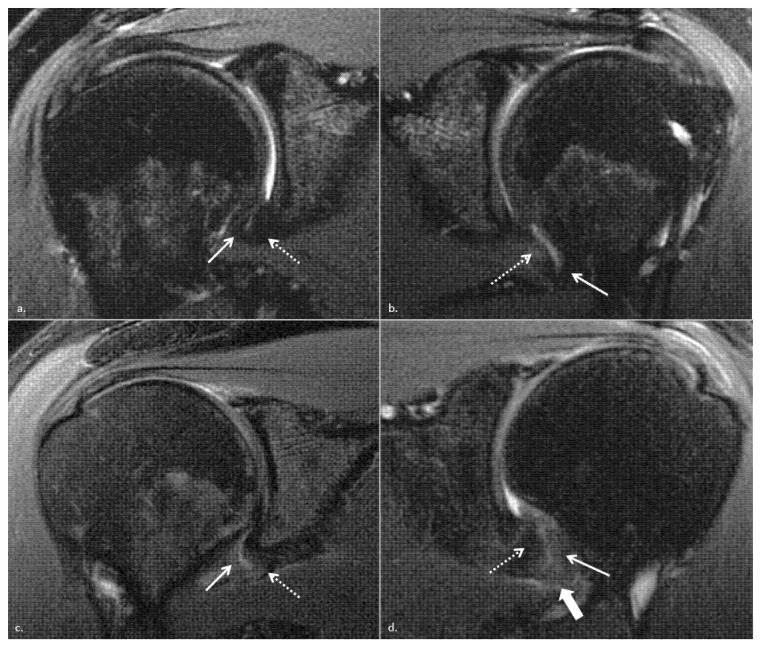
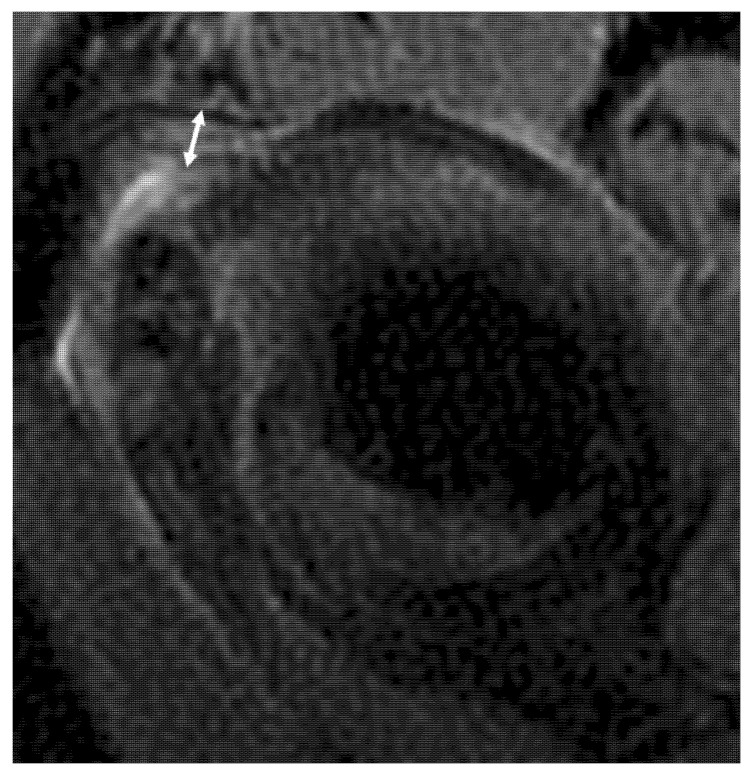
This monocentric prospective study included 132 patients with a clinical diagnosis of shoulder AC who underwent shoulder MRI. Mean patient age was 54.1 ± 9.3 years, and there were 55 men and 77 women. A radiologist examined all patients and completed the CMS just prior to MRI. Pain duration was assessed along with the signal intensity and measured the maximal thickness of the inferior glenohumeral ligament (IGHL) by two radiologists. Medical record analysis was performed in a sub-group of 49 patients to assess prognosis approximately one year after the MRI examination. Linear regression analysis with the Pearson test and the Fisher exact test were used to determine the association between MRI findings and clinical impairment.
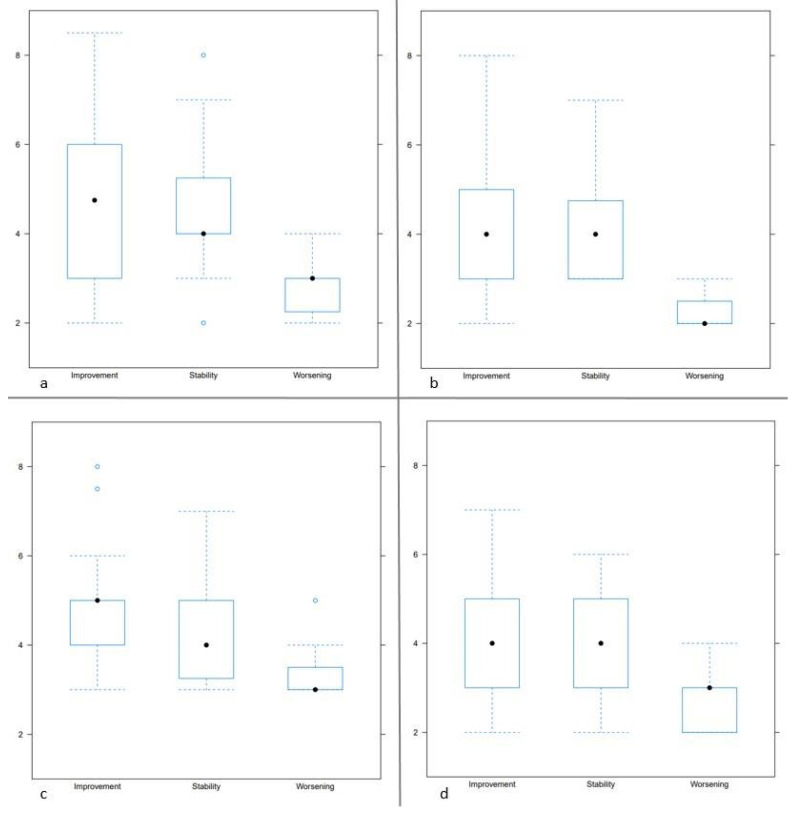
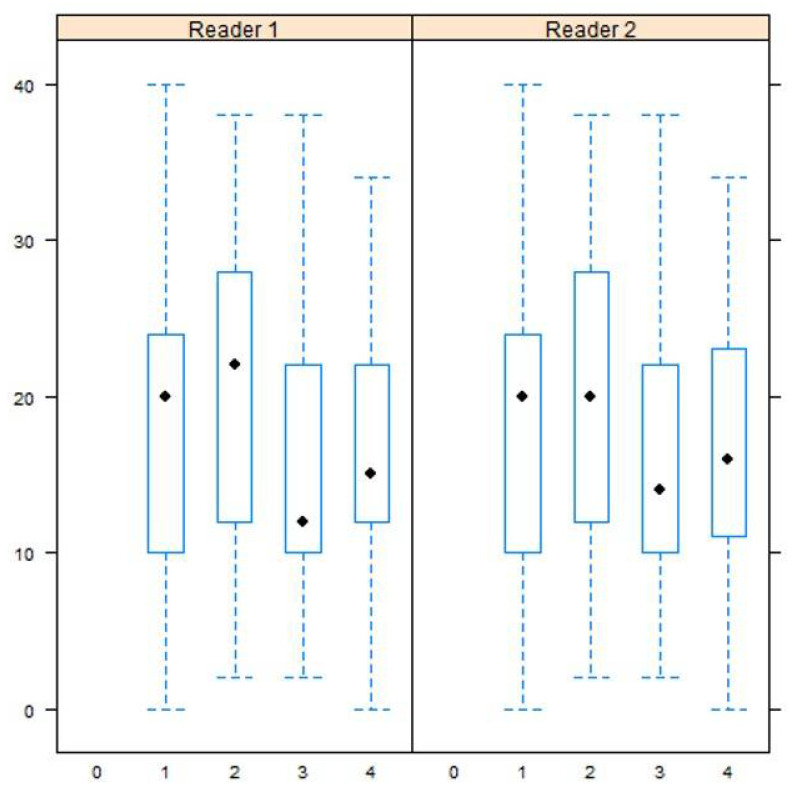
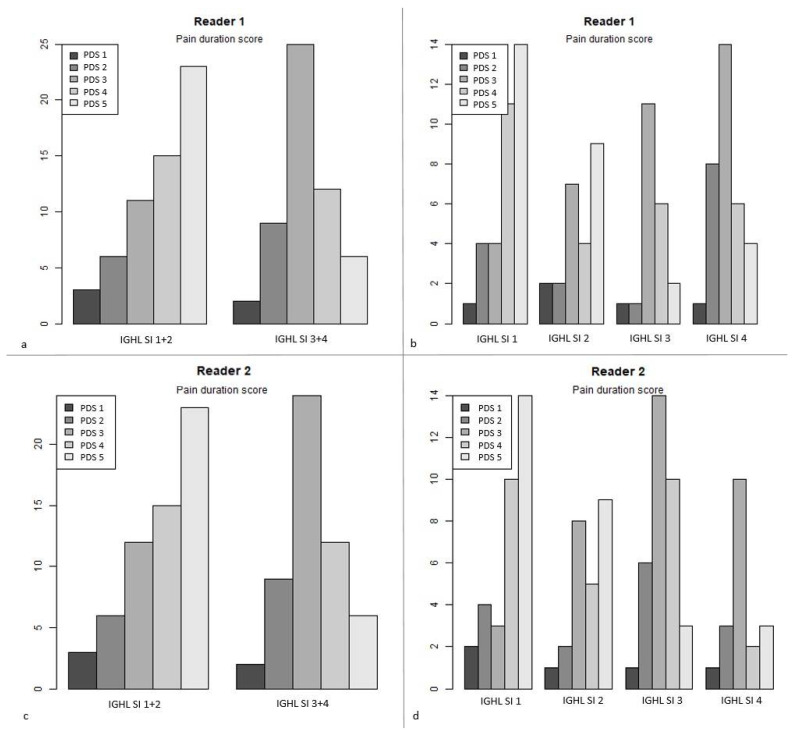
There was a significant difference in mean pain duration score (3.8 ± 1.2 versus 3.2 ± 0.9 and 3.8 ± 1.2 versus 3.2 ± 0.9, respectively, for readers 1 and 2) and in mean mobility scores (15.7 ± 8 points versus 19.6 ± 10.1 points and 15.8 ± 8.2 points versus 19.4 ± 10 points, respectively, for readers 1 and 2) in patients with a high IGHL signal compared to those with a low IGHL signal ( < 0.05). IGHL was thicker in patients with clinical improvement at one-year follow-up compared to those presenting clinical stability or worsening ( < 0.05).
In patients with shoulder AC, the degree of signal intensity at the IGHL was inversely related to shoulder pain duration and range of motion, and a thickened IGHL indicated a favorable outcome at one-year follow-up.
目前,肩关节粘连性关节囊炎(AC)的MRI诊断标准被广泛应用,但关于MRI表现与临床功能损害之间的关联信息较少。
确定AC患者MRI表现与Constant-Murley评分(CMS)、疼痛持续时间及一年随访时症状的相关性。
这项单中心前瞻性研究纳入了132例临床诊断为肩关节AC且接受肩关节MRI检查的患者。患者平均年龄为54.1±9.3岁,其中男性55例,女性77例。一名放射科医生对所有患者进行检查,并在MRI检查前完成CMS评估。两名放射科医生评估疼痛持续时间以及信号强度,并测量下盂肱韧带(IGHL)的最大厚度。对49例患者的亚组进行病历分析,以评估MRI检查后约一年的预后情况。采用Pearson检验的线性回归分析和Fisher精确检验来确定MRI表现与临床功能损害之间的关联。
与IGHL信号低的患者相比,IGHL信号高的患者平均疼痛持续时间评分(读者1和读者2分别为3.8±1.2与3.2±0.9以及3.8±1.2与3.2±0.9)和平均活动度评分(读者1和读者2分别为15.7±8分与19.6±10.1分以及15.8±8.2分与19.4±10分)存在显著差异(P<0.05)。与临床稳定或病情恶化的患者相比,一年随访时临床症状改善的患者IGHL更厚(P<0.05)。
在肩关节AC患者中,IGHL的信号强度程度与肩部疼痛持续时间和活动范围呈负相关,且IGHL增厚表明一年随访时预后良好。