Ramos-de-Miguel Angel, Falcón-González Juan Carlos, Ramos-Macias Angel
Hearing and Balance Laboratory, Las Palmas de Gran Canaria University (SIANI), 35001 Las Palmas, Spain.
Department of Otolaryngology, Head and Neck Surgery, Complejo Hospitalario Universitario Insular Materno Infantil de Gran Canaria, 35016 Las Palmas, Spain.
J Clin Med. 2021 Aug 31;10(17):3962. doi: 10.3390/jcm10173962.
The proximity of the electrode to the modiolar wall may be of interest to investigate the effect of pitch discrimination. This research establishes the relation between these factors and whether perimodiolar positions may provide benefits regarding improved electrode discrimination.
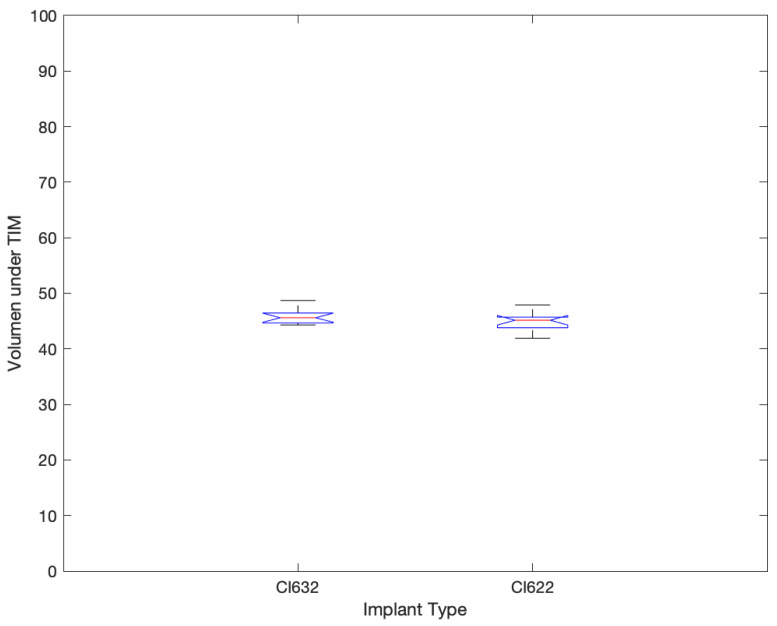
A prospective randomized study including 24 post-lingual deaf adults was performed. A psychoacoustic study was done by using a psychoacoustic research platform. Radiological study, and a cone-beam computed tomography was used to assess post cochlear implantation electrodes' position. Trans-impedance matrix (TIM) analysis was performed after cochlear implant insertion in all cases, and pupillometry test was also performed.
12 patients received a slim perimodiolar electrode array, and 12 patients received a straight electrode array. Although all the patients showed similar speech test results after 12 months follow-up, those implanted with a perimodiolar electrode obtained better scores in electrode discrimination test and pupillometry test, and showed more homogenous TIM patterns.
The better positioning of the electrode array seams to provide a better hearing resolution and less listening effort trans-impedance matrix seems to be a useful tool to analyze positioning of the perimodiolar array.
电极与蜗轴壁的接近程度可能是研究音高辨别效应的一个关注点。本研究建立了这些因素之间的关系,以及蜗周位置是否可能在改善电极辨别方面提供益处。
对24名语后聋成年人进行了一项前瞻性随机研究。使用心理声学研究平台进行了一项心理声学研究。进行了放射学研究,并使用锥形束计算机断层扫描来评估人工耳蜗植入后电极的位置。所有病例在人工耳蜗植入后均进行了跨阻抗矩阵(TIM)分析,并且还进行了瞳孔测量测试。
12名患者接受了纤细的蜗周电极阵列,12名患者接受了直电极阵列。尽管所有患者在12个月的随访后语音测试结果相似,但植入蜗周电极的患者在电极辨别测试和瞳孔测量测试中获得了更好的分数,并且显示出更均匀的TIM模式。
电极阵列的更好定位似乎能提供更好的听力分辨率和更少的聆听努力。跨阻抗矩阵似乎是分析蜗周阵列定位的一个有用工具。