Atwa Sara M, Odenthal Margarete, El Tayebi Hend M
Pharmaceutical Biology Department, German University in Cairo, Cairo 11865, Egypt.
Molecular Pharmacology Research Group, Department of Pharmacology and Toxicology, Faculty of Pharmacy and Biotechnology, German University in Cairo, Cairo 11835, Egypt.
Cancers (Basel). 2021 Aug 27;13(17):4343. doi: 10.3390/cancers13174343.
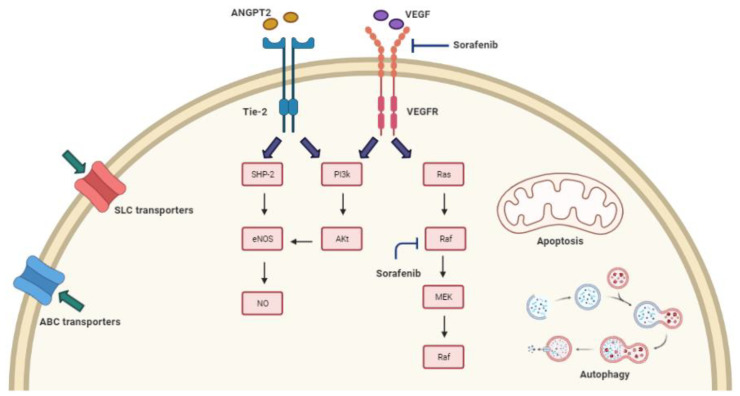
Despite the latest advances in hepatocellular carcinoma (HCC) screening and treatment modalities, HCC is still representing a global burden. Most HCC patients present at later stages to an extent that conventional curative options are ineffective. Hence, systemic therapy represented by the tyrosine kinase inhibitor, sorafenib, in the first-line setting is the main treatment modality for advanced-stage HCC. However, in the two groundbreaking phase III clinical trials, the SHARP and Asia-Pacific trials, sorafenib has demonstrated a modest prolongation of overall survival in almost 30% of HCC patients. As HCC develops in an immune-rich milieu, particular attention has been placed on immune checkpoint inhibitors (ICIs) as a novel therapeutic modality for HCC. Yet, HCC therapy is hampered by the resistance to chemotherapeutic drugs and the subsequent tumor recurrence. HCC is characterized by substantial genomic heterogeneity that has an impact on cellular response to the applied therapy. And hence, this review aims at giving an insight into the therapeutic impact and the different mechanisms of resistance to sorafenib and ICIs as well as, discussing the genomic heterogeneity associated with such mechanisms.
尽管肝细胞癌(HCC)筛查和治疗方式取得了最新进展,但HCC仍然是一项全球负担。大多数HCC患者就诊时已处于晚期,以至于传统的治愈性选择无效。因此,在一线治疗中以酪氨酸激酶抑制剂索拉非尼为代表的全身治疗是晚期HCC的主要治疗方式。然而,在两项开创性的III期临床试验即SHARP试验和亚太试验中,索拉非尼仅使近30%的HCC患者的总生存期略有延长。由于HCC在富含免疫细胞的环境中发生,免疫检查点抑制剂(ICIs)作为HCC的一种新型治疗方式受到了特别关注。然而,HCC治疗受到对化疗药物的耐药性以及随后肿瘤复发的阻碍。HCC的特征是具有大量基因组异质性,这会影响细胞对所应用治疗的反应。因此,本综述旨在深入了解索拉非尼和ICIs的治疗效果及不同耐药机制,并讨论与这些机制相关的基因组异质性。