Department of Pathology, School of Medicine, Boston University Medical Campus, Boston, MA, 02118, USA.
Center for Biomedical Mass Spectrometry, Boston University School of Medicine, Boston, MA, 02118, USA.
J Biomed Sci. 2021 Sep 9;28(1):61. doi: 10.1186/s12929-021-00757-z.
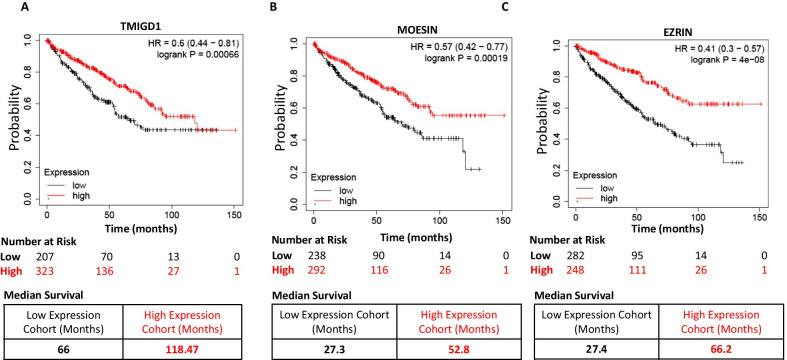
The cell adhesion molecule transmembrane and immunoglobulin (Ig) domain containing1 (TMIGD1) is a novel tumor suppressor that plays important roles in regulating cell-cell adhesion, cell proliferation and cell cycle. However, the mechanisms of TMIGD1 signaling are not yet fully elucidated.
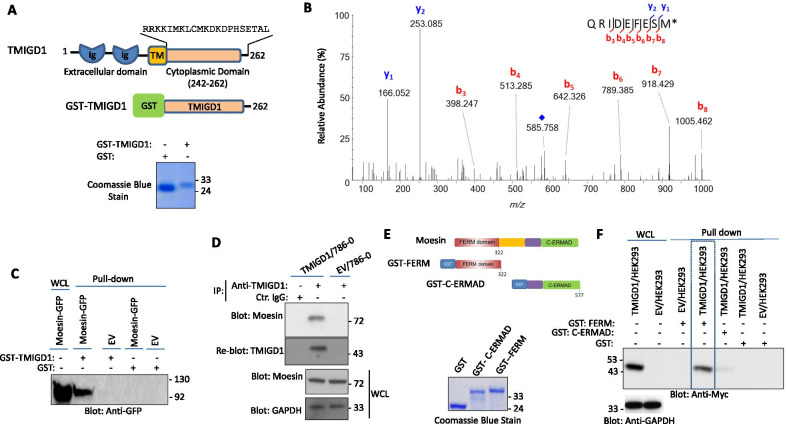
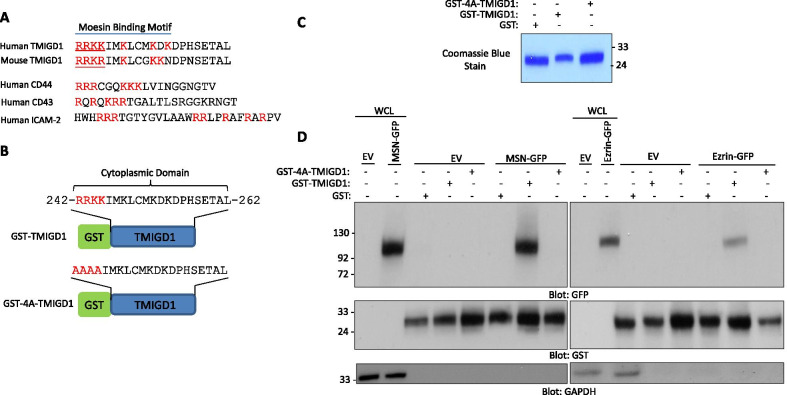
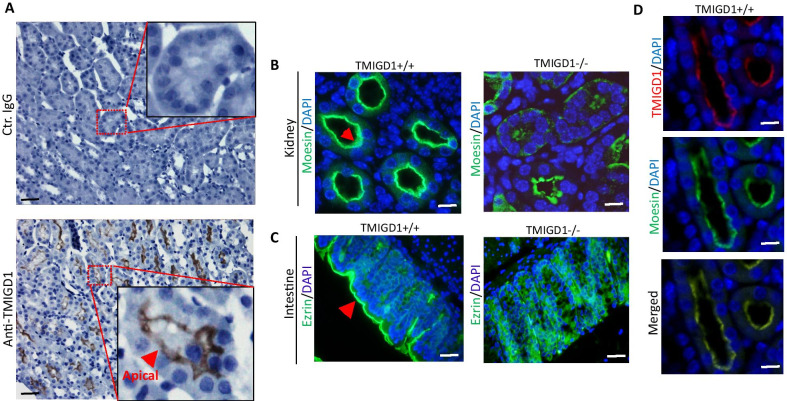
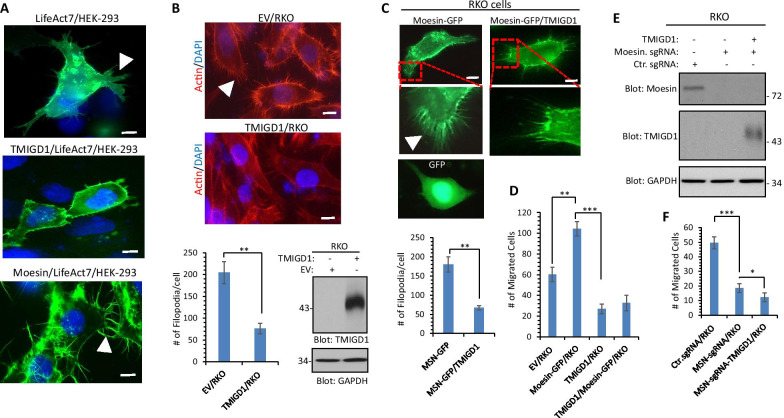
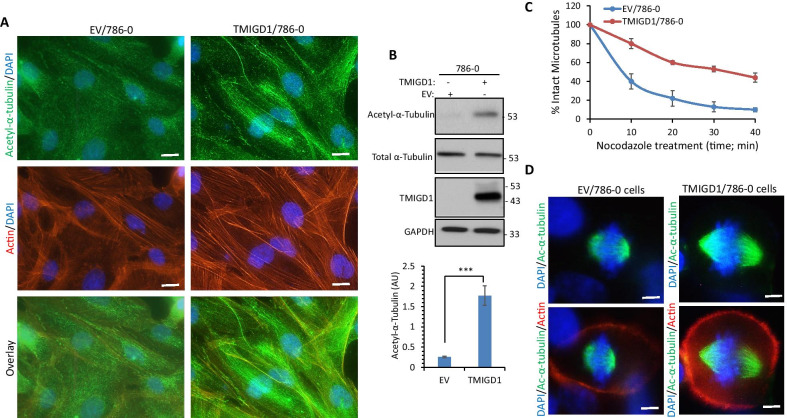
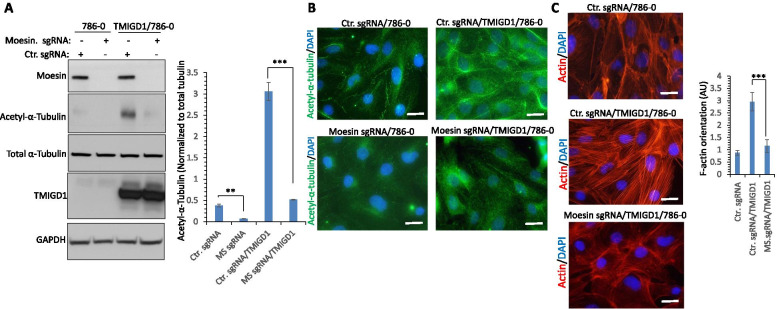
TMIGD1 binds to the ERM family proteins moesin and ezrin, and an evolutionarily conserved RRKK motif on the carboxyl terminus of TMIGD1 mediates the interaction of TMIGD1 with the N-terminal ERM domains of moesin and ezrin. TMIGD1 governs the apical localization of moesin and ezrin, as the loss of TMIGD1 in mice altered apical localization of moesin and ezrin in epithelial cells. In cell culture, TMIGD1 inhibited moesin-induced filopodia-like protrusions and cell migration. More importantly, TMIGD1 stimulated the Lysine (K40) acetylation of α-tubulin and promoted mitotic spindle organization and CRISPR/Cas9-mediated knockout of moesin impaired the TMIGD1-mediated acetylation of α-tubulin and filamentous (F)-actin organization.
TMIGD1 binds to moesin and ezrin, and regulates their cellular localization. Moesin plays critical roles in TMIGD1-dependent acetylation of α-tubulin, mitotic spindle organization and cell migration. Our findings offer a molecular framework for understanding the complex functional interplay between TMIGD1 and the ERM family proteins in the regulation of cell adhesion and mitotic spindle assembly, and have wide-ranging implications in physiological and pathological processes such as cancer progression.
跨膜和免疫球蛋白(Ig)结构域包含 1(TMIGD1)是一种新型的肿瘤抑制因子,在调节细胞-细胞黏附、细胞增殖和细胞周期方面发挥重要作用。然而,TMIGD1 信号通路的机制尚不完全清楚。
TMIGD1 与 ERM 家族蛋白 moesin 和 ezrin 结合,TMIGD1 羧基末端的一个进化保守的 RRKK 基序介导 TMIGD1 与 moesin 和 ezrin 的 N 端 ERM 结构域的相互作用。TMIGD1 控制 moesin 和 ezrin 的顶端定位,因为 TMIGD1 在小鼠中的缺失改变了上皮细胞中 moesin 和 ezrin 的顶端定位。在细胞培养中,TMIGD1 抑制 moesin 诱导的丝状伪足样突起和细胞迁移。更重要的是,TMIGD1 刺激 α-微管蛋白的赖氨酸(K40)乙酰化,并促进有丝分裂纺锤体的组织,而 CRISPR/Cas9 介导的 moesin 敲除则损害了 TMIGD1 介导的 α-微管蛋白和丝状(F)-肌动蛋白的组织。
TMIGD1 与 moesin 和 ezrin 结合,调节它们的细胞定位。Moesin 在 TMIGD1 依赖的 α-微管蛋白乙酰化、有丝分裂纺锤体组织和细胞迁移中发挥关键作用。我们的研究结果为理解 TMIGD1 与 ERM 家族蛋白在调节细胞黏附和有丝分裂纺锤体组装中的复杂功能相互作用提供了分子框架,并在癌症进展等生理和病理过程中具有广泛的意义。