Department of Gastroenterology, The First Affiliated Hospital of Sun Yat-Sen University, Guangzhou, Guangdong, People's Republic of China.
Institute of Precision Medicine, The First Affiliated Hospital of Sun Yat-Sen University, Guangzhou, Guangdong, People's Republic of China.
BMC Med. 2023 Aug 4;21(1):287. doi: 10.1186/s12916-023-02989-2.
Disrupted intestinal epithelial barrier is one of the major causes of Crohn's disease (CD). Novel molecular targets for intestinal epithelial barrier are essential to treatment of CD. Transmembrane and immunoglobulin domain-containing protein 1 (TMIGD1) is an adhesion molecule that regulates cell adhesion, migration, and enterocyte differentiation. However, the function and mechanism of TMIGD1 in CD and intestinal epithelial barrier has rarely been studied. Furthermore, the association between TMIGD1 and the clinical features of CD remains unclear.
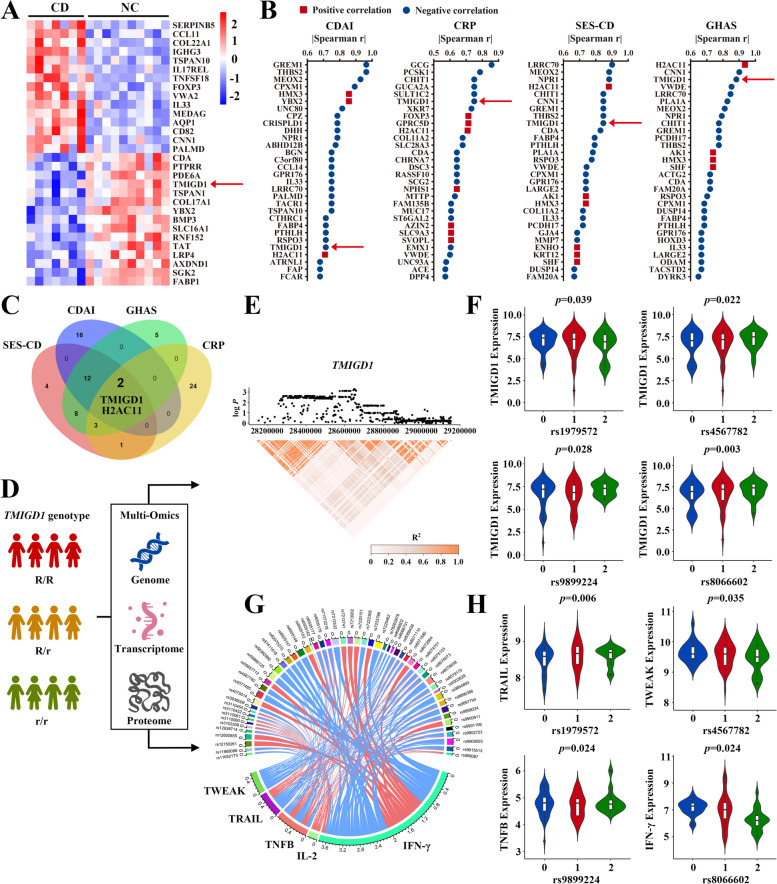
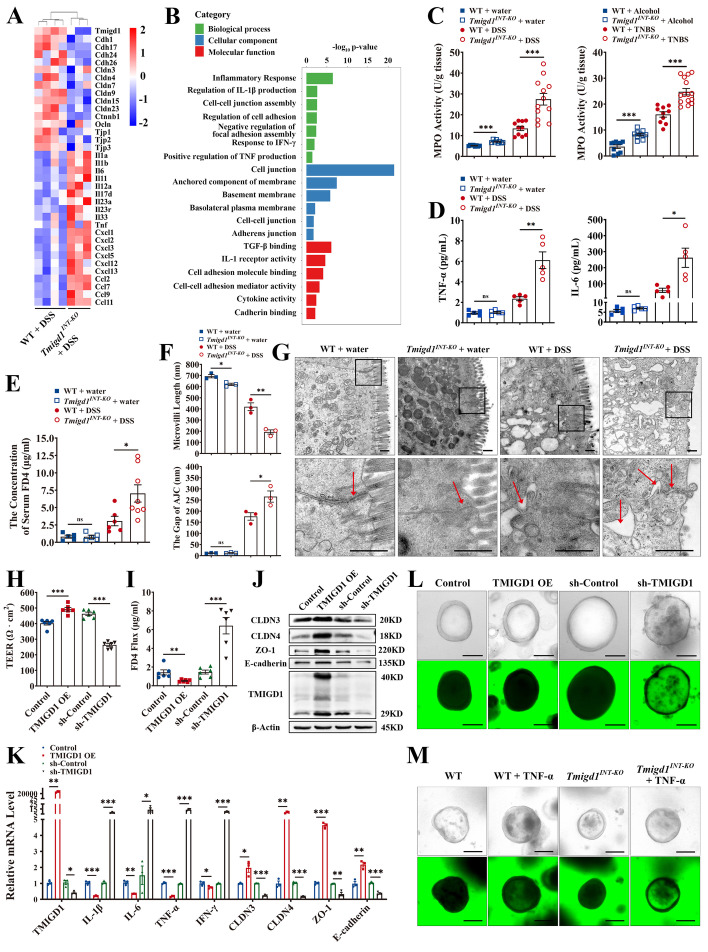
Transcriptome analysis on colonic mucosa from CD patients and healthy individuals were performed to identify dysregulated genes. Multi-omics integration of the 1000IBD cohort including genomics, transcriptomics of intestinal biopsies, and serum proteomics identified the association between genes and characteristics of CD. Inflammation was assessed by cytokine production in cell lines, organoids and intestinal-specific Tmigd1 knockout (Tmigd1) mice. Epithelial barrier integrity was evaluated by trans-epithelium electrical resistance (TEER), paracellular permeability, and apical junction complex (AJC) expression. Co-immunoprecipitation, GST pull-down assays, mass spectrometry, proteomics, and transcriptome analysis were used to explore downstream mechanisms.
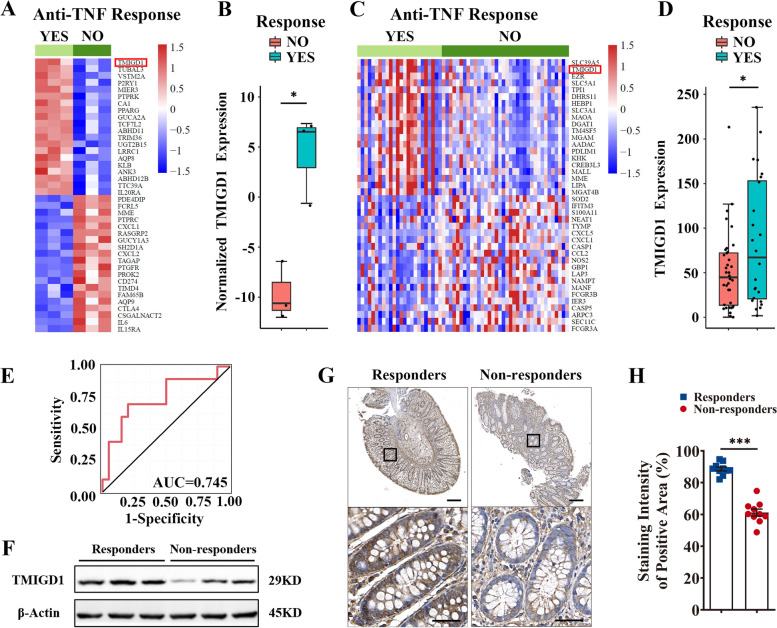
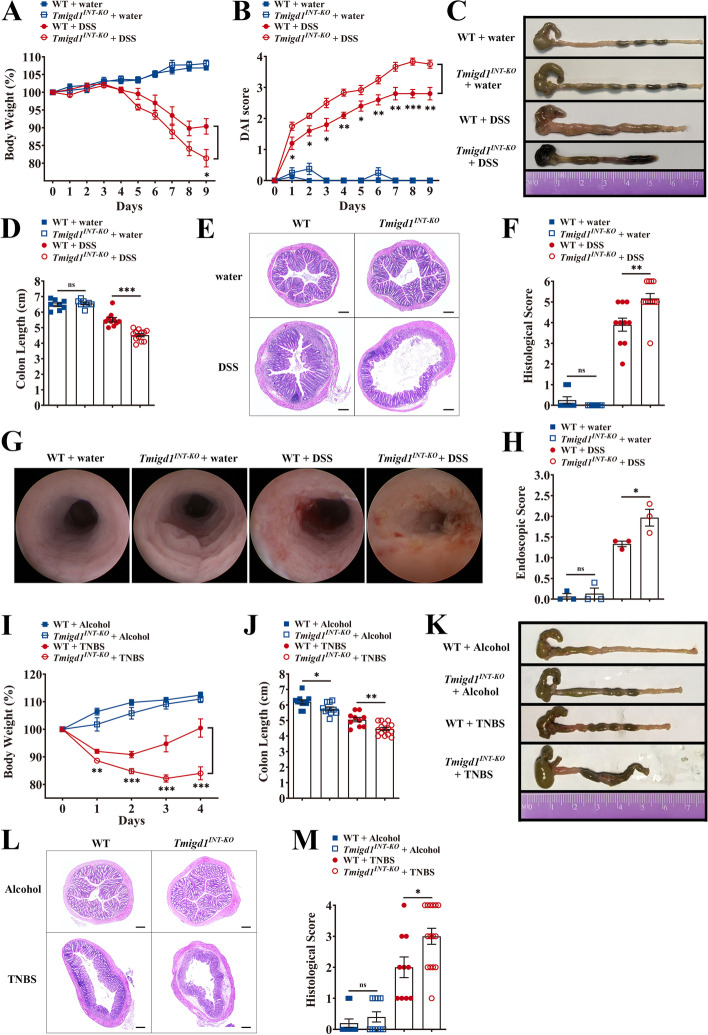
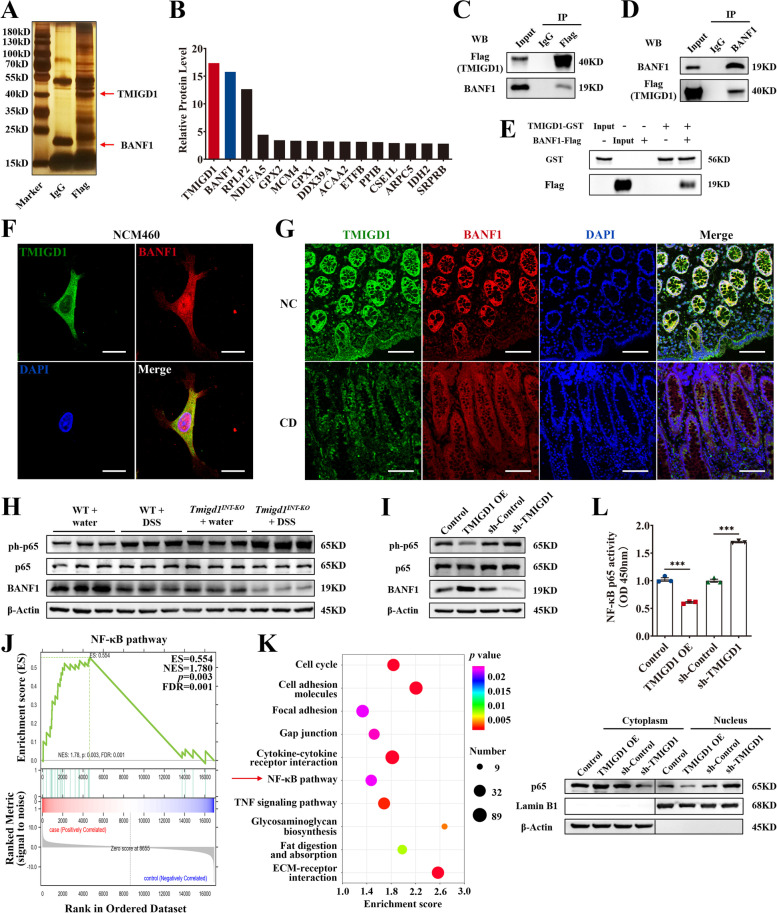
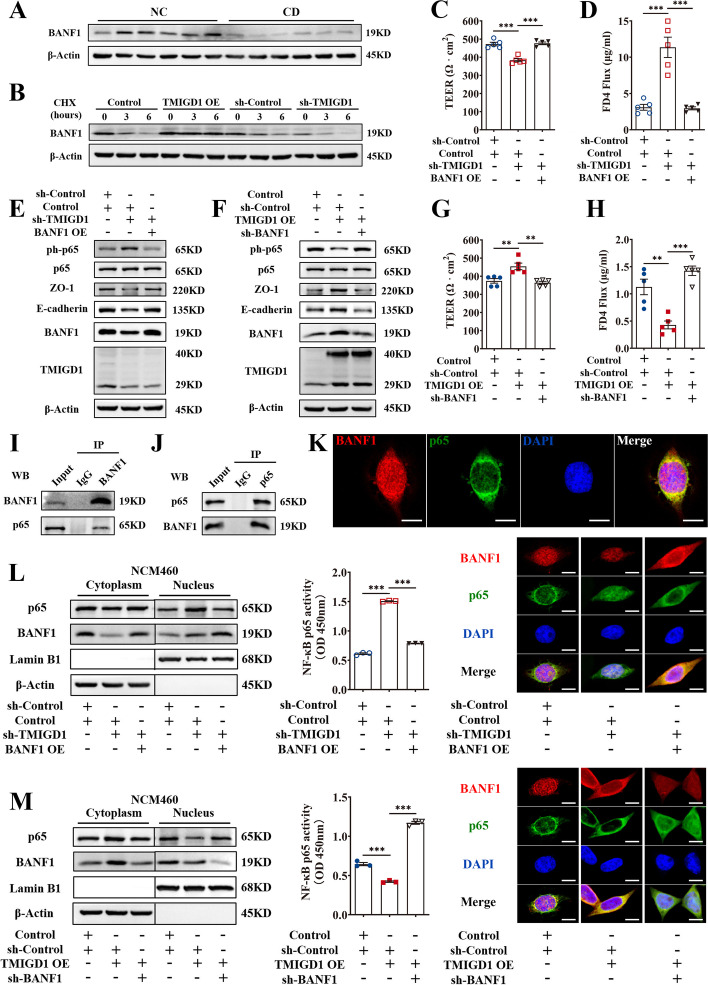
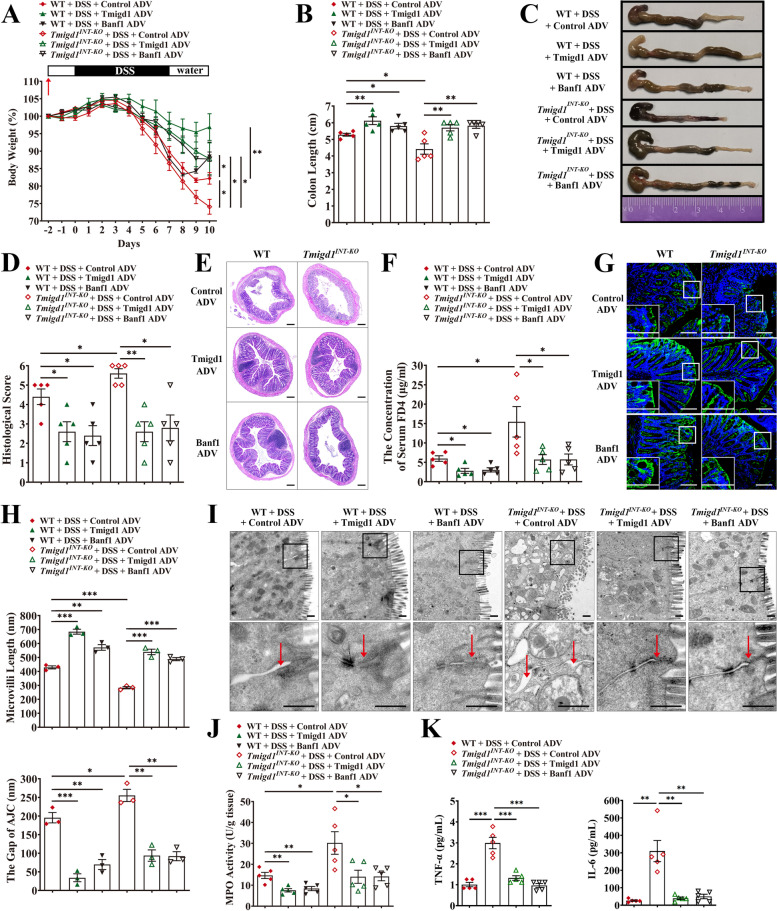
Multi-omics integration suggested that TMIGD1 was negatively associated with inflammatory characteristics of CD. TMIGD1 was downregulated in inflamed intestinal mucosa of patients with CD and mice colitis models. Tmigd1 mice were more susceptible to chemically induced colitis. In epithelial cell lines and colonic organoids, TMIGD1 knockdown caused impaired intestinal barrier integrity evidenced by increased paracellular permeability and reduced TEER and AJC expression. TMIGD1 knockdown in intestinal epithelial cells also induced pro-inflammatory cytokine production. Mechanistically, TMIGD1 directly interacted with cytoplasmic BAF nuclear assembly factor 1 (BANF1) to inhibit NF-κB activation. Exogenous expression of TMIGD1 and BANF1 restored intestinal barrier function and inhibited inflammation in vitro and in vivo. TMIGD1 expression predicted response to anti-TNF treatment in patients with CD.
Our study demonstrated that TMIGD1 maintained intestinal barrier integrity and inactivated inflammation, and was therefore a potential therapeutic target for CD.
肠道上皮屏障的破坏是克罗恩病(CD)的主要原因之一。寻找肠道上皮屏障的新型分子靶点对于 CD 的治疗至关重要。跨膜和免疫球蛋白结构域蛋白 1(TMIGD1)是一种黏附分子,可调节细胞黏附、迁移和肠上皮细胞分化。然而,TMIGD1 在 CD 和肠道上皮屏障中的功能和机制很少被研究。此外,TMIGD1 与 CD 的临床特征之间的关联尚不清楚。
对 CD 患者和健康个体的结肠黏膜进行转录组分析,以鉴定失调基因。包括肠道活检的基因组、转录组和血清蛋白质组学在内的 1000IBD 队列的多组学整合确定了基因与 CD 特征之间的关联。通过细胞系、类器官和肠道特异性 Tmigd1 敲除(Tmigd1)小鼠中的细胞因子产生来评估炎症。通过跨上皮电阻(TEER)、旁分泌通透性和顶端连接复合物(AJC)表达来评估上皮屏障完整性。使用免疫共沉淀、GST 下拉测定、质谱、蛋白质组学和转录组分析来探索下游机制。
多组学整合表明,TMIGD1 与 CD 的炎症特征呈负相关。TMIGD1 在 CD 患者的炎症性肠道黏膜和结肠炎模型小鼠中下调。Tmigd1 小鼠更容易发生化学诱导的结肠炎。在肠上皮细胞系和结肠类器官中,TMIGD1 敲低导致肠道屏障完整性受损,表现为旁分泌通透性增加、TEER 和 AJC 表达降低。TMIGD1 敲低在肠上皮细胞中也诱导了促炎细胞因子的产生。在机制上,TMIGD1 直接与细胞质 BAF 核组装因子 1(BANF1)相互作用以抑制 NF-κB 激活。TMIGD1 和 BANF1 的外源性表达可恢复体外和体内的肠道屏障功能并抑制炎症。TMIGD1 的表达可预测 CD 患者对抗 TNF 治疗的反应。
我们的研究表明,TMIGD1 维持肠道屏障完整性并使炎症失活,因此是 CD 的潜在治疗靶点。