Li Keqi, Wang Jie, Kuang Lieqiong, Tian Ze, Wang Xinfa, Dun Xiaoling, Tu Jinxing, Wang Hanzhong
Oil Crops Research Institute of the Chinese Academy of Agricultural Sciences/Key Laboratory of Biology and Genetic Improvement of Oil Crops, Ministry of Agriculture, Wuhan, 430062, China.
National Key Laboratory of Crop Genetic Improvement, Huazhong Agricultural University, Wuhan, 430062, China.
Biotechnol Biofuels. 2021 Sep 10;14(1):178. doi: 10.1186/s13068-021-02032-7.
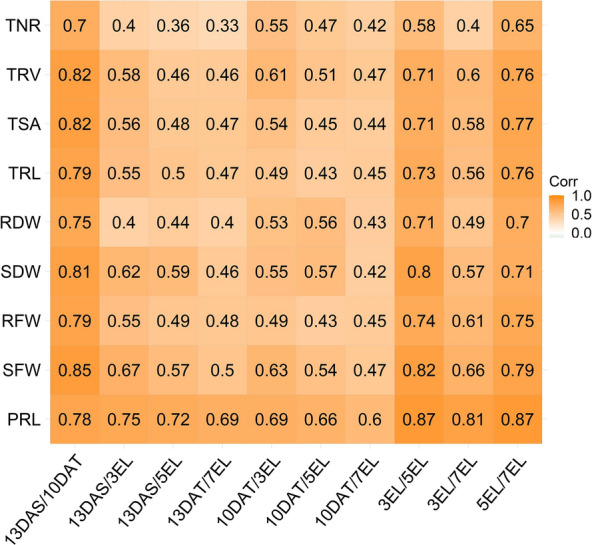
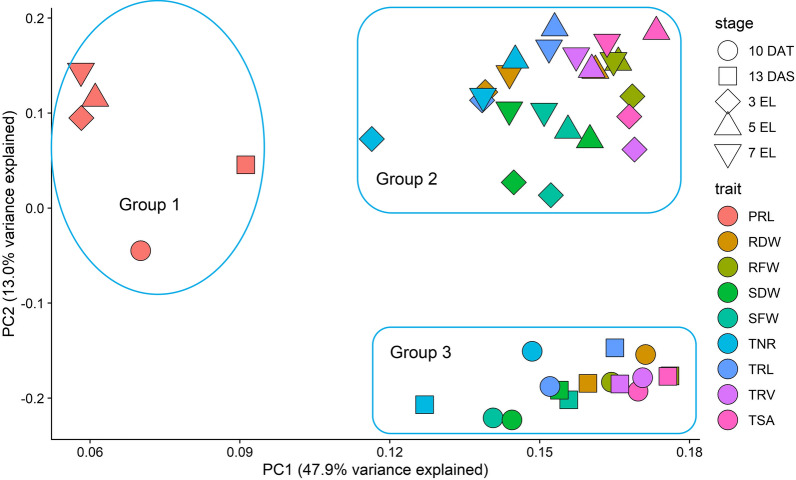
In terms of global demand, rapeseed is the third-largest oilseed crop after soybeans and palm, which produces vegetable oil for human consumption and biofuel for industrial production. Roots are vital organs for plant to absorb water and attain mineral nutrients, thus they are of great importance to plant productivity. However, the genetic mechanisms regulating root development in rapeseed remain unclear. In the present study, seven root-related traits and shoot biomass traits in 280 Brassica napus accessions at five continuous vegetative stages were measured to establish the genetic basis of root growth in rapeseed.
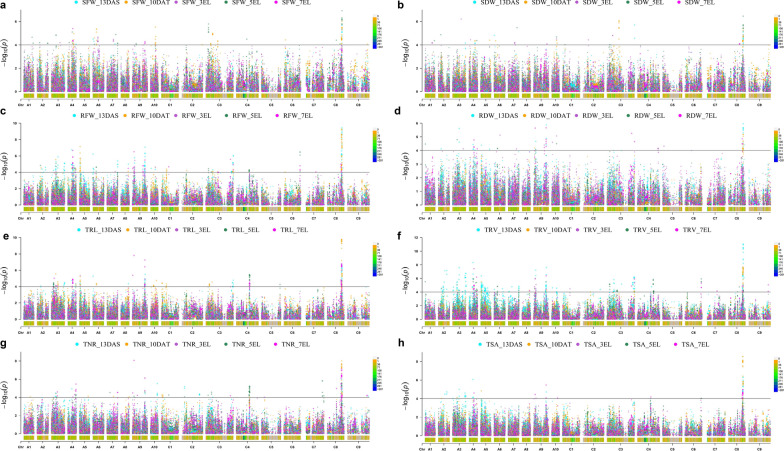
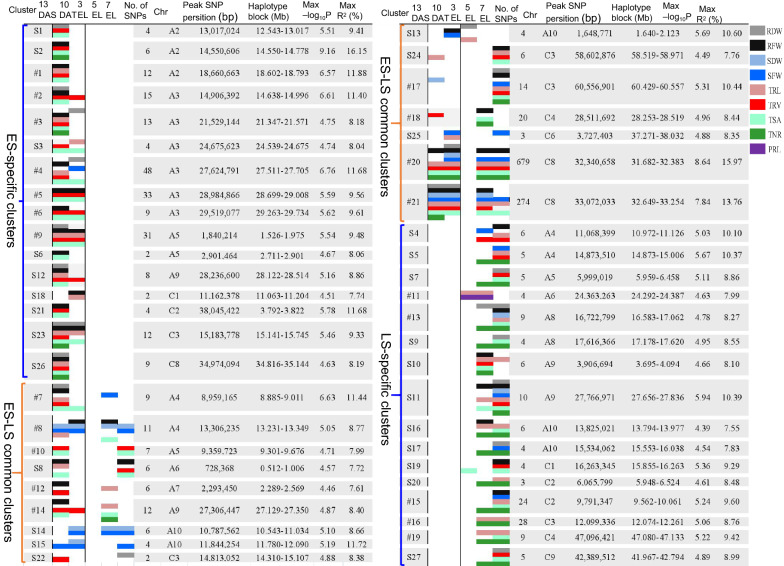
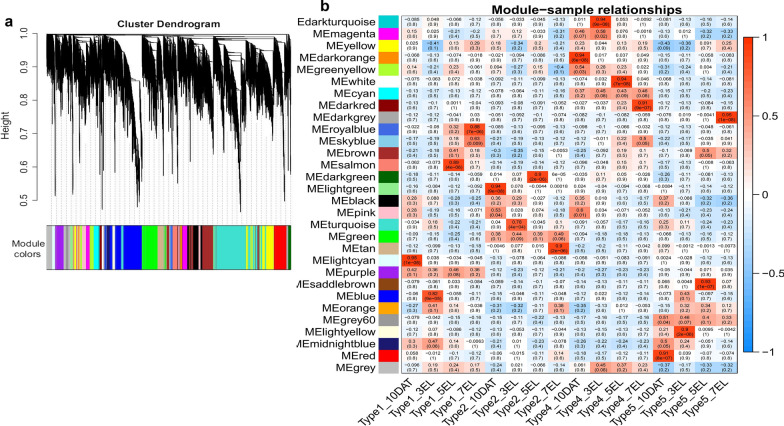
The persistent and stage-specific genetic mechanisms were revealed by root dynamic analysis. Sixteen persistent and 32 stage-specific quantitative trait loci (QTL) clusters were identified through genome-wide association study (GWAS). Root samples with contrasting (slow and fast) growth rates throughout the investigated stages and those with obvious stage-specific changes in growth rates were subjected to transcriptome analysis. A total of 367 differentially expressed genes (DEGs) with persistent differential expressions throughout root development were identified, and these DEGs were significantly enriched in GO terms, such as energy metabolism and response to biotic or abiotic stress. Totally, 485 stage-specific DEGs with different expressions at specific stage were identified, and these DEGs were enriched in GO terms, such as nitrogen metabolism. Four candidate genes were identified as key persistent genetic factors and eight as stage-specific ones by integrating GWAS, weighted gene co-expression network analysis (WGCNA), and differential expression analysis. These candidate genes were speculated to regulate root system development, and they were less than 100 kb away from peak SNPs of QTL clusters. The homologs of three genes (BnaA03g52990D, BnaA06g37280D, and BnaA09g07580D) out of 12 candidate genes have been reported to regulate root development in previous studies.
Sixteen QTL clusters and four candidate genes controlling persistently root development, and 32 QTL clusters and eight candidate genes stage-specifically regulating root growth in rapeseed were detected in this study. Our results provide new insights into the temporal genetic mechanisms of root growth by identifying key candidate QTL/genes in rapeseed.
就全球需求而言,油菜籽是仅次于大豆和棕榈的第三大油籽作物,可生产供人类食用的植物油和用于工业生产的生物燃料。根是植物吸收水分和获取矿质养分的重要器官,因此对植物生产力至关重要。然而,调控油菜根发育的遗传机制仍不清楚。在本研究中,对280份甘蓝型油菜材料在五个连续营养生长阶段的七个根相关性状和地上部生物量性状进行了测定,以建立油菜根生长的遗传基础。
通过根动态分析揭示了持续和阶段特异性的遗传机制。通过全基因组关联研究(GWAS)鉴定出16个持续和32个阶段特异性的数量性状位点(QTL)簇。对在整个研究阶段具有对比(慢和快)生长速率以及那些生长速率具有明显阶段特异性变化的根样本进行了转录组分析。共鉴定出367个在根发育过程中具有持续差异表达的差异表达基因(DEG),这些DEG在能量代谢和对生物或非生物胁迫的响应等GO术语中显著富集。总共鉴定出485个在特定阶段具有不同表达的阶段特异性DEG,这些DEG在氮代谢等GO术语中富集。通过整合GWAS、加权基因共表达网络分析(WGCNA)和差异表达分析,鉴定出4个候选基因作为关键的持续遗传因子,8个作为阶段特异性遗传因子。推测这些候选基因调控根系发育,并且它们距离QTL簇的峰值SNP不到100 kb。在12个候选基因中,有3个基因(BnaA03g52990D、BnaA06g37280D和BnaA09g07580D)的同源基因在先前的研究中已被报道调控根发育。
本研究检测到16个控制油菜根持续发育的QTL簇和4个候选基因,以及32个阶段特异性调控油菜根生长的QTL簇和8个候选基因。我们的结果通过鉴定油菜中的关键候选QTL/基因,为根生长的时间遗传机制提供了新的见解。