Department of Radiology, West China Hospital, Sichuan University, Chengdu, China.
Department of Nuclear Medicine, Sichuan Academy of Medical Sciences, Sichuan Provincial People's Hospital, Chengdu, China.
Front Immunol. 2021 Aug 26;12:724464. doi: 10.3389/fimmu.2021.724464. eCollection 2021.
Microsatellite instability (MSI) is one of the important factors that determine the effectiveness of immunotherapy in colorectal cancer (CRC) and serves as a prognostic biomarker for its clinical outcomes.
To investigate whether the metabolic parameters derived fromF-fluorodeoxyglucose (F-FDG) positron emission tomography/computed tomography (PET/CT) can predict MSI status in patients with CRC.
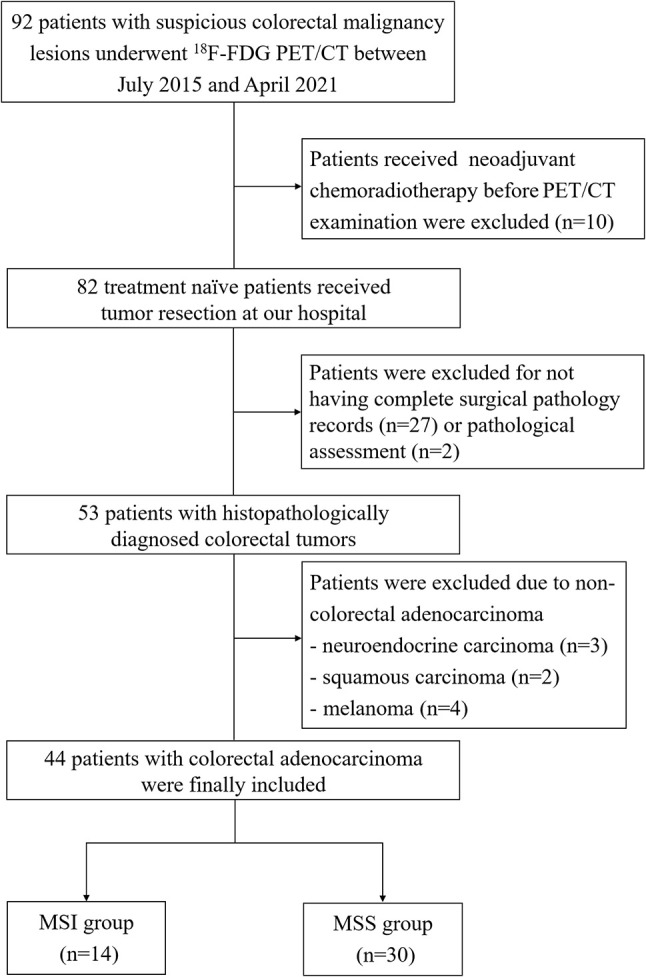
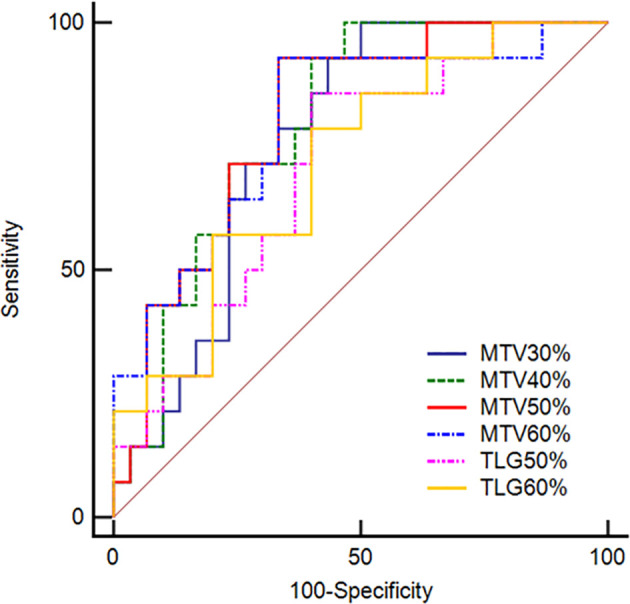
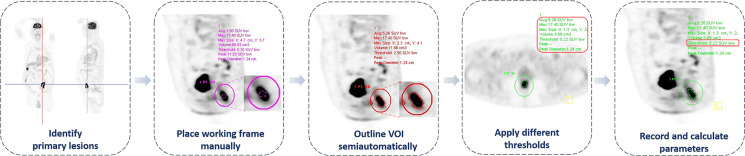
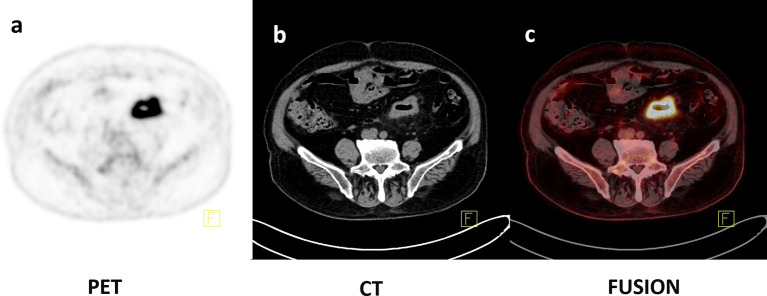
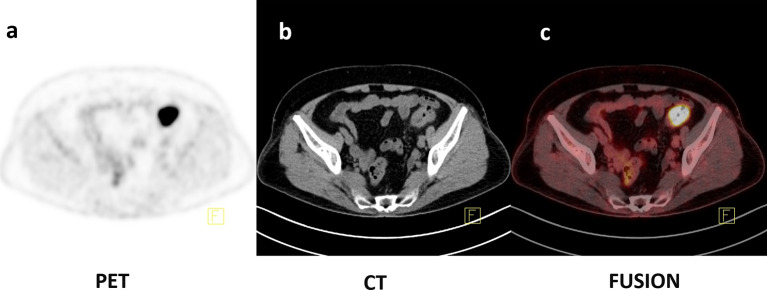
A retrospective analysis was performed on CRC patients who underwent F-FDG PET/CT examination before surgery between January 2015 and April 2021. The metabolic F-FDG PET/CT parameters of the primary CRC lesion were calculated and recorded with different thresholds, including the maximum, peak, and mean standardized uptake value (SUV, SUV, and SUV), as well as the metabolic tumor volume (MTV) and the total lesion glycolysis (TLG). The status of MSI was determined by immunohistochemical assessment. The difference of quantitative parameters between MSI and microsatellite stability (MSS) groups was assessed, and the receiver operating characteristic (ROC) analyses with area under ROC curves (AUC) was used to evaluate the predictive performance of metabolic parameters.
A total of 44 patients (24 men and 20 women; mean ± standard deviation age: 71.1 ± 14.2 years) were included. There were 14 patients in the MSI group while there were 30 in the MSS group. MTV, MTV, MTV, and MTV, as well as TLG and TLG showed significant difference between two groups (all -values <0.05), among which MTV demonstrated the highest performance in the prediction of MSI, with an AUC of 0.805 [95% confidence interval (CI): 0.657-0.909], a sensitivity of 92.9% (95% CI: 0.661-0.998), and a specificity of 66.7% (95% CI: 0.472-0.827). Patients' age and MTV were significant predictive indicators of MSI in multivariate logistic regression.
The metabolic parameters derived fromF-FDG PET/CT were able to preoperatively predict the MSI status in CRC, with MTV demonstrating the highest predictive performance. PET/CT imaging could serve as a noninvasive tool in the guidance of immunotherapy and individualized treatment in CRC patients.
微卫星不稳定性(MSI)是决定结直肠癌(CRC)免疫治疗效果的重要因素之一,也是其临床结局的预后生物标志物。
探讨 F-氟脱氧葡萄糖(F-FDG)正电子发射断层扫描/计算机断层扫描(PET/CT)衍生的代谢参数是否可预测 CRC 患者的 MSI 状态。
回顾性分析 2015 年 1 月至 2021 年 4 月期间接受手术前 F-FDG PET/CT 检查的 CRC 患者。记录并计算原发 CRC 病灶的代谢 F-FDG PET/CT 参数,包括最大、峰值和平均标准化摄取值(SUV、SUV 和 SUV)、代谢肿瘤体积(MTV)和总病灶糖酵解(TLG)。通过免疫组织化学评估 MSI 状态。评估 MSI 和微卫星稳定(MSS)组之间定量参数的差异,并使用 ROC 曲线下面积(AUC)评估代谢参数的预测性能。
共纳入 44 例患者(24 例男性,20 例女性;平均年龄±标准差:71.1±14.2 岁)。其中 MSI 组 14 例,MSS 组 30 例。MTV、MTV、MTV 和 MTV 以及 TLG 和 TLG 在两组间差异均有统计学意义(均 -值<0.05),其中 MTV 对 MSI 的预测效能最高,AUC 为 0.805[95%置信区间(CI):0.657-0.909],灵敏度为 92.9%(95%CI:0.661-0.998),特异度为 66.7%(95%CI:0.472-0.827)。多因素逻辑回归分析显示患者年龄和 MTV 是 MSI 的显著预测指标。
F-FDG PET/CT 衍生的代谢参数可术前预测 CRC 的 MSI 状态,其中 MTV 预测效能最高。PET/CT 成像可作为 CRC 患者免疫治疗和个体化治疗指导的一种非侵入性工具。