Osvalde Anita, Jakobsone Gunta, Akmane Ieva, Svilāns Andrejs, Dubova Ilze
Institute of Biology, University of Latvia, 4 O. Vaciesa Street, Riga LV-1004, Latvia.
National Botanic Garden, 1 Miera Street, Salaspils LV-2169, Latvia.
AoB Plants. 2021 Aug 7;13(5):plab051. doi: 10.1093/aobpla/plab051. eCollection 2021 Oct.
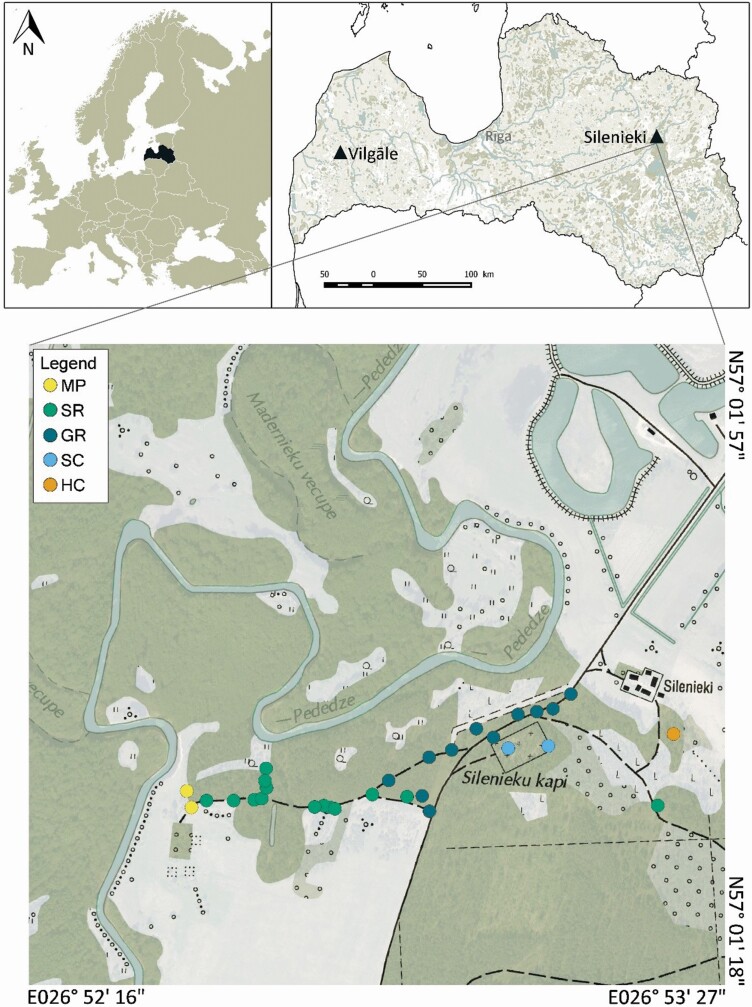
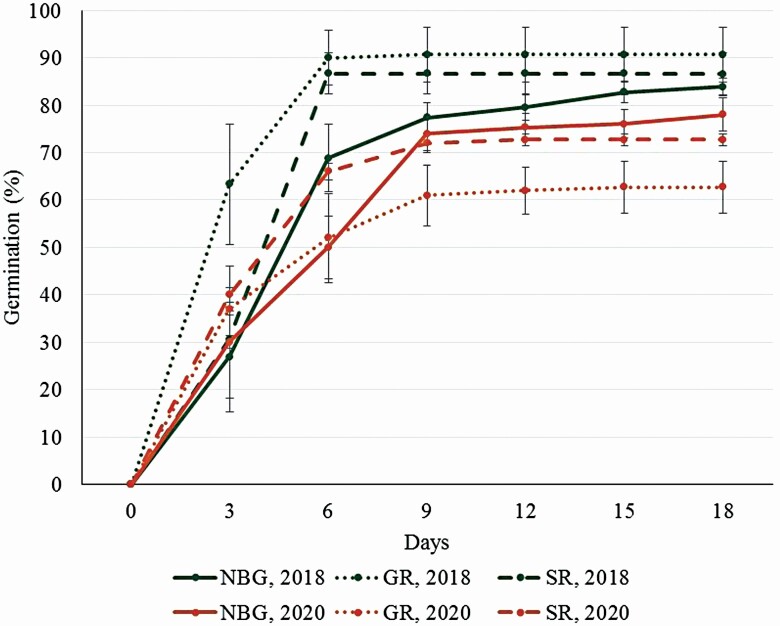
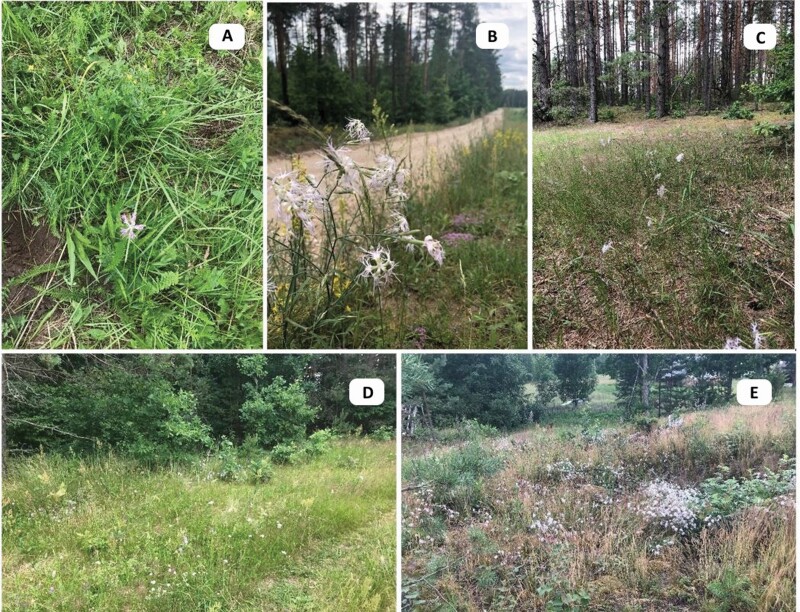
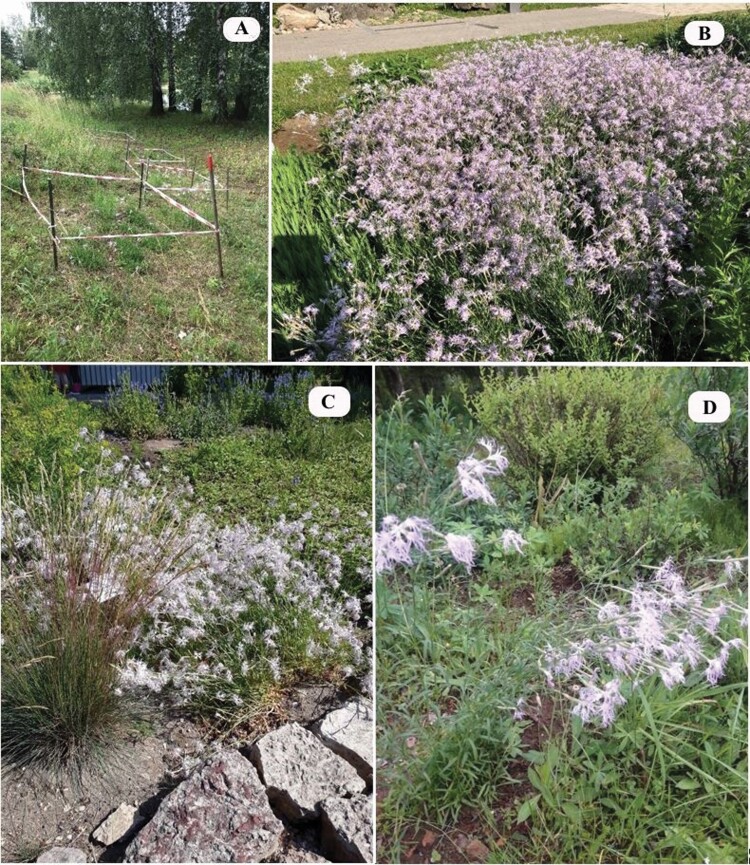
is one of the most endangered species in Latvia and is on the verge of local extinction. Therefore, the aim of this study was to inventory previously identified populations of in Latvia and to develop activities to conserve this species in accordance with the results obtained . Expeditions on 18 previously documented locations, according to the data of Nature Conservation Agency, revealed only three existing localities in Latvia with a significant number of specimens located in the Latgale region near Silenieki. In 2020, for the first time, two more new localities were found in the vicinity of these three approved locations. As it is not possible to create micro-reserves in the existing localities which are mainly located either on roadsides or in a cemetery, additional activities are needed to preserve the in Latvia. culture was initiated from shoot explants obtained , from which, in turn, plantings were done in the National Botanic Garden (NBG) and the Botanical Garden of the University of Latvia (BG UL). Their quality and compliance with plants were analysed. Overall, it was concluded that the plants grown were qualitatively equivalent to those obtained , as a very high percentage of seed viability and germination was found both for and growing . Based on the results obtained we could conclude that is a species that is able to adapt to different soils with a wide range of nutrient levels, moisture conditions and pH, as long as there are three main preconditions-adequate lighting, low overgrowth of other plant species and non-destructive human activities.
是拉脱维亚最濒危的物种之一,已濒临局部灭绝。因此,本研究的目的是对拉脱维亚先前确定的种群进行清查,并根据所得结果开展保护该物种的活动。根据自然保护局的数据,在18个先前有记录的地点进行考察后,发现拉脱维亚仅存三个有该物种的地点,大量标本位于锡莱涅基附近的拉特加莱地区。2020年,首次在这三个已获批地点附近又发现了两个新的该物种地点。由于在主要位于路边或墓地的现有地点无法设立微型保护区,因此需要开展额外活动来保护拉脱维亚的该物种。从获得的茎尖外植体开始培育该物种的培养物,进而在国家植物园(NBG)和拉脱维亚大学植物园(BG UL)进行种植。对其质量以及与植株的一致性进行了分析。总体而言,得出的结论是,所培育的植株在质量上与所获得的植株相当,因为在所培育和生长的该物种中都发现了非常高的种子活力和发芽率。根据所得结果我们可以得出结论,只要具备三个主要前提条件——充足的光照、其他植物物种的低覆盖率以及非破坏性的人类活动,该物种就能适应营养水平、湿度条件和pH值范围广泛的不同土壤。