Wei Q T, Liu B Y, Ji H Y, Lan Y F, Tang W H, Zhou J, Zhong X Y, Lian C L, Huang Q Z, Wang C Y, Xu Y M, Guo H B
Department of Neurosurgery Center, The National Key Clinical Specialty, The Engineering Technology Research Center of Education Ministry of China on Diagnosis and Treatment of Cerebrovascular Disease, Guangdong Provincial Key Laboratory on Brain Function Repair and Regeneration, The Neurosurgery Institute of Guangdong Province, Zhujiang Hospital, Southern Medical University, 253 Gongye Middle Avenue, Haizhu District, Guangzhou, Guangdong 510280, China.
Department of Neurosurgery, The First Affiliated Hospital of Shantou University, Shantou 515041, Guangdong, China.
Mol Ther Oncolytics. 2021 Aug 19;22:114-128. doi: 10.1016/j.omto.2021.08.004. eCollection 2021 Sep 24.
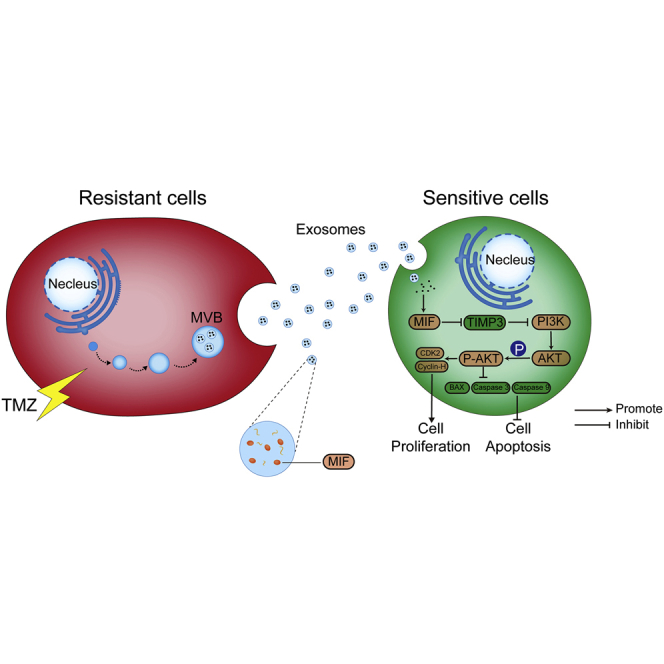
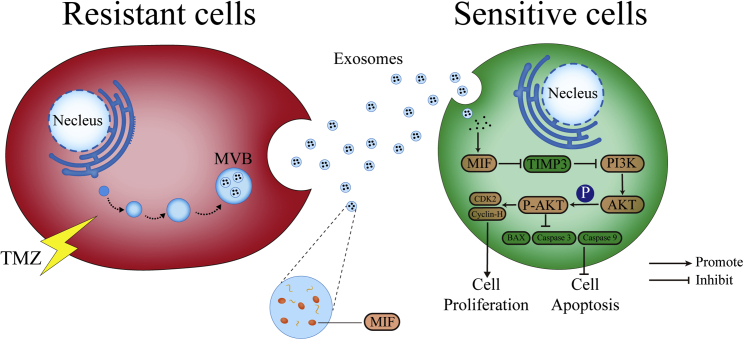
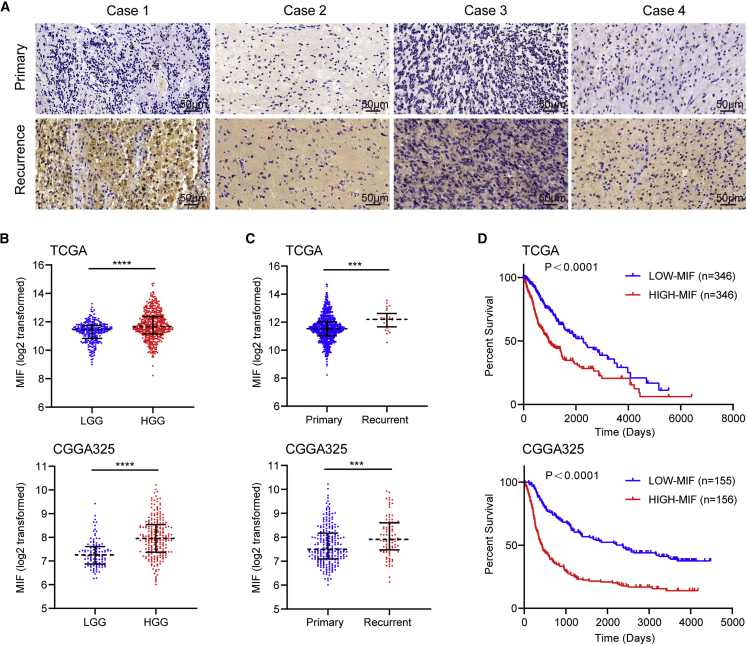
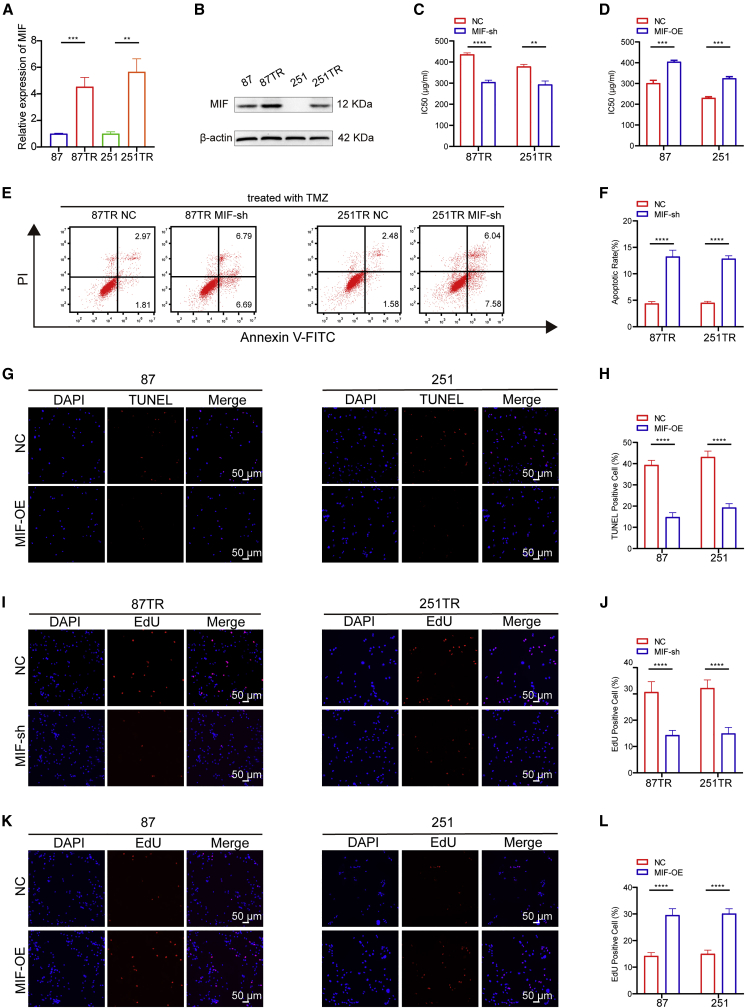
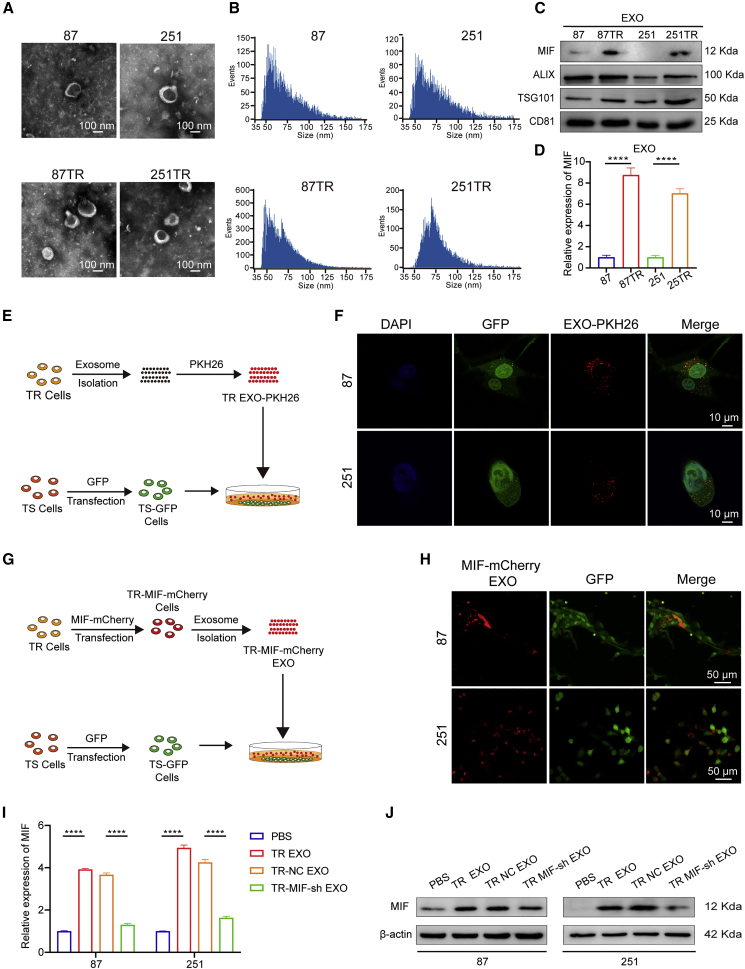
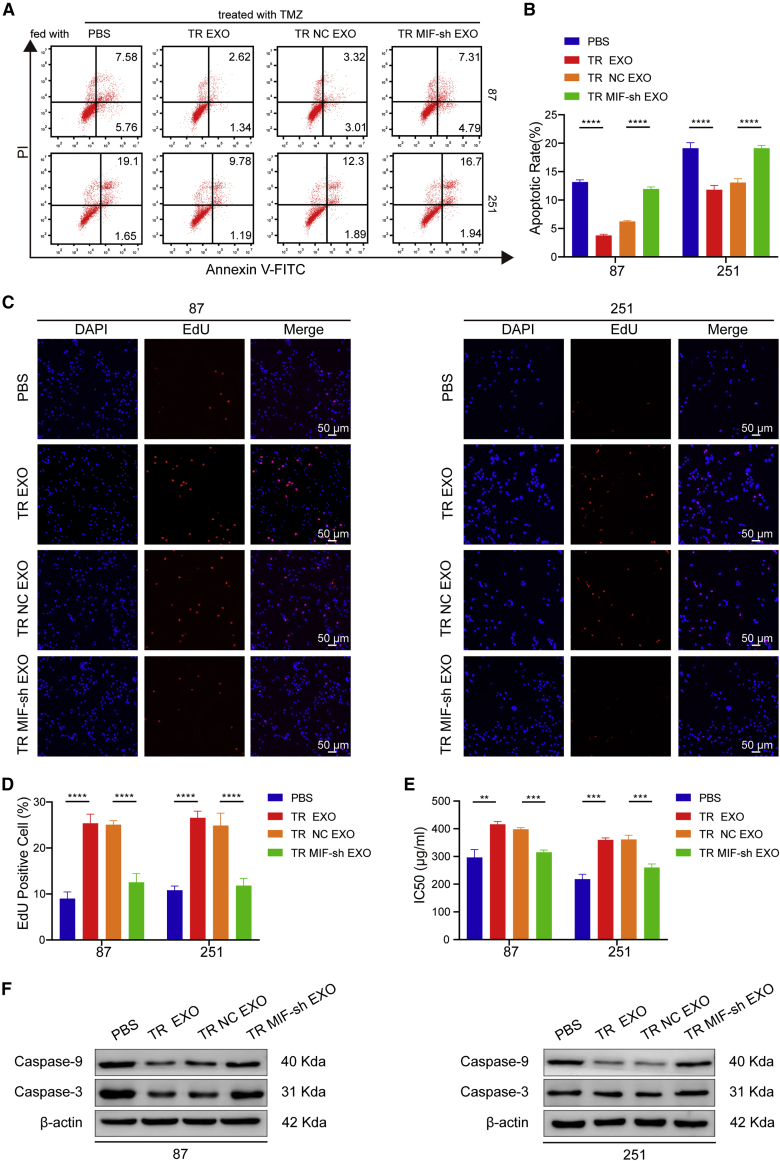
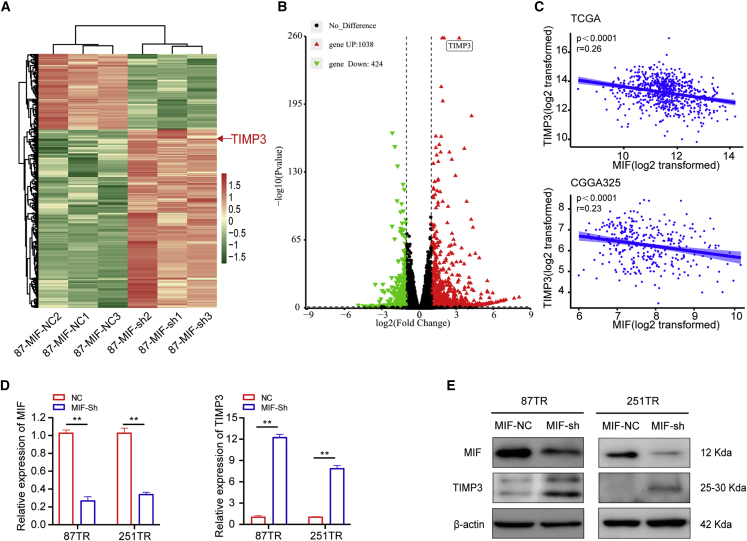
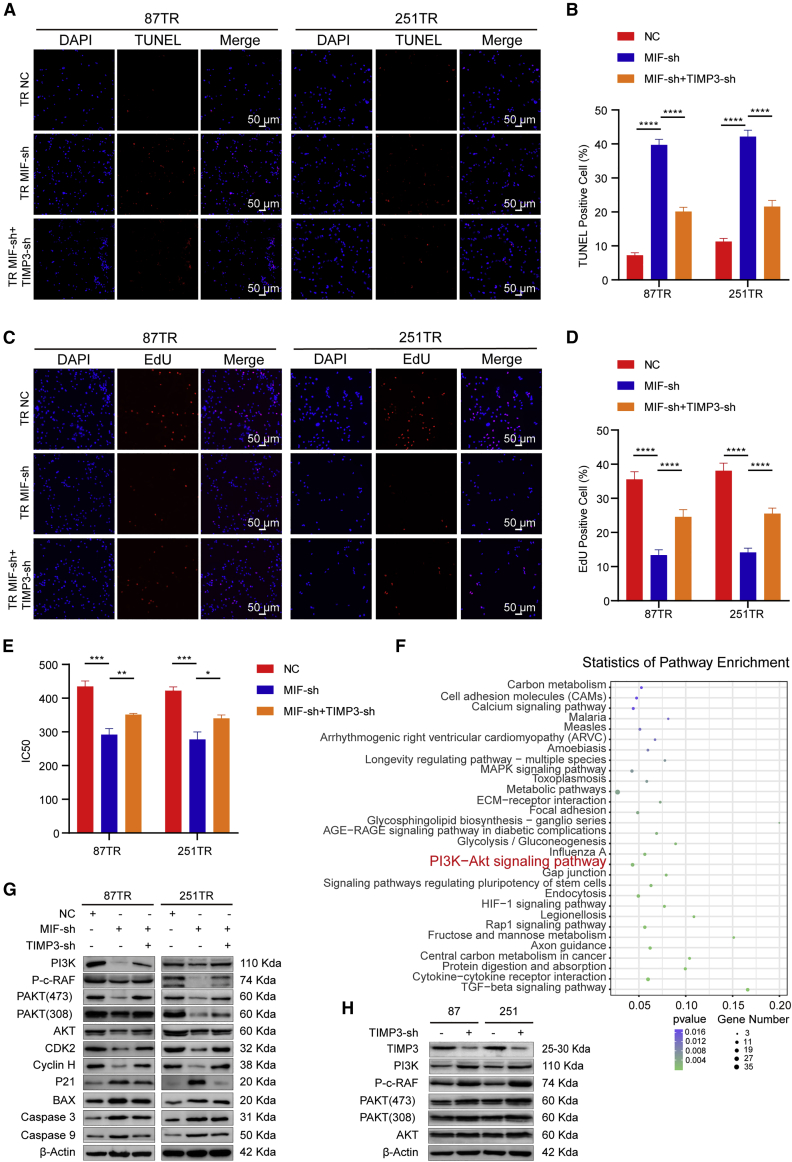
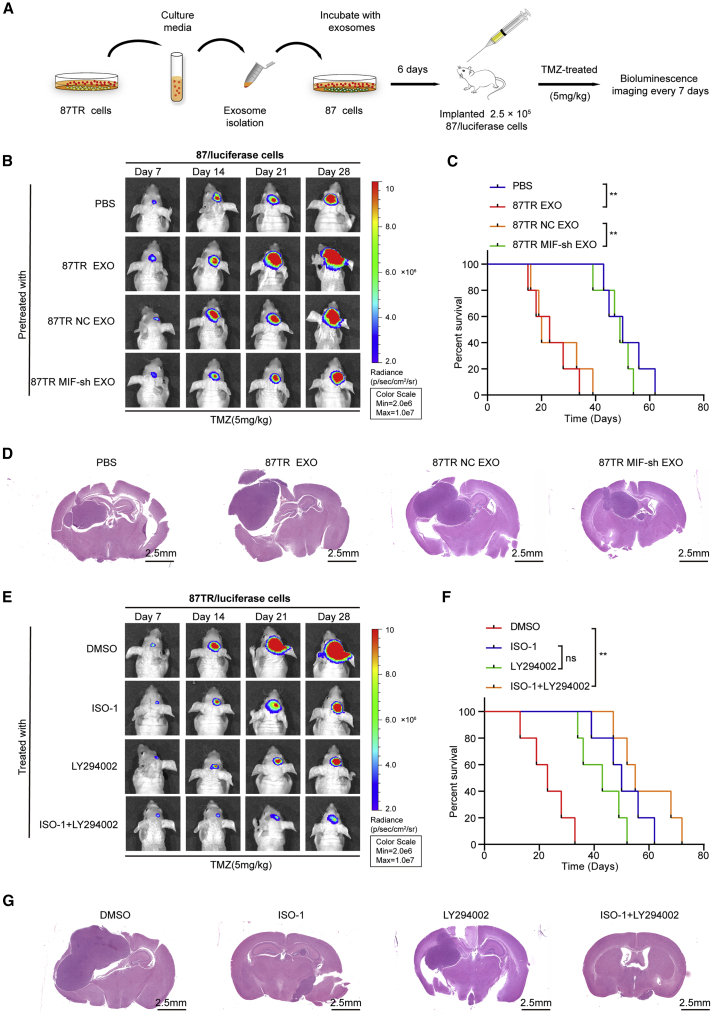
Temozolomide (TMZ) resistance is an important cause of clinical treatment failure and poor prognosis in gliomas. Increasing evidence indicates that cancer-derived exosomes contribute to chemoresistance; however, the specific contribution of glioma-derived exosomes remains unclear. The aim of this study was to explore the role and underlying mechanisms of exosomal macrophage migration inhibitory factor (MIF) on TMZ resistance in gliomas. We first demonstrated that MIF was upregulated in the exosomes of TMZ-resistant cells, engendering the transfer of TMZ resistance to sensitive cells. Our results indicated that exosomal MIF conferred TMZ resistance to sensitive cells through the enhancement of cell proliferation and the repression of cell apoptosis upon TMZ exposure. MIF knockdown enhanced TMZ sensitivity in resistant glioma cells by upregulating Metalloproteinase Inhibitor 3 (TIMP3) and subsequently suppressing the PI3K/AKT signaling pathway. Additionally, exosomal MIF promoted tumor growth and TMZ resistance of glioma cells , while IOS-1 (MIF inhibitor) promotes glioma TMZ sensitive . Taken together, our study demonstrated that exosome-mediated transfer of MIF enhanced TMZ resistance in glioma through downregulating TIMP3 and further activating the PI3K/AKT signaling pathway, highlighting a prognostic biomarker and promising therapeutic target for TMZ treatment in gliomas.
替莫唑胺(TMZ)耐药是胶质瘤临床治疗失败和预后不良的重要原因。越来越多的证据表明,癌症来源的外泌体促成了化疗耐药;然而,胶质瘤来源的外泌体的具体作用仍不清楚。本研究的目的是探讨外泌体巨噬细胞迁移抑制因子(MIF)在胶质瘤TMZ耐药中的作用及潜在机制。我们首先证明,MIF在TMZ耐药细胞的外泌体中上调,导致TMZ耐药转移至敏感细胞。我们的结果表明,外泌体MIF通过增强细胞增殖和抑制TMZ暴露后的细胞凋亡,赋予敏感细胞TMZ耐药性。MIF敲低通过上调金属蛋白酶抑制剂3(TIMP3)并随后抑制PI3K/AKT信号通路,增强耐药胶质瘤细胞对TMZ的敏感性。此外,外泌体MIF促进胶质瘤细胞的肿瘤生长和TMZ耐药,而IOS-1(MIF抑制剂)促进胶质瘤对TMZ敏感。综上所述,我们的研究表明,外泌体介导的MIF转移通过下调TIMP3并进一步激活PI3K/AKT信号通路增强了胶质瘤的TMZ耐药性,突出了一种预后生物标志物以及胶质瘤TMZ治疗的有前景的治疗靶点。