Melzer Fiona, Geisler Corinna, Schulte Dominik M, Laudes Matthias
Institute of Diabetes and Clinical Metabolic Research, Kiel, Germany.
Department of Medicine 1, Division of Endocrinology, Diabetes and Clinical Nutrition, University Hospital of Schleswig-Holstein, Kiel, Germany.
Endocrinol Diabetes Metab Case Rep. 2021 Sep 1;2021. doi: 10.1530/EDM-21-0082.
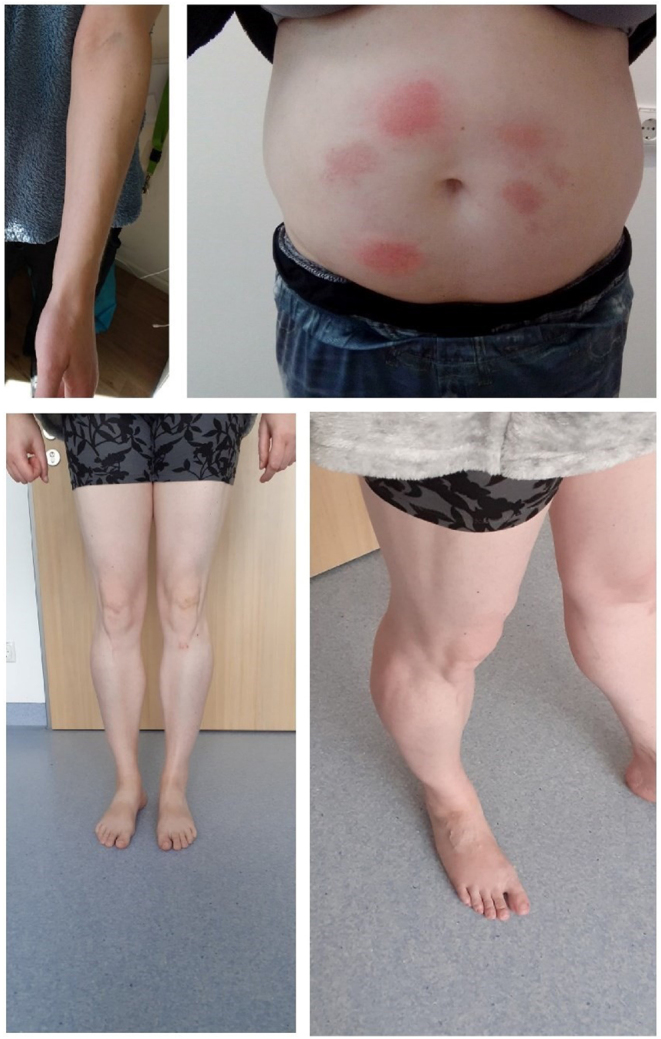
Familial partial lipodystrophy (FPLD) syndromes are rare heterogeneous disorders especially in women characterized by selective loss of adipose tissue, reduced leptin levels and severe metabolic abnormalities. Here we report a 34-year-old female with a novel heterozygotic c.485 thymine>guanine (T>G) missense variant (p.phenylalanine162cysteine; (Phe162Cys)) in exon 4 of the peroxisome proliferator-activated receptor gamma (PPARG) gene, developing a non-ketotic diabetes and severe hypertriglyceridemia with triglyceride concentrations >50 mmol/L. In this case, a particular interesting feature in comparison to other known PPARG mutations in FPLD is that while glycaemic control could be achieved through standard anti-diabetic medication, hypertriglyceridemia did neither respond to fibrate nor to omega-3-fatty acid therapy. This might suggest a lipid metabolism driven phenotype of the novel PPARG c.485T>G missense variant. Notably, recombinant leptin replacement therapy (metreleptin (Myalepta®)) was initiated showing a rapid and profound effect on triglyceride levels as well as on liver function tests and satiety feeling. Unfortunately, severe allergic skin reactions developed at the side of injection which could be covered by anti-histaminc treatment. We conclude that the heterozygous PPARG c.485T>G variant is a yet undescribed molecular basis underlying FPLD with difficulties predominantly to control hypertriglyceridemia and that recombinant leptin therapy may be effective in affected subjects.
Heterozygous c.485T>G variant in PPARG is most likely a cause for FPLD in humans. This variant results in a special metabolic phenotype with a predominant dysregulation of triglyceride metabolism not responding to standard lipid lowering therapy. Recombinant leptin therapy is effective in rapidly improving hypertriglyceridemia.
家族性部分脂肪营养不良(FPLD)综合征是罕见的异质性疾病,在女性中尤为常见,其特征为脂肪组织选择性丢失、瘦素水平降低以及严重的代谢异常。在此,我们报告一名34岁女性,其过氧化物酶体增殖物激活受体γ(PPARG)基因第4外显子存在一种新的杂合性c.485胸腺嘧啶>鸟嘌呤(T>G)错义变异(p.苯丙氨酸162半胱氨酸;(Phe162Cys)),该患者患有非酮症糖尿病和严重高甘油三酯血症,甘油三酯浓度>50 mmol/L。在该病例中,与FPLD中其他已知的PPARG突变相比,一个特别有趣的特征是,虽然通过标准抗糖尿病药物可实现血糖控制,但高甘油三酯血症对贝特类药物和ω-3脂肪酸治疗均无反应。这可能提示新的PPARG c.485T>G错义变异具有脂质代谢驱动的表型。值得注意的是,开始使用重组瘦素替代疗法(米泊美生(Myalepta®)),该疗法对甘油三酯水平、肝功能检查和饱腹感均显示出快速而显著的效果。不幸的是,注射部位出现了严重的过敏性皮肤反应,可通过抗组胺治疗加以控制。我们得出结论,杂合性PPARG c.485T>G变异是FPLD尚未被描述的分子基础,主要难以控制高甘油三酯血症,且重组瘦素疗法可能对受影响的患者有效。
PPARG中的杂合性c.485T>G变异很可能是人类FPLD的病因。该变异导致一种特殊的代谢表型,主要表现为甘油三酯代谢失调,对标准降脂治疗无反应。重组瘦素疗法可有效快速改善高甘油三酯血症。