University of Zagreb Faculty of Pharmacy and Biochemistry, Zagreb, Croatia.
Department of Twin Research and Genetic Epidemiology, King's College London, London, UK.
BMJ Open Diabetes Res Care. 2021 Sep;9(1). doi: 10.1136/bmjdrc-2021-002263.
Prediction of type 2 diabetes mellitus (T2DM) and its preceding factors, such as insulin resistance (IR), is of great importance as it may allow delay or prevention of onset of the disease. Plasma protein N-glycome has emerged as a promising predictive biomarker. In a prospective longitudinal study, we included patients with a first diagnosis of impaired glucose metabolism (IR or T2DM) to investigate the N-glycosylation's predictive value years before diabetes development.
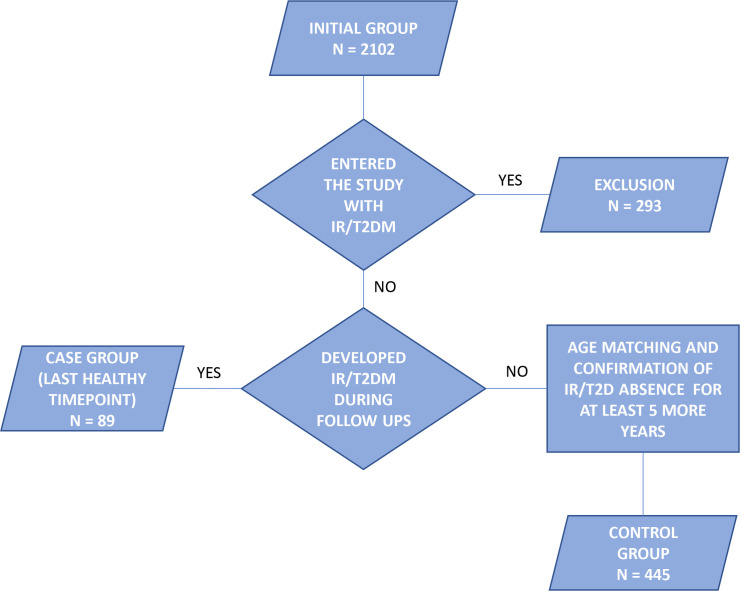
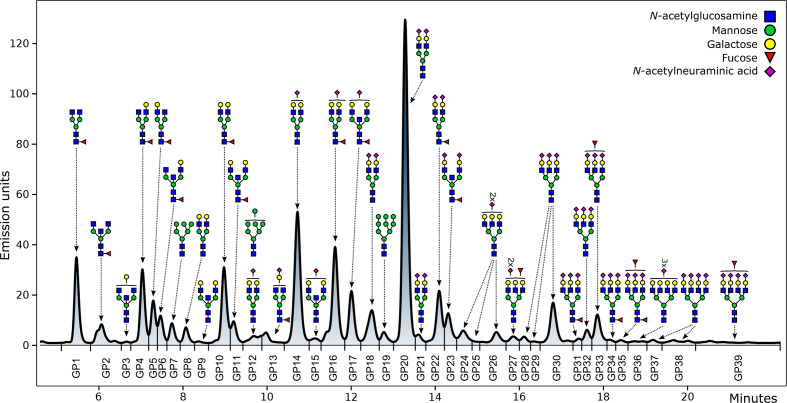
Plasma protein N-glycome was profiled by hydrophilic interaction ultra-performance liquid chromatography in 534 TwinsUK participants free from disease at baseline. This included 89 participants with incident diagnosis of IR or T2DM during the follow-up period (7.14±3.04 years) whose last sample prior to diagnosis was compared using general linear regression with 445 age-matched unrelated controls. Findings were replicated in an independent cohort. Changes in N-glycome have also been presented in connection with time to diagnosis.
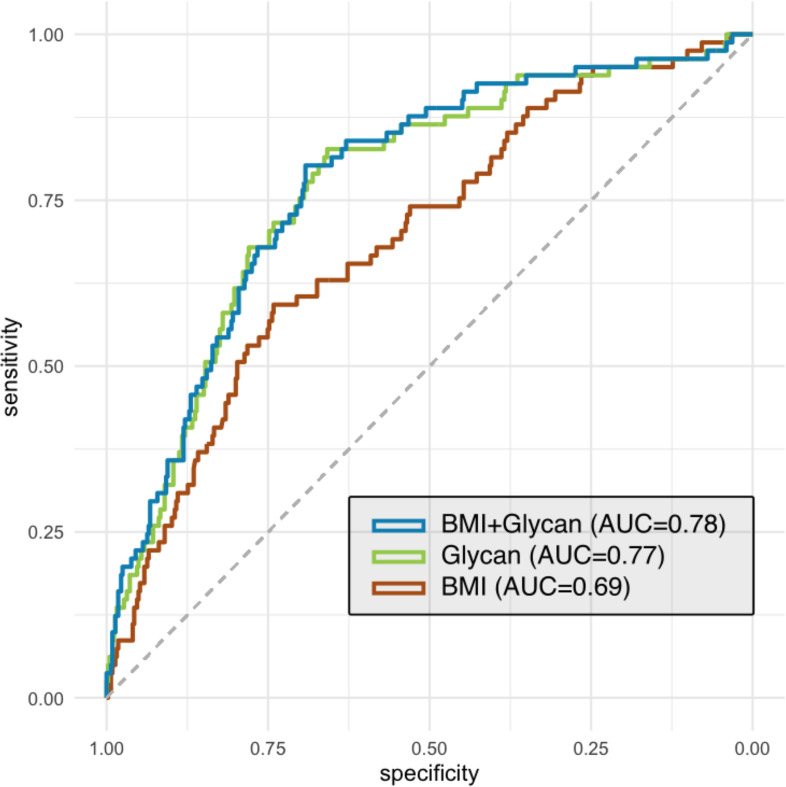
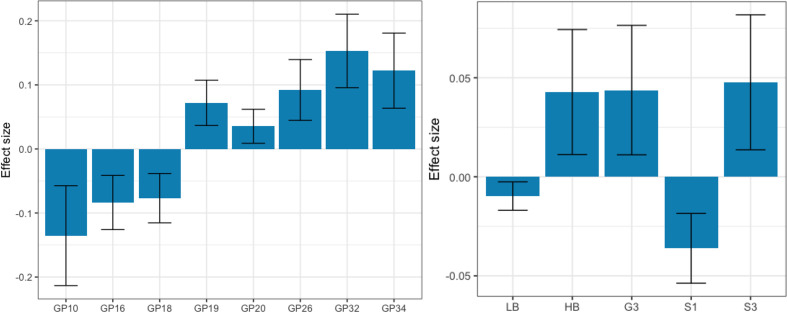
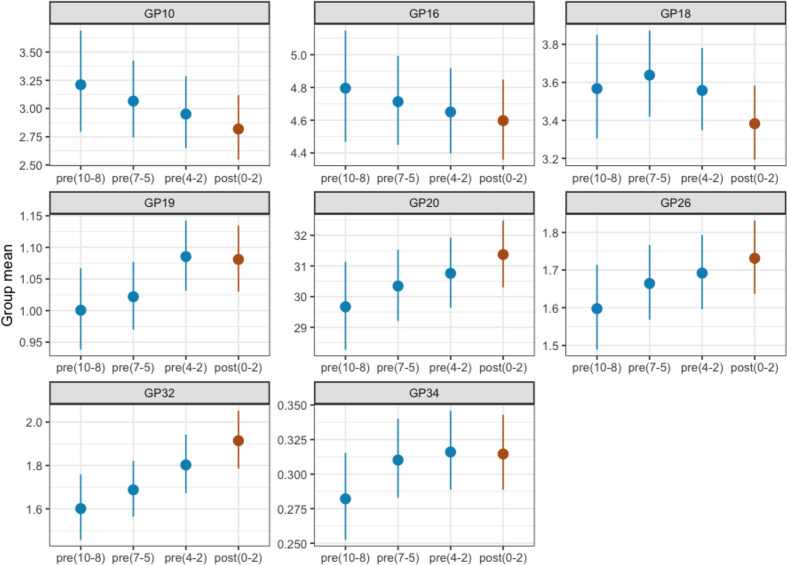
Eight groups of plasma N-glycans were different between incident IR or T2DM cases and controls (p<0.05) after adjusting for multiple testing using Benjamini-Hochberg correction. These differences were noticeable up to 10 years prior to diagnosis and are changing continuously as becoming more expressed toward the diagnosis. The prediction model was built using significant glycan traits, displaying a discriminative performance with an area under the receiver operating characteristic curve of 0.77.
In addition to previous studies, we showed the diagnostic potential of plasma N-glycome in the prediction of both IR and T2DM development years before the clinical manifestation and indicated the continuous deterioration of N-glycome toward the diagnosis.
预测 2 型糖尿病(T2DM)及其前因,如胰岛素抵抗(IR),非常重要,因为它可能有助于延迟或预防疾病的发生。血浆蛋白 N-糖组已成为有前途的预测生物标志物。在一项前瞻性纵向研究中,我们纳入了首次诊断为葡萄糖代谢受损(IR 或 T2DM)的患者,以研究 N-糖基化在糖尿病发生前数年的预测价值。
在基线时,534 名无疾病的 TwinsUK 参与者中通过亲水相互作用超高效液相色谱法对血浆蛋白 N-糖组进行了分析。其中 89 名参与者在随访期间(7.14±3.04 年)发生了 IR 或 T2DM 的确诊,他们在诊断前的最后一次样本与 445 名年龄匹配的无关对照使用一般线性回归进行了比较。结果在独立队列中得到了复制。还根据与诊断的时间关系展示了 N-聚糖的变化。
在使用 Benjamini-Hochberg 校正进行多重检验调整后,8 组血浆 N-聚糖在 IR 或 T2DM 病例和对照组之间存在差异(p<0.05)。这些差异在诊断前 10 年就已经很明显,并且随着诊断的临近,这些差异在不断变化。使用显著的聚糖特征构建了预测模型,显示出 0.77 的接收者操作特征曲线下面积的区分性能。
除了之前的研究,我们还展示了血浆 N-糖组在预测 IR 和 T2DM 发展方面的诊断潜力,这些预测在临床表现前数年就已经存在,并表明 N-糖组在向诊断方向的恶化是连续的。