Garvan Institute of Medical Research, Darlinghurst, NSW, Australia.
CSIRO Data61, Canberra, ACT, Australia.
Mol Syst Biol. 2021 Sep;17(9):e10079. doi: 10.15252/msb.202010079.
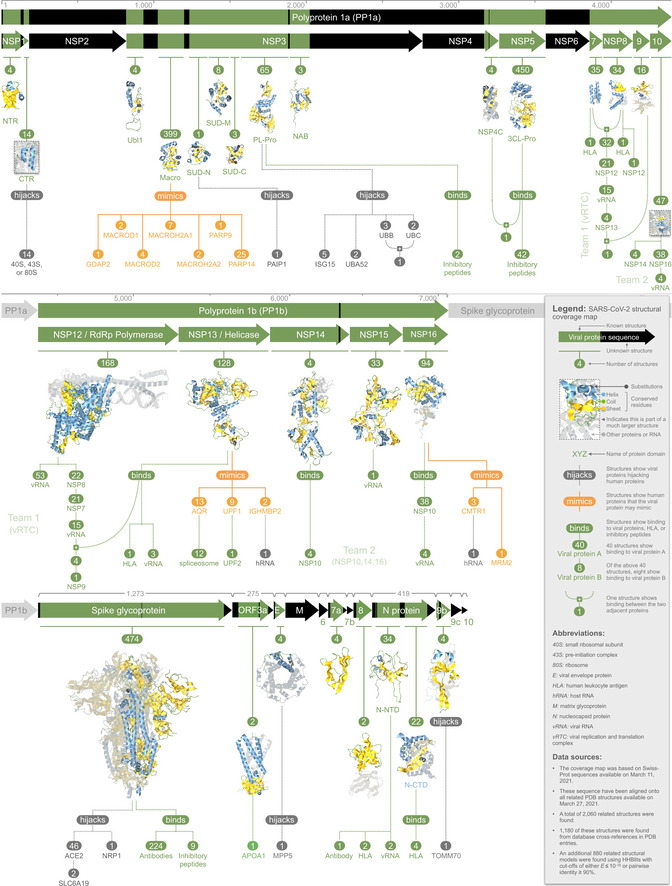
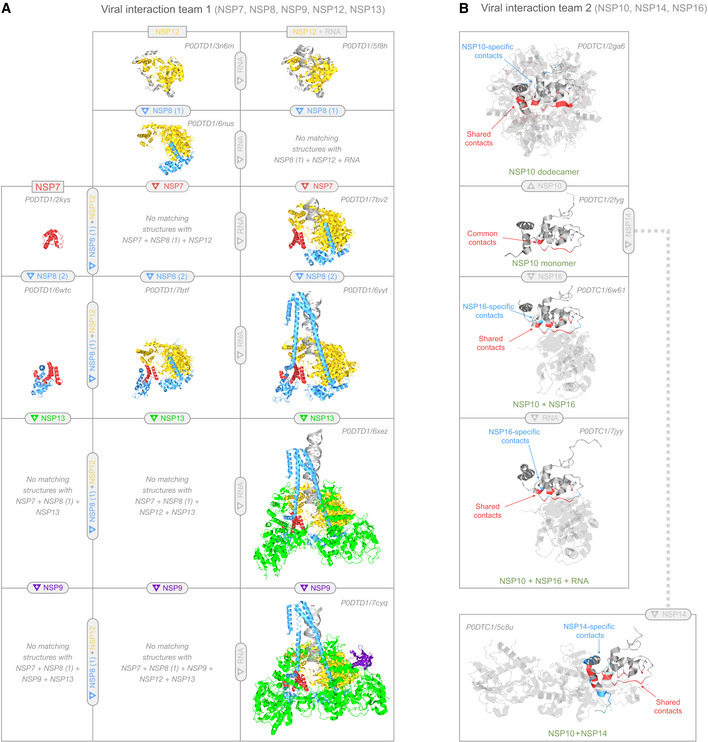
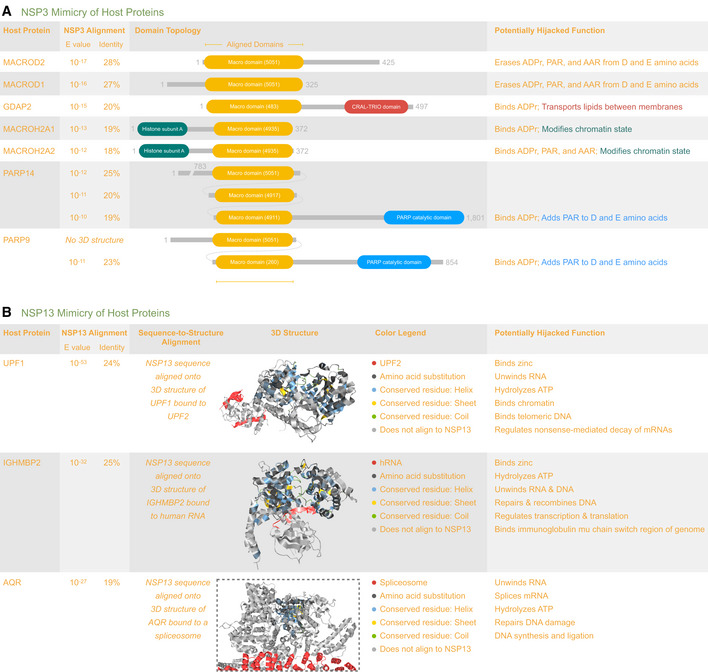
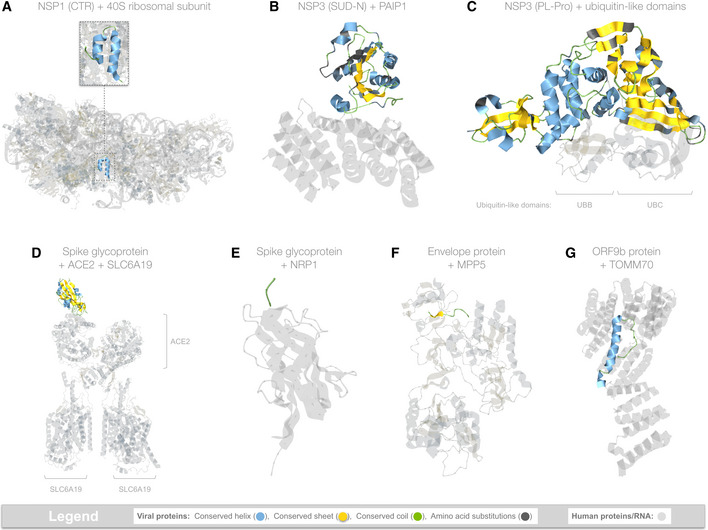
We modeled 3D structures of all SARS-CoV-2 proteins, generating 2,060 models that span 69% of the viral proteome and provide details not available elsewhere. We found that ˜6% of the proteome mimicked human proteins, while ˜7% was implicated in hijacking mechanisms that reverse post-translational modifications, block host translation, and disable host defenses; a further ˜29% self-assembled into heteromeric states that provided insight into how the viral replication and translation complex forms. To make these 3D models more accessible, we devised a structural coverage map, a novel visualization method to show what is-and is not-known about the 3D structure of the viral proteome. We integrated the coverage map into an accompanying online resource (https://aquaria.ws/covid) that can be used to find and explore models corresponding to the 79 structural states identified in this work. The resulting Aquaria-COVID resource helps scientists use emerging structural data to understand the mechanisms underlying coronavirus infection and draws attention to the 31% of the viral proteome that remains structurally unknown or dark.
我们对所有 SARS-CoV-2 蛋白的 3D 结构进行建模,生成了 2060 个模型,涵盖了病毒蛋白质组的 69%,提供了其他地方无法获得的详细信息。我们发现,蛋白质组的约 6%模拟了人类蛋白质,而约 7%参与劫持逆转翻译后修饰、阻断宿主翻译和使宿主防御失效的机制;还有进一步的约 29% 自组装成异源状态,深入了解病毒复制和翻译复合物是如何形成的。为了使这些 3D 模型更容易访问,我们设计了一个结构覆盖图,这是一种新颖的可视化方法,可以显示病毒蛋白质组的 3D 结构已知和未知的部分。我们将覆盖图集成到一个配套的在线资源(https://aquaria.ws/covid)中,可以用来查找和探索与本工作中确定的 79 种结构状态相对应的模型。由此产生的 Aquaria-COVID 资源帮助科学家利用新兴的结构数据来了解冠状病毒感染的机制,并引起人们对蛋白质组中仍有 31%的结构未知或黑暗的关注。