Department of Biology, Boston College, Chestnut Hill, MA 02467.
Mol Biol Cell. 2021 Nov 1;32(21):ar27. doi: 10.1091/mbc.E21-06-0324. Epub 2021 Sep 15.
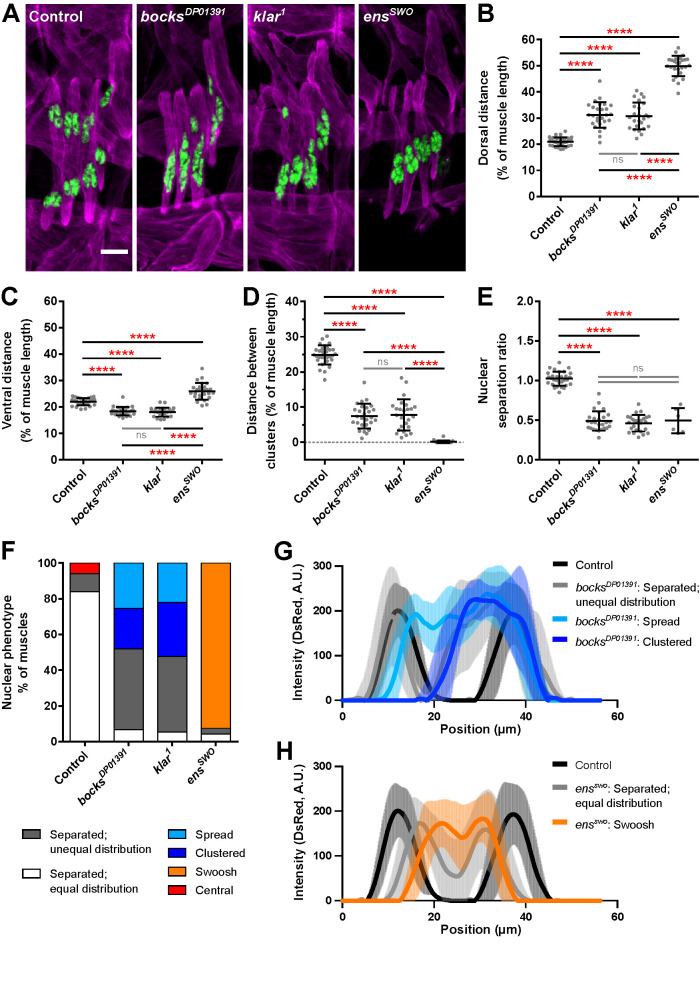
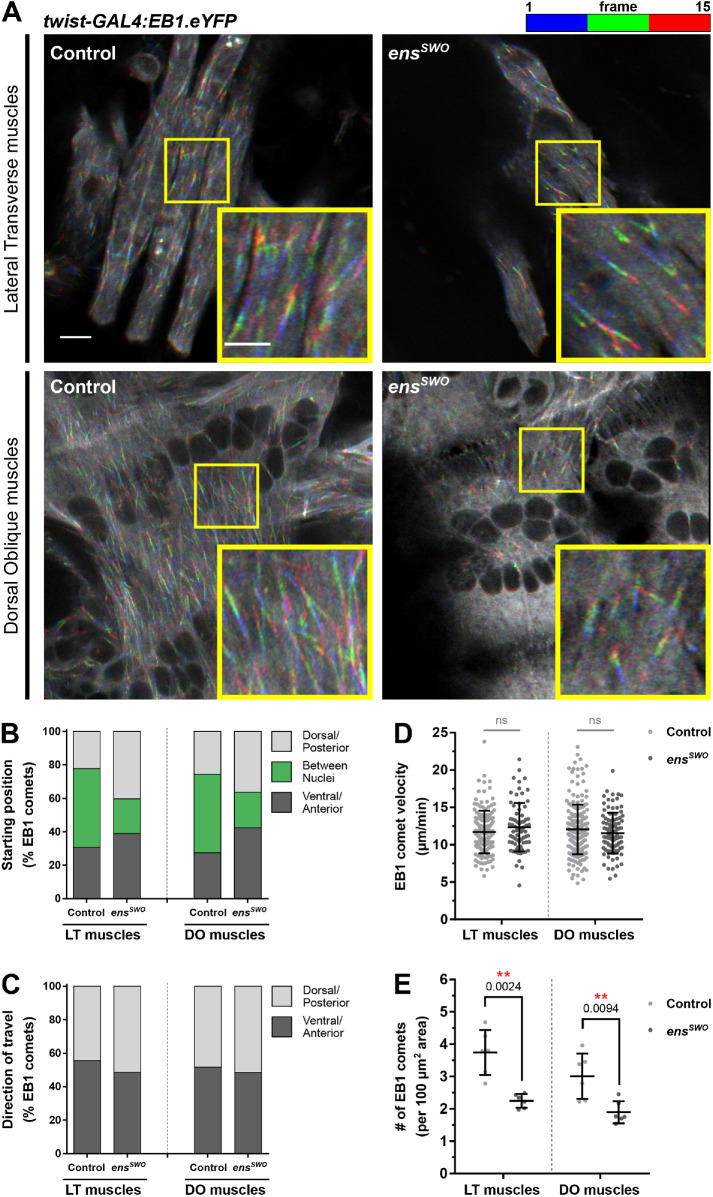
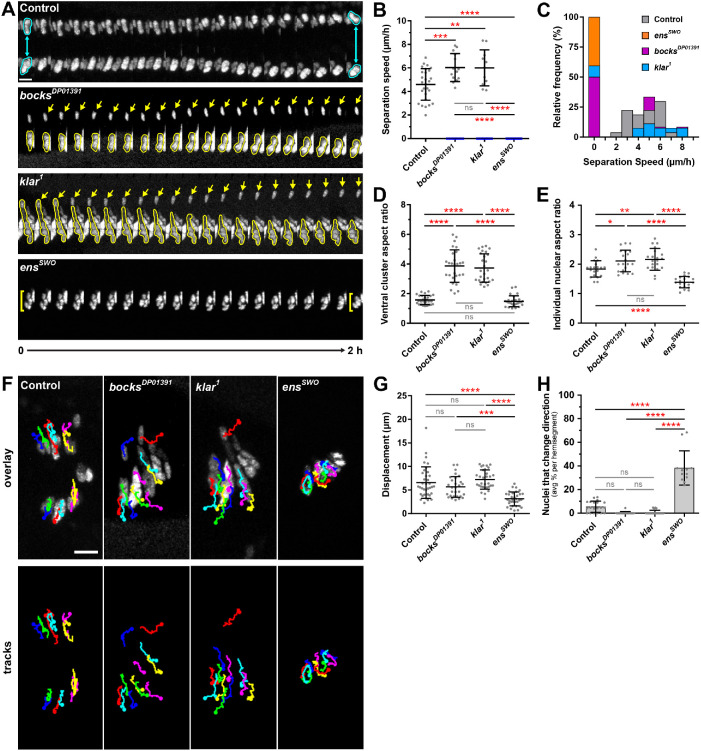
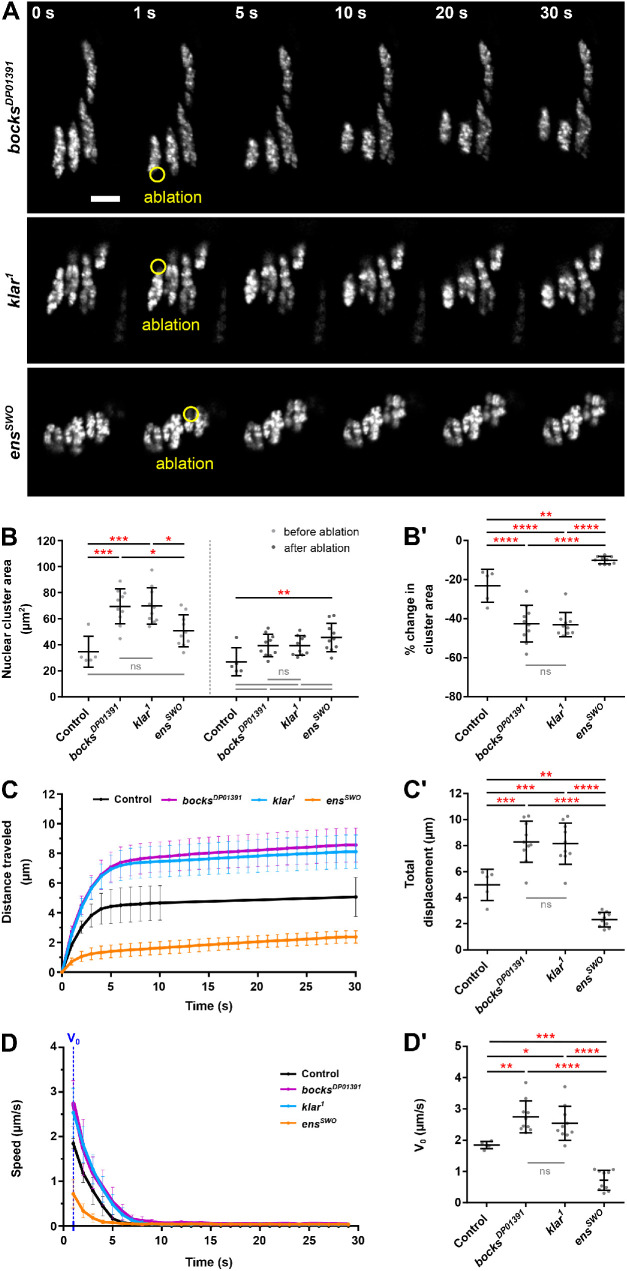
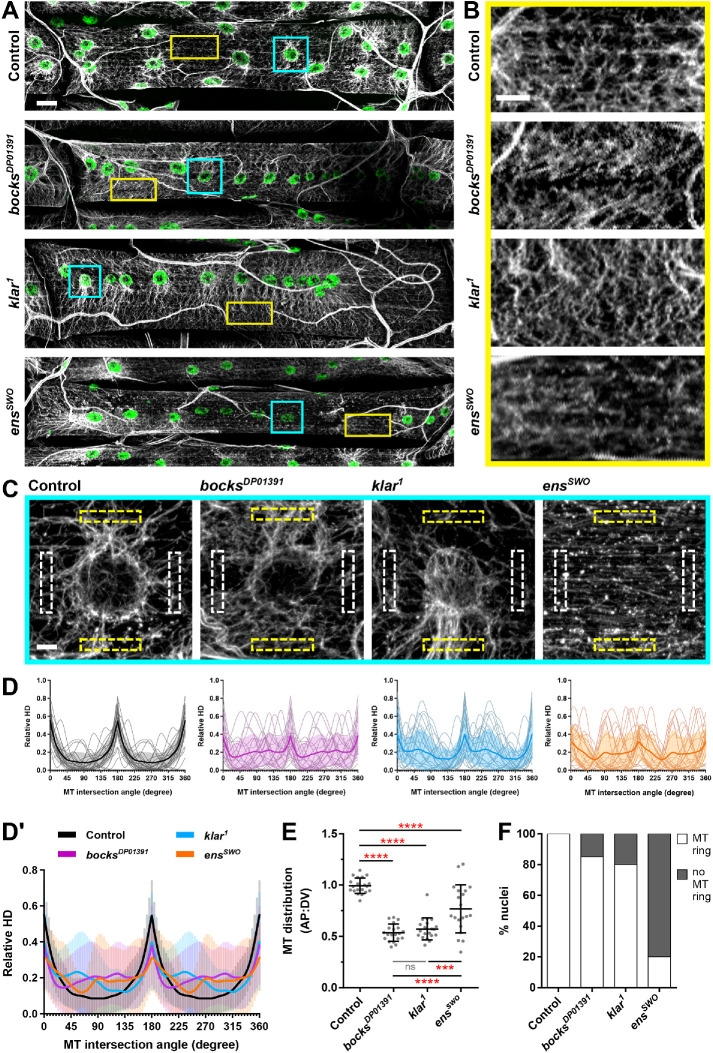
Nuclear movement is a fundamental process of eukaryotic cell biology. Skeletal muscle presents an intriguing model to study nuclear movement because its development requires the precise positioning of multiple nuclei within a single cytoplasm. Furthermore, there is a high correlation between aberrant nuclear positioning and poor muscle function. Although many genes that regulate nuclear movement have been identified, the mechanisms by which these genes act are not known. Using muscle development as a model system and a combination of live-embryo microscopy and laser ablation of nuclei, we have found that clustered nuclei encompass at least two phenotypes that are caused by distinct mechanisms. Specifically, Ensconsin is necessary for productive force production to drive any movement of nuclei, whereas Bocksbeutel and Klarsicht are necessary to form distinct populations of nuclei that move to different cellular locations. Mechanistically, Ensconsin regulates the number of growing microtubules that are used to move nuclei, whereas Bocksbeutel and Klarsicht regulate interactions between nuclei.
核运动是真核细胞生物学的一个基本过程。骨骼肌是研究核运动的一个有趣模型,因为它的发育需要在单个细胞质内精确定位多个细胞核。此外,核定位异常与肌肉功能不良之间存在高度相关性。尽管已经鉴定出许多调节核运动的基因,但这些基因的作用机制尚不清楚。我们使用肌肉发育作为模型系统,结合活胚胎显微镜和核激光消融技术,发现聚集的核至少包含两种表型,它们由不同的机制引起。具体来说,Ensconsin 对于产生有效的力来驱动核的任何运动是必需的,而 Bocksbeutel 和 Klarsicht 对于形成移动到不同细胞位置的不同核群体是必需的。从机制上讲,Ensconsin 调节用于移动核的生长微管的数量,而 Bocksbeutel 和 Klarsicht 调节核之间的相互作用。