Swansea University, Swansea, SA2 8PP, UK.
Department of Physics, Umm Al-Qura University, Makkah, Saudi Arabia.
Sci Rep. 2021 Sep 15;11(1):18362. doi: 10.1038/s41598-021-96026-y.
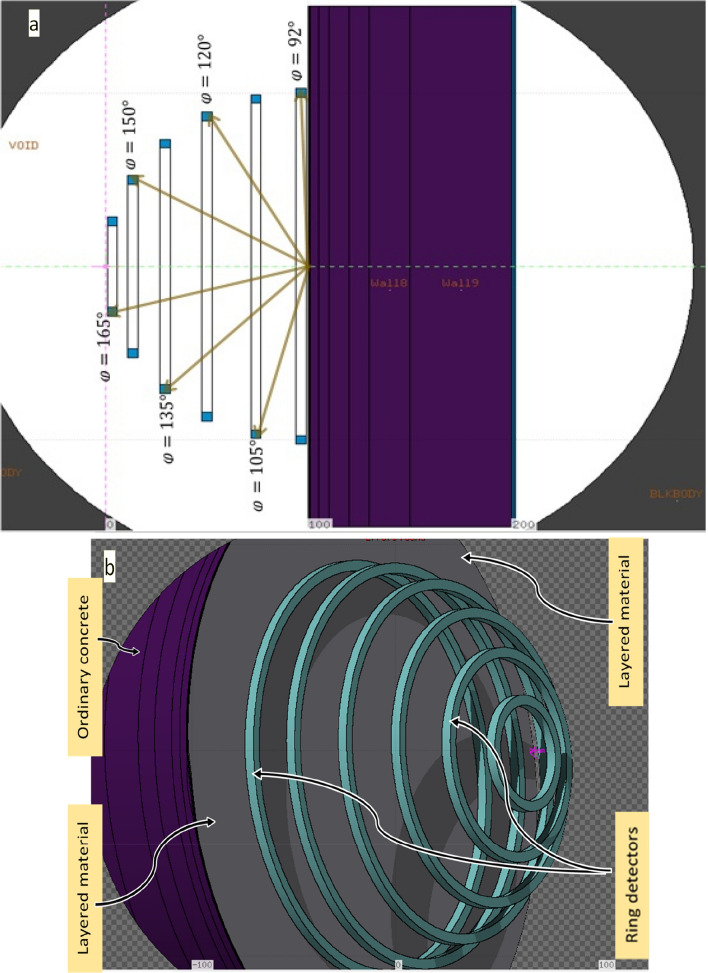
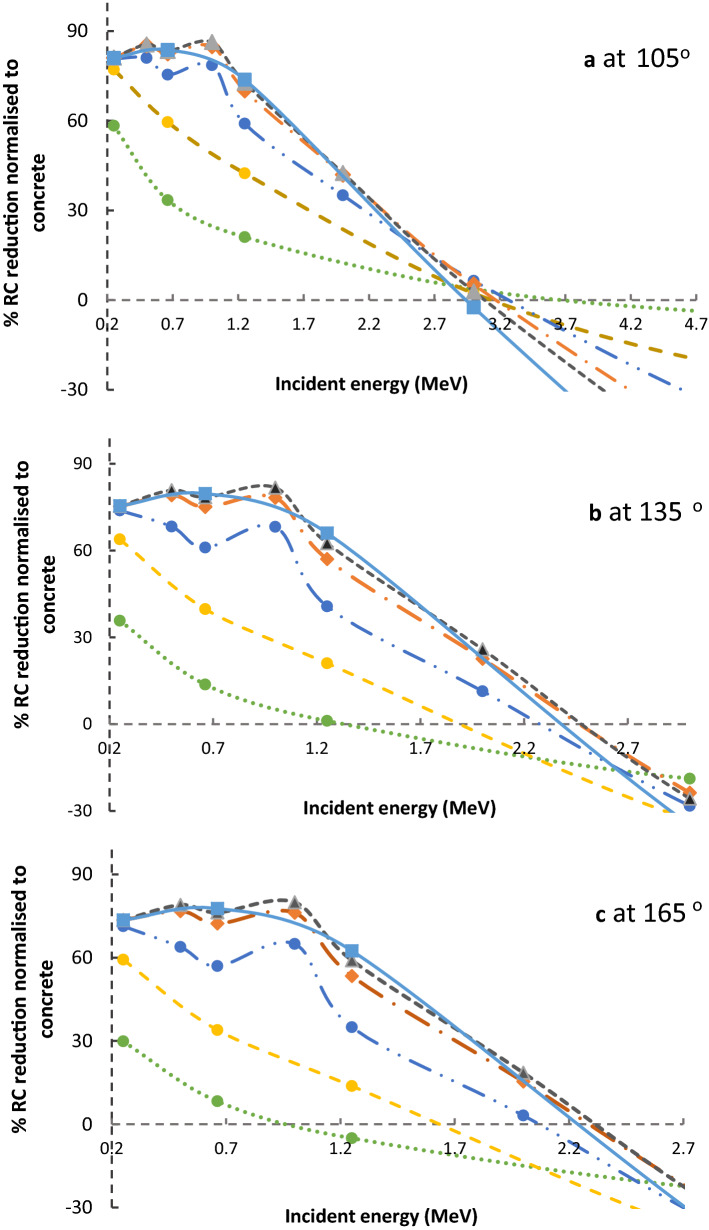
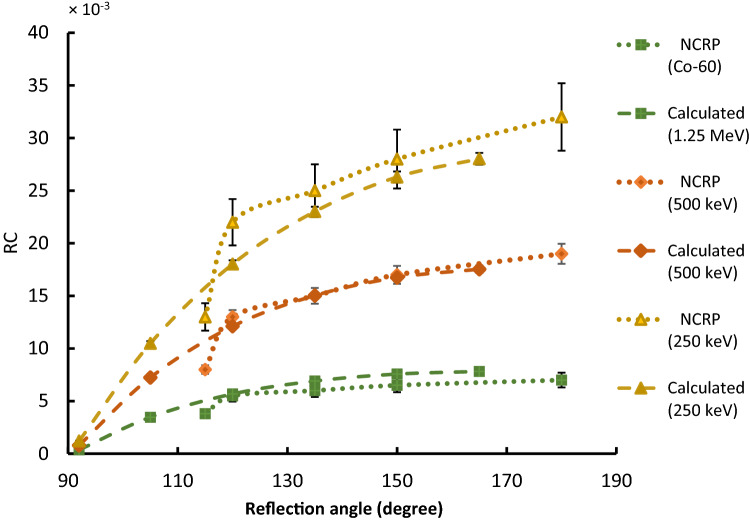
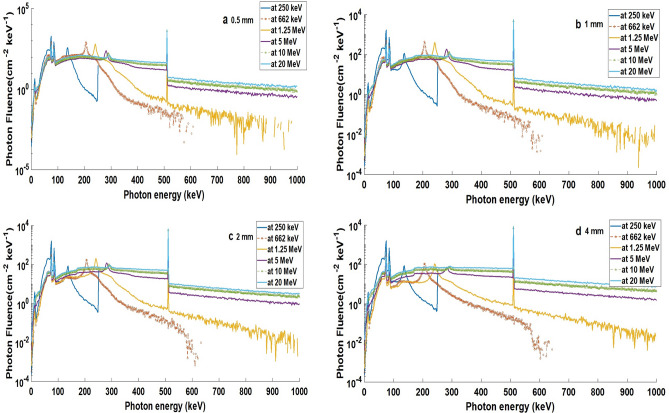
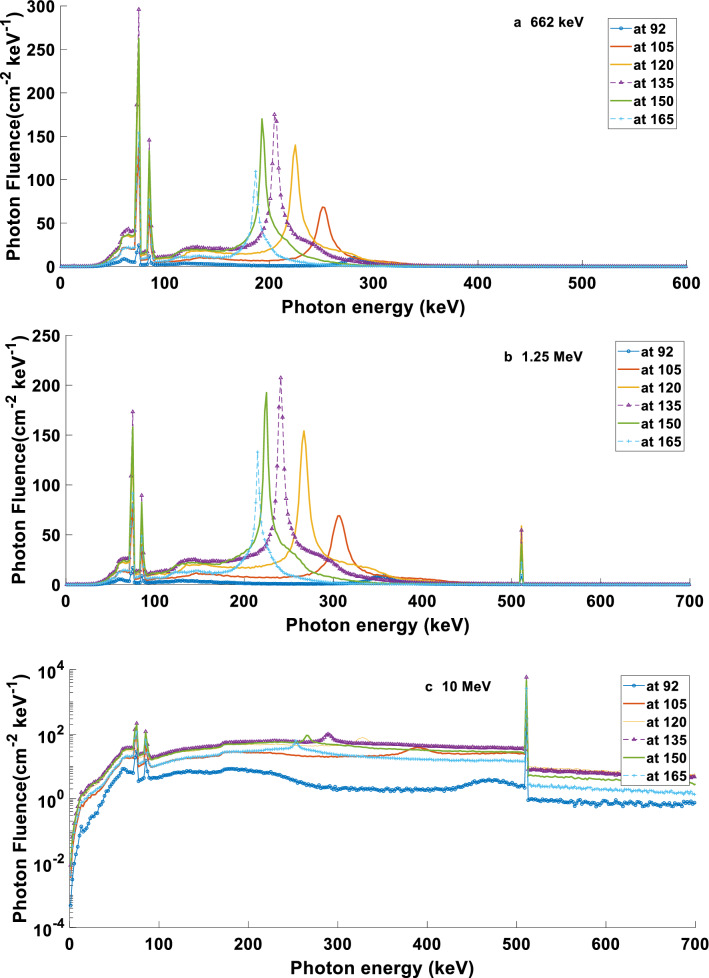
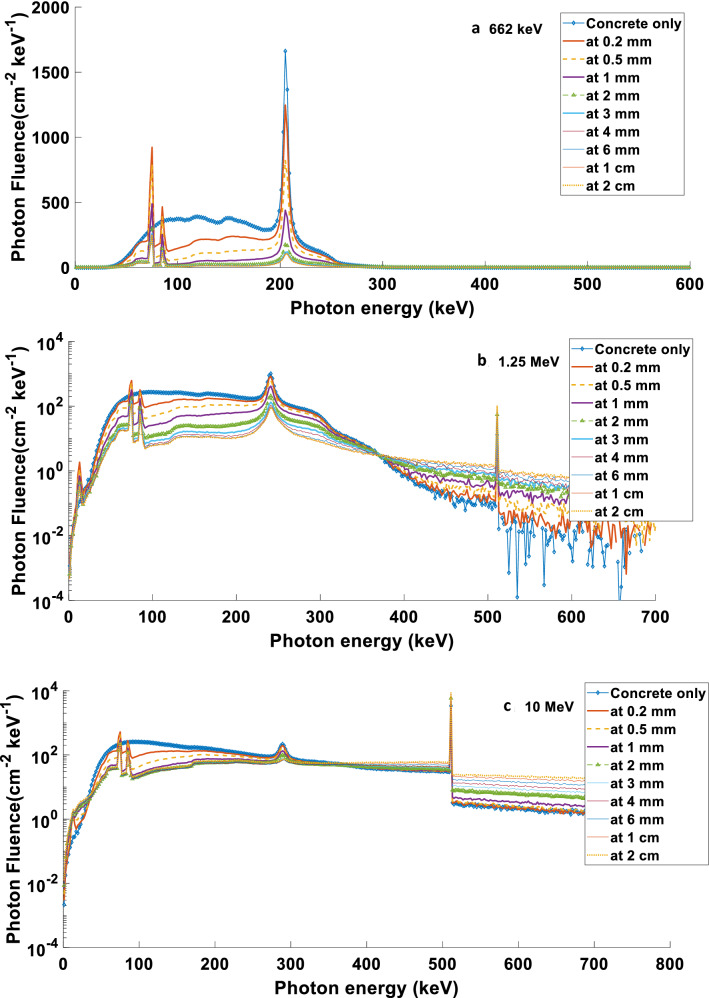
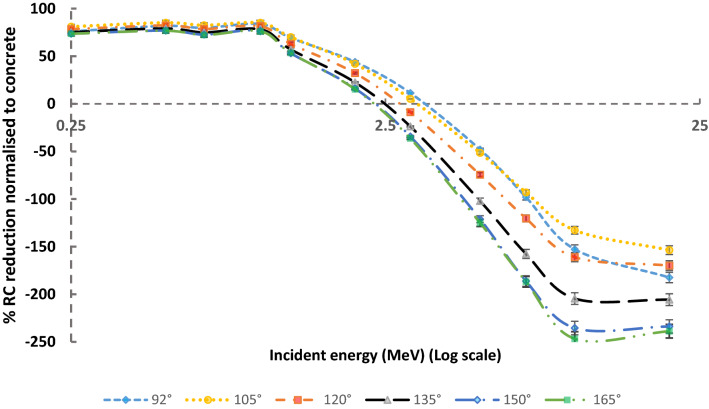
There is an increased interest in determining the photon reflection coefficient for layered systems consisting of lead (Pb) and concrete. The generation of accurate reflection coefficient data has implications for many fields, especially radiation protection, industry, and radiotherapy room design. Therefore, this study aims to calculate the reflection coefficients of photons for various lead thicknesses covering the concrete. This new data for lead, layered over concrete, supports various applications, such as an improved design of the mazes used for radiotherapy rooms, which helps to reduce cost and space requirements. The FLUKA Monte Carlo code was used to calculate photon reflection coefficients for a concrete wall with different energies. The reflection coefficient was also calculated for a concrete wall covered by varying thicknesses of lead to study the effect of lining this metal on the concrete wall. The concrete's reflection coefficient data were compared to internationally published data and showed that Monte Carlo calculations differed significantly from some of the extrapolated data. The absorbed dose of backscattered photons for various thicknesses of lead covering the ordinary concrete has been tabulated as a function of the reflection angle. Also, the reflection coefficient as a function of the Pb thicknesses covering the ordinary concrete has been figured to study the dose reduction factor. The generation of accurate data for reflection coefficients is vital for many fields, especially for radiation protection and radiotherapy room design. The new data have been presented for lead layered over concrete in various applications, such as an improvement in the design of the mazes used for radiotherapy rooms, thereby reducing the cost and space requirements. In addition, the Monte Carlo method enables calculating the energy distribution of reflected photons, and these were shown for a range of angles.
人们对确定由铅 (Pb) 和混凝土组成的层状系统的光子反射系数越来越感兴趣。准确的反射系数数据的产生对许多领域都有影响,特别是辐射防护、工业和放射治疗室设计。因此,本研究旨在计算各种覆盖混凝土的不同铅厚度的光子反射系数。这种新的铅与混凝土层的数据支持各种应用,例如改进放射治疗室迷宫的设计,这有助于降低成本和空间要求。使用 FLUKA 蒙特卡罗代码计算了不同能量的混凝土墙的光子反射系数。还计算了不同厚度的铅覆盖混凝土墙的反射系数,以研究在混凝土墙上衬里这种金属的效果。混凝土的反射系数数据与国际公布的数据进行了比较,结果表明蒙特卡罗计算与一些外推数据有很大差异。作为反射角的函数,列出了各种厚度的铅覆盖普通混凝土的背散射光子的吸收剂量。还计算了普通混凝土上覆盖的 Pb 厚度的反射系数,以研究剂量减少因子。准确的反射系数数据的生成对许多领域都至关重要,特别是对辐射防护和放射治疗室设计。已经提出了铅覆盖在各种应用中的混凝土的新数据,例如改进放射治疗室中使用的迷宫设计,从而降低了成本和空间要求。此外,蒙特卡罗方法可以计算反射光子的能量分布,并在一系列角度上显示了这些分布。