Long Khuong Quynh, Ngoc-Anh Hoang Thi, Phuong Nguyen Hong, Tuyet-Hanh Tran Thi, Park Kidong, Takeuchi Momoe, Lam Nguyen Tuan, Nga Pham Thi Quynh, Phuong-Anh Le, Van Tuan Le, Bao Tran Quoc, Thinh Ong Phuc, Van Huy Nguyen, Lan Vu Thi Hoang, Van Minh Hoang
Hanoi University of Public Health, Hanoi, 100000, Vietnam.
Poverty, Health and Nutrition Division, International Food Policy Research Institute, Washington, DC 20006.
Lancet Reg Health West Pac. 2021 Jul 30;15:100225. doi: 10.1016/j.lanwpc.2021.100225. eCollection 2021 Oct.
Adolescence is a vulnerable period for many lifestyle risk behaviors. In this study, we aimed to 1) examine a clustering pattern of lifestyle risk behaviors; 2) investigate roles of the school health promotion programs on this pattern among adolescents in Vietnam.
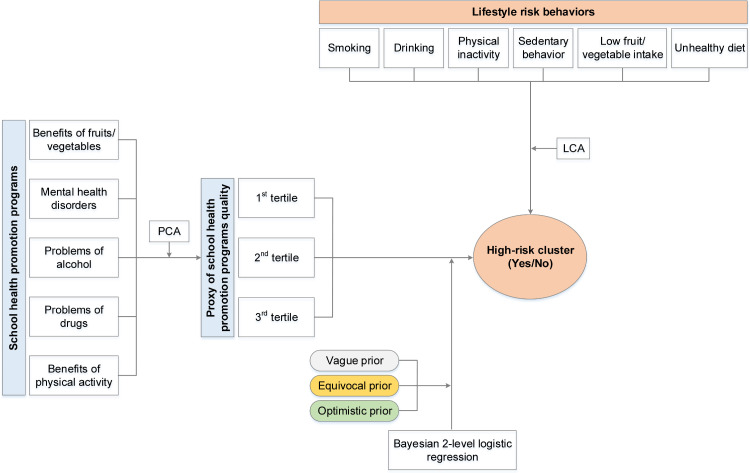
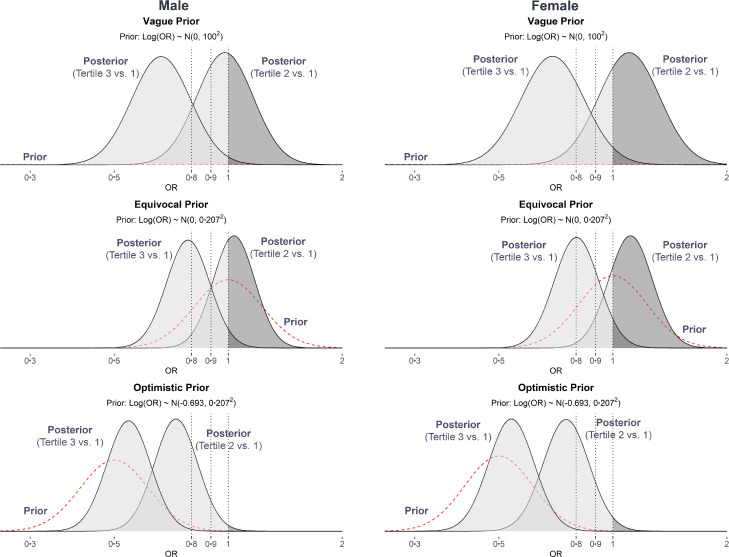
We analyzed data of 7,541 adolescents aged 13-17 years from the 2019 nationally representative Global School-based Student Health Survey, conducted in 20 provinces and cities in Vietnam. We applied the latent class analysis to identify groups of clustering and used Bayesian 2-level logistic regressions to evaluate the correlation of school health promotion programs on these clusters. We reassessed the school effect size by incorporating different informative priors to the Bayesian models.
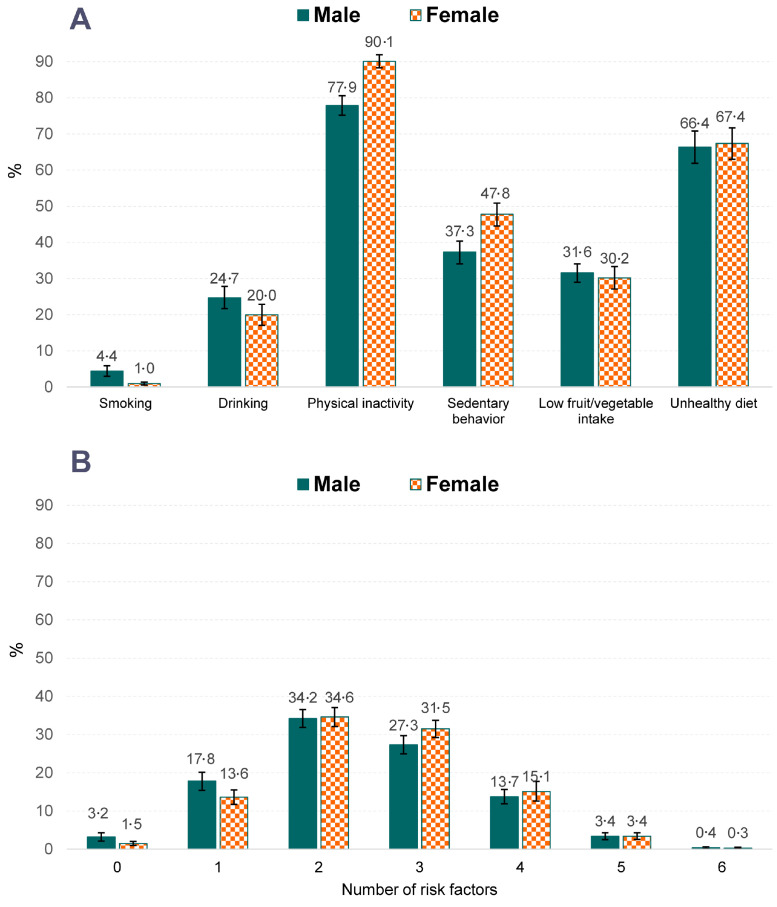
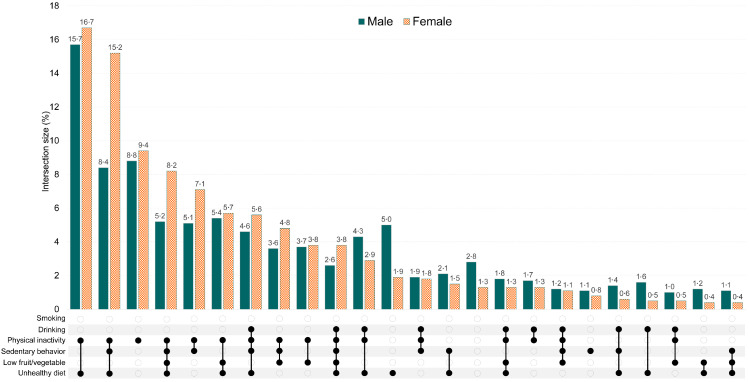
The most frequent lifestyle risk behavior among Vietnamese adolescents was physical inactivity, followed by unhealthy diet, and sedentary behavior. Most of students had a cluster of at least two risk factors and nearly a half with at least three risk factors. Latent class analysis detected 23% males and 18% females being at higher risk of lifestyle behaviors. Consistent through different priors, high quality of health promotion programs associated with lower the odds of lifestyle risk behaviors (highest quality schools vs. lowest quality schools; males: Odds ratio (OR) = 0·67, 95% Highest Density Interval (HDI): 0·46 - 0·93; females: OR = 0·69, 95% HDI: 0·47 - 0·98).
Our findings demonstrated the clustering of specific lifestyle risk behaviors among Vietnamese in-school adolescents. School-based interventions separated for males and females might reduce multiple health risk behaviors in adolescence.
The 2019 Global School-based Student Health Survey was conducted with financial support from the World Health Organization. The authors received no funding for the data analysis, data interpretation, manuscript writing, authorship, and/or publication of this article.
青春期是许多生活方式风险行为的脆弱时期。在本研究中,我们旨在:1)研究生活方式风险行为的聚集模式;2)调查学校健康促进项目在越南青少年中对这种模式的作用。
我们分析了2019年在越南20个省市进行的具有全国代表性的全球学校学生健康调查中7541名13 - 17岁青少年的数据。我们应用潜在类别分析来识别聚集组,并使用贝叶斯二级逻辑回归来评估学校健康促进项目与这些组之间的相关性。我们通过在贝叶斯模型中纳入不同的信息先验来重新评估学校效应大小。
越南青少年中最常见的生活方式风险行为是缺乏身体活动,其次是不健康饮食和久坐行为。大多数学生至少有两种风险因素聚集在一起,近一半学生至少有三种风险因素。潜在类别分析发现23%的男性和18%的女性有更高的生活方式行为风险。在不同先验条件下一致的是,高质量的健康促进项目与较低的生活方式风险行为几率相关(最高质量学校与最低质量学校相比;男性:优势比(OR)= 0·67,95%最高密度区间(HDI):0·46 - 0·93;女性:OR = 0·69,95% HDI:0·47 - 0·98)。
我们的研究结果表明越南在校青少年中特定生活方式风险行为存在聚集现象。针对男性和女性分别开展的学校干预措施可能会减少青少年时期的多种健康风险行为。
2019年全球学校学生健康调查在世界卫生组织的财政支持下进行。作者在本文的数据分析、数据解读、稿件撰写、署名和/或发表方面未获得资金支持。