Department of Neonatology, Affiliated Hangzhou First People's Hospital, Zhejiang University School of Medicine, No. 261, Huansha Road, Hangzhou, 310000, Zhejiang Province, People's Republic of China.
Mol Med. 2021 Sep 16;27(1):109. doi: 10.1186/s10020-021-00374-4.
Recently, the role of several microRNAs (miRNAs or miRs) in pulmonary diseases has been described. The molecular mechanisms by which miR-214 is possibly implicated in bronchopulmonary dysplasia (BPD) have not yet been addressed. Hence, this study aimed to investigate a putative role of miR-214 in alveolarization among preterm neonates with BPD.
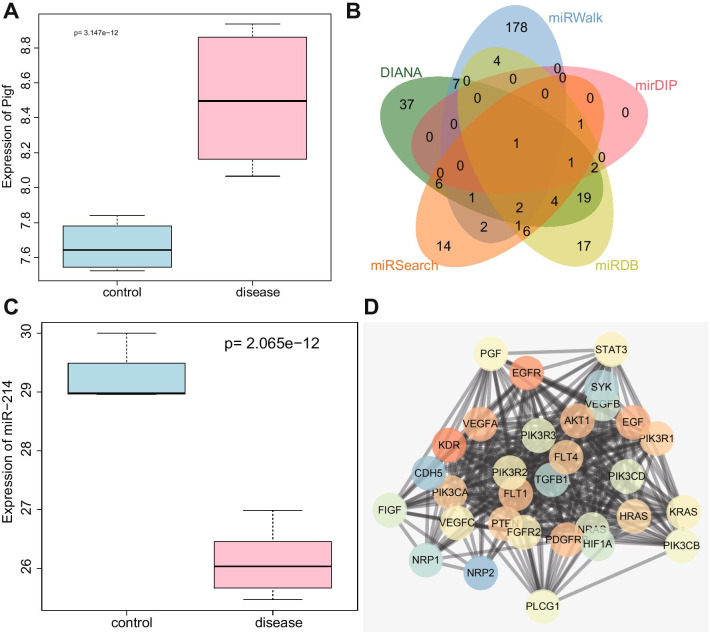
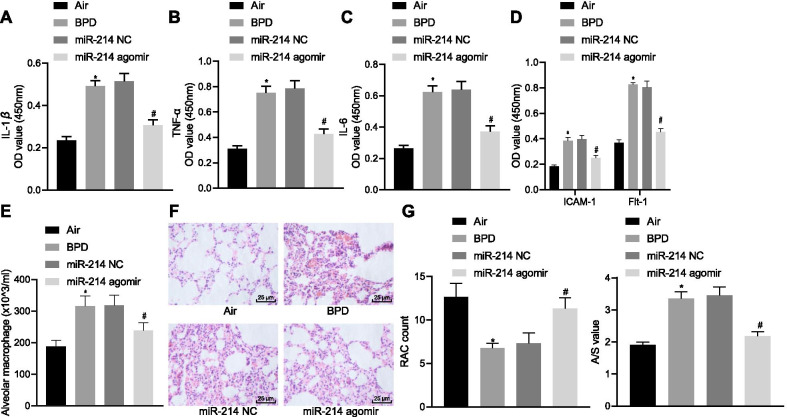
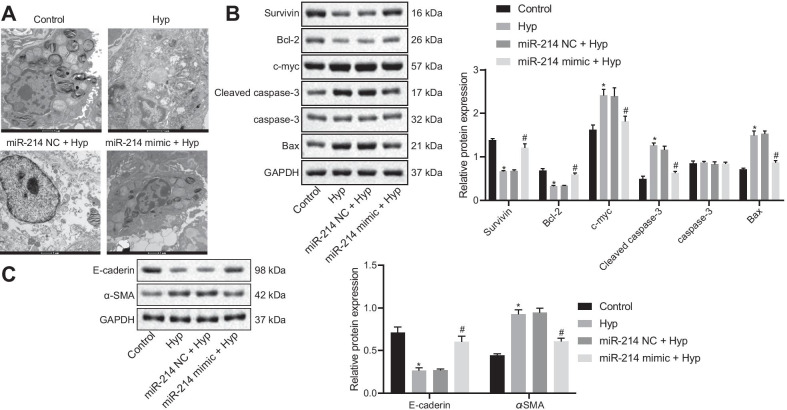
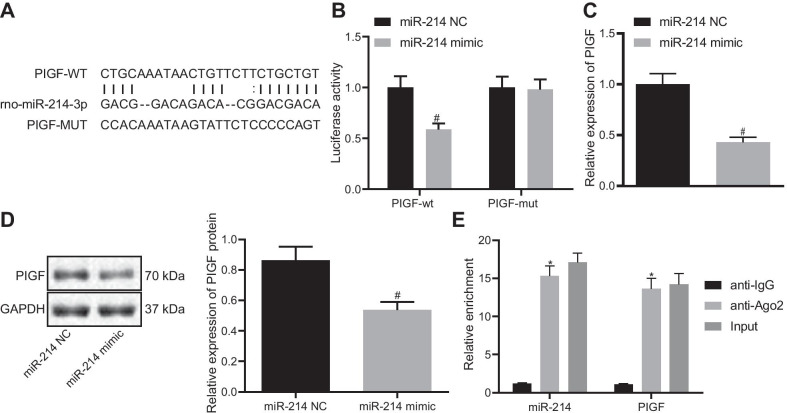
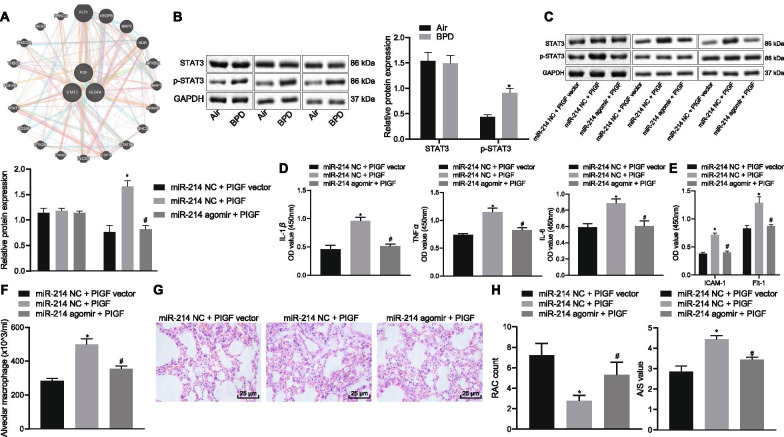
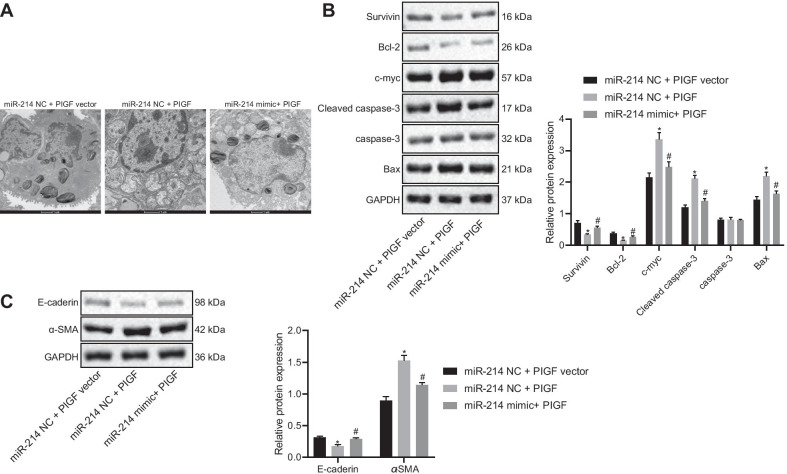
Microarray-based gene expression profiling data from BPD was employed to identify differentially expressed genes. A BPD neonatal rat model was induced by hyperoxia. Pulmonary epithelial cells were isolated from rats and exposed to hyperoxia to establish cell injury models. Gain- and loss-of-function experiments were performed in BPD neonatal rats and hyperoxic pulmonary epithelial cells. MiR-214 and PlGF expression in BPD neonatal rats, and eNOS, Bcl-2, c-myc, Survivin, α-SMA and E-cadherin expression in hyperoxic pulmonary epithelial cells were measured using RT-qPCR and Western blot analysis. The interaction between PlGF and miR-214 was identified using dual luciferase reporter gene and RIP assays. IL-1β, TNF-a, IL-6, ICAM-1 and Flt-1 expression in the rat models was measured using ELISA.
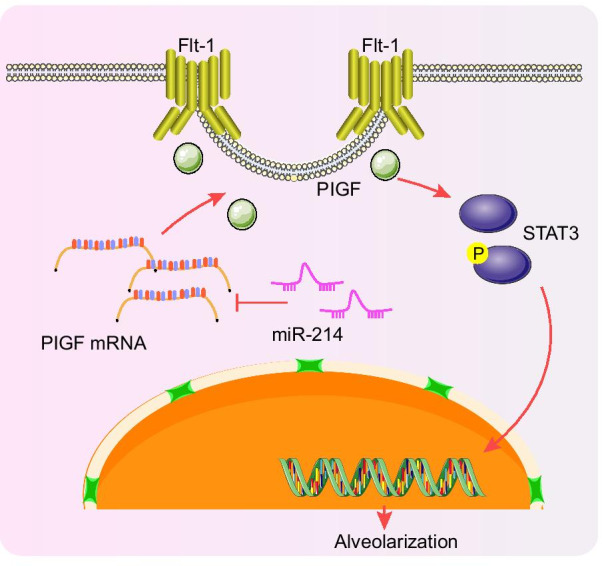
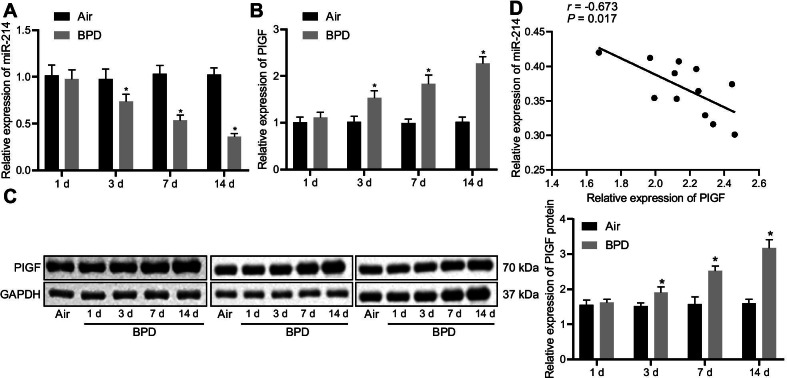
The lung tissues of neonatal rats with BPD showed decreased miR-214 expression with elevated PlGF expression. PlGF was found to be a target of miR-214, whereby miR-214 downregulated PlGF to inactivate the STAT3 pathway. miR-214 overexpression or PlGF silencing decreased the apoptosis of hyperoxic pulmonary epithelial cells in vitro and restored alveolarization in BPD neonatal rats.
Overall, the results demonstrated that miR-214 could facilitate alveolarization in preterm neonates with BPD by suppressing the PlGF-dependent STAT3 pathway.
最近,几种 microRNAs(miRNAs 或 miRs)在肺部疾病中的作用已经被描述。miR-214 如何可能参与支气管肺发育不良(BPD)的分子机制尚未得到解决。因此,本研究旨在探讨 miR-214 在伴有 BPD 的早产儿肺泡化中的潜在作用。
利用 BPD 的基于微阵列的基因表达谱数据来鉴定差异表达的基因。通过高氧诱导建立 BPD 新生大鼠模型。从大鼠中分离肺上皮细胞并暴露于高氧中以建立细胞损伤模型。在 BPD 新生大鼠和高氧肺上皮细胞中进行增益和失能实验。使用 RT-qPCR 和 Western blot 分析测量 BPD 新生大鼠中的 miR-214 和 PlGF 表达,以及高氧肺上皮细胞中的 eNOS、Bcl-2、c-myc、Survivin、α-SMA 和 E-cadherin 表达。使用双荧光素酶报告基因和 RIP 测定鉴定 PlGF 和 miR-214 之间的相互作用。使用 ELISA 测量大鼠模型中的 IL-1β、TNF-a、IL-6、ICAM-1 和 Flt-1 表达。
BPD 新生儿的肺组织显示 miR-214 表达降低,PlGF 表达升高。发现 PlGF 是 miR-214 的靶标,miR-214 下调 PlGF 以失活 STAT3 途径。miR-214 过表达或 PlGF 沉默减少体外高氧肺上皮细胞的凋亡,并恢复 BPD 新生大鼠的肺泡化。
总之,研究结果表明,miR-214 可通过抑制 PlGF 依赖性 STAT3 途径促进伴有 BPD 的早产儿的肺泡化。