Pulmonology Department, University Hospital Gregorio Marañón, Madrid, Spain.
Servicio de Neumología. Hospital Universitario Gregorio Marañón, c/ Dr. Esquerdo 46, 28007, Madrid, Spain.
Lung. 2021 Oct;199(5):507-515. doi: 10.1007/s00408-021-00475-1. Epub 2021 Sep 17.
The aim of this study was to understand the perception of family physicians, pulmonologists, and allergists with respect to diagnostic tests performed on patients with chronic cough and treatments prescribed to patients with refractory or unexplained chronic cough. We also assessed how these health professionals perceived the effectiveness of these treatments.
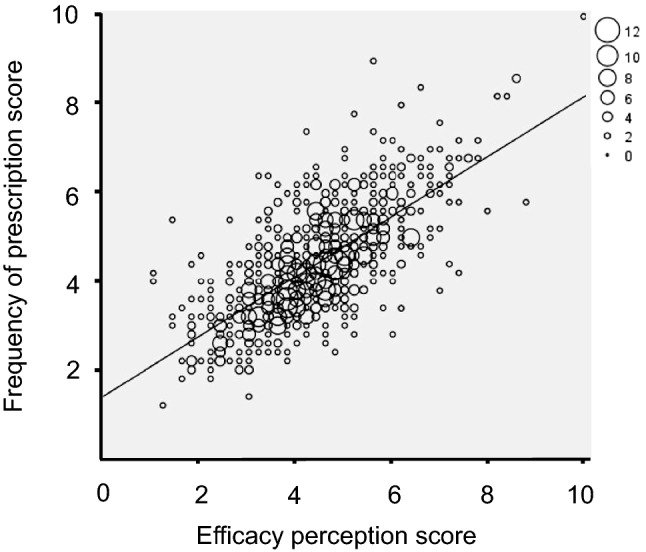
An anonymous survey was distributed by the scientific societies SEPAR, SEAIC, SEMERGEN, semFYC, and SEMG. Respondents were asked how often they perform diagnostic tests and prescribe treatments (responses from 1 = never to 10 = always) and how they perceived the effectiveness of the drugs used (from 1 = not at all to 10 = very effective). The correlation between perceived effectiveness and frequency of prescription was analyzed.
The respondents comprised 620 family physicians, 92 pulmonologists, and 62 allergists. The most frequently performed diagnostic tests were chest x-ray and, among pulmonologists and allergists, simple spirometry and bronchodilator tests. The most frequently prescribed drugs were bronchodilators (percentages scoring 8-10 for each specialty: 43.2%, 42.4%, and 56.5%; p = 0.127), inhaled corticosteroids (36.9%, 55.4%, and 54.8%; p < 0.001), and antitussives (family physicians, 33.4%). Regarding perceived effectiveness, only bronchodilators, inhaled or oral corticosteroids, and opioids obtained a median effectiveness score > 5 (between 6 and 7). Correlation coefficients (ρ) suggested that approximately 45% of prescription was related to perceived effectiveness.
Although chronic cough is a common problem, diagnosis and treatment differ among specialists. The perceived effectiveness of drugs is generally low.
本研究旨在了解家庭医生、肺科医生和过敏科医生对慢性咳嗽患者进行诊断测试以及对难治性或不明原因慢性咳嗽患者进行治疗的看法。我们还评估了这些卫生专业人员如何看待这些治疗方法的有效性。
通过 SEPAR、SEAIC、SEMERGEN、semFYC 和 SEMG 科学协会分发了一份匿名调查。受访者被要求回答他们进行诊断测试和开处方治疗的频率(从 1=从不到 10=总是),以及他们如何看待所用药物的有效性(从 1=根本没有到 10=非常有效)。分析了感知效果与处方频率之间的相关性。
受访者包括 620 名家庭医生、92 名肺科医生和 62 名过敏科医生。最常进行的诊断测试是胸部 X 光检查,而在肺科医生和过敏科医生中,最常进行的是简单肺量测定和支气管扩张剂测试。最常开的药物是支气管扩张剂(每个专科评分 8-10 的百分比:43.2%、42.4%和 56.5%;p=0.127)、吸入皮质类固醇(36.9%、55.4%和 54.8%;p<0.001)和镇咳药(家庭医生为 33.4%)。关于感知效果,只有支气管扩张剂、吸入或口服皮质类固醇和阿片类药物的中位效果评分>5(6-7 分之间)。相关系数(ρ)表明,大约 45%的处方与感知效果有关。
尽管慢性咳嗽是一个常见问题,但不同专家的诊断和治疗方法存在差异。药物的感知效果普遍较低。