Department of Biotechnology, National Institute of Technology Warangal, Warangal, 506004, Telangana, India.
BMC Med Genomics. 2021 Sep 17;14(1):226. doi: 10.1186/s12920-021-01079-7.
Higher mortality of COVID-19 patients with lung disease is a formidable challenge for the health care system. Genetic association between COVID-19 and various lung disorders must be understood to comprehend the molecular basis of comorbidity and accelerate drug development.
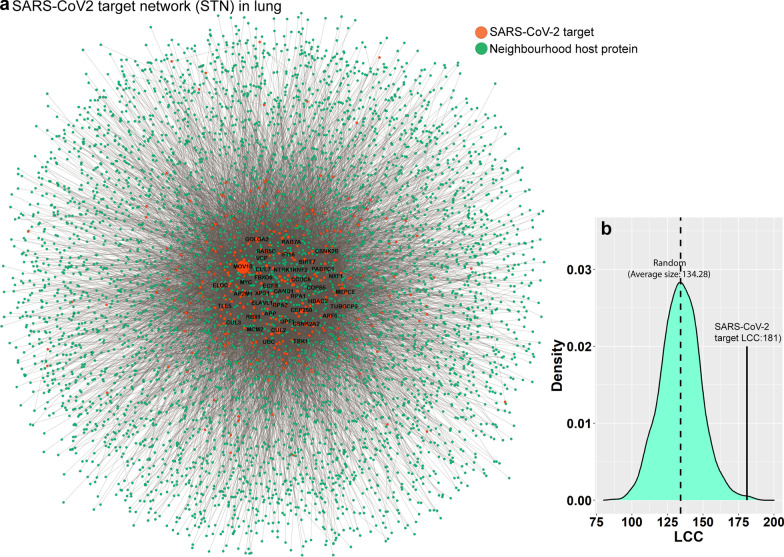
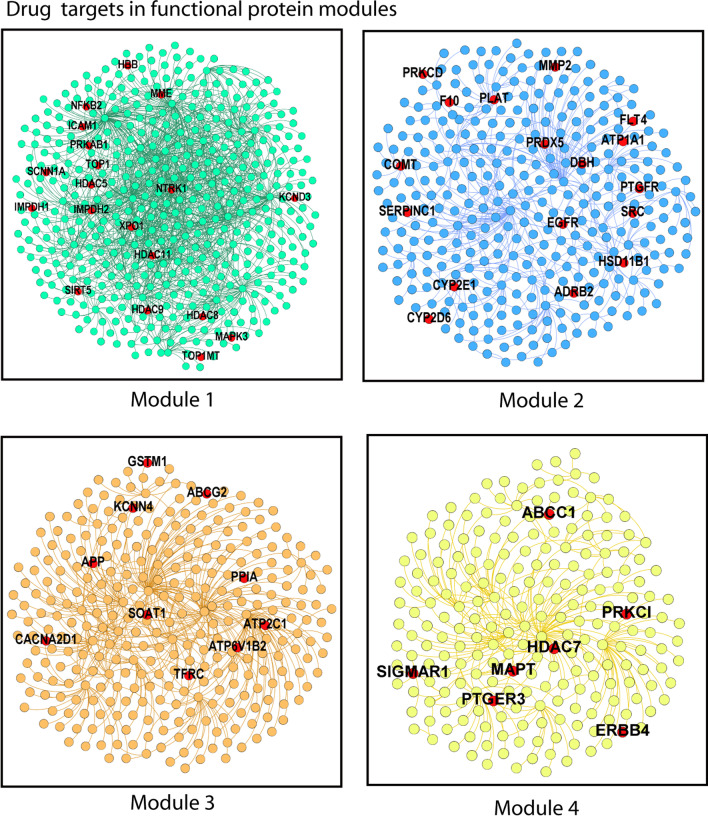
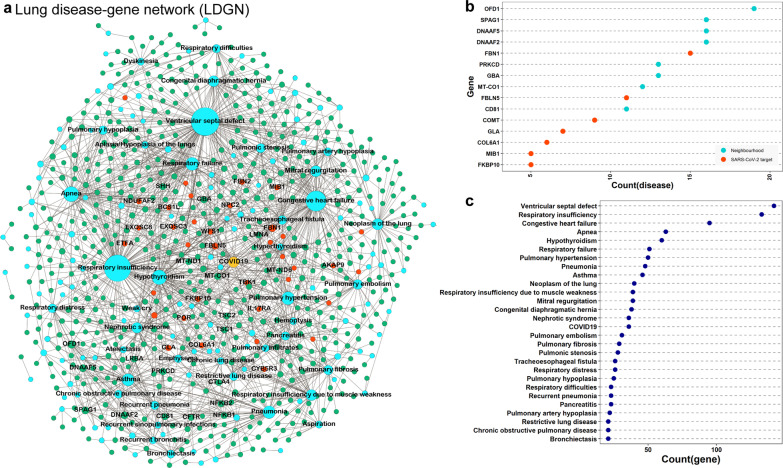
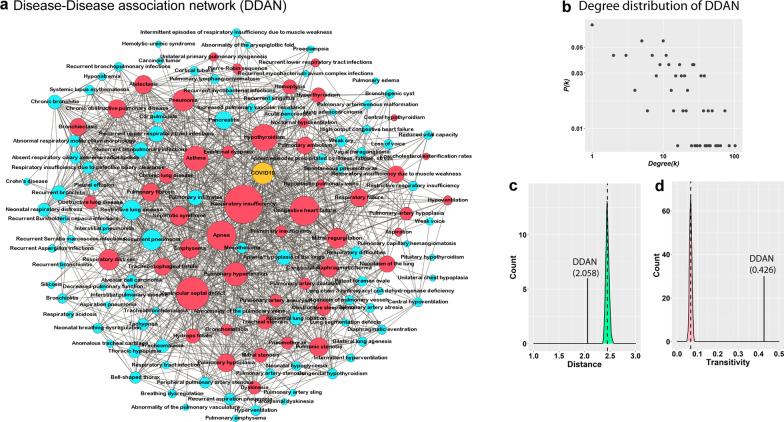
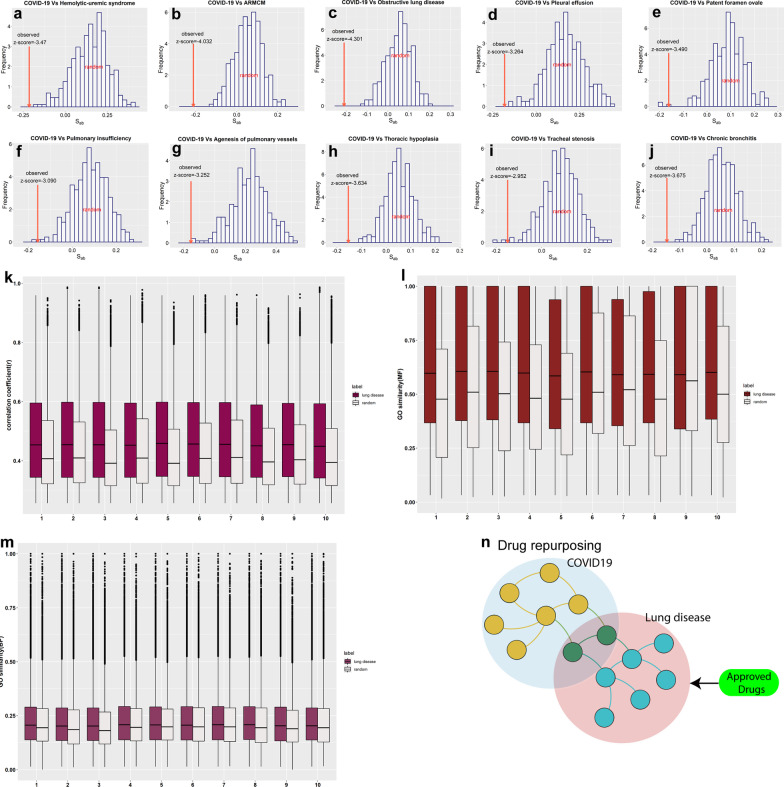
Lungs tissue-specific neighborhood network of human targets of SARS-CoV-2 was constructed. This network was integrated with lung diseases to build a disease-gene and disease-disease association network. Network-based toolset was used to identify the overlapping disease modules and drug targets. The functional protein modules were identified using community detection algorithms and biological processes, and pathway enrichment analysis.
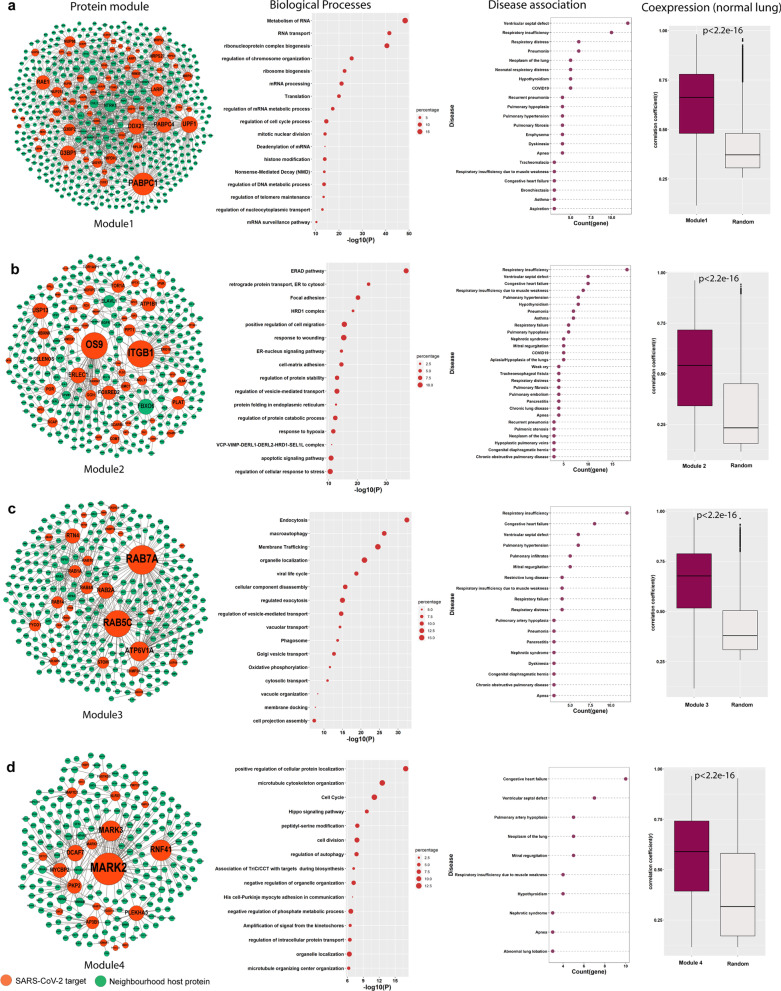
In total, 141 lung diseases were linked to a neighborhood network of SARS-CoV-2 targets, and 59 lung diseases were found to be topologically overlapped with the COVID-19 module. Topological overlap with various lung disorders allows repurposing of drugs used for these disorders to hit the closely associated COVID-19 module. Further analysis showed that functional protein-protein interaction modules in the lungs, substantially hijacked by SARS-CoV-2, are connected to several lung disorders. FDA-approved targets in the hijacked protein modules were identified and that can be hit by exiting drugs to rescue these modules from virus possession.
Lung diseases are clustered with COVID-19 in the same network vicinity, indicating the potential threat for patients with respiratory diseases after SARS-CoV-2 infection. Pathobiological similarities between lung diseases and COVID-19 and clinical evidence suggest that shared molecular features are the probable reason for comorbidity. Network-based drug repurposing approaches can be applied to improve the clinical conditions of COVID-19 patients.
患有肺部疾病的 COVID-19 患者死亡率较高,这对医疗保健系统来说是一个巨大的挑战。必须了解 COVID-19 与各种肺部疾病之间的遗传关联,以了解合并症的分子基础并加速药物开发。
构建了人类 SARS-CoV-2 靶点的肺部组织特异性邻域网络。该网络与肺部疾病相结合,构建了疾病-基因和疾病-疾病关联网络。使用基于网络的工具集来识别重叠的疾病模块和药物靶点。使用社区检测算法和生物过程以及途径富集分析来识别功能蛋白模块。
总共将 141 种肺部疾病与 SARS-CoV-2 靶点的邻域网络联系起来,并且发现 59 种肺部疾病与 COVID-19 模块在拓扑上重叠。与各种肺部疾病的拓扑重叠允许重新利用用于这些疾病的药物来靶向密切相关的 COVID-19 模块。进一步的分析表明,SARS-CoV-2 大量劫持的肺部功能蛋白-蛋白相互作用模块与几种肺部疾病有关。鉴定出劫持蛋白模块中的 FDA 批准靶点,并且可以用现有的药物来攻击这些模块,使其免受病毒侵害。
肺部疾病与 COVID-19 在同一网络附近聚集,表明 SARS-CoV-2 感染后患有呼吸系统疾病的患者存在潜在威胁。肺部疾病和 COVID-19 之间的病理生物学相似性以及临床证据表明,共同的分子特征可能是合并症的原因。基于网络的药物重新利用方法可用于改善 COVID-19 患者的临床状况。