Department of Psychiatry and Behavioral Sciences, Emory University, Atlanta, GA, USA.
The Winship Cancer Institute, Emory University, Atlanta, GA, USA.
Mol Psychiatry. 2021 Dec;26(12):7384-7392. doi: 10.1038/s41380-021-01258-z. Epub 2021 Sep 17.
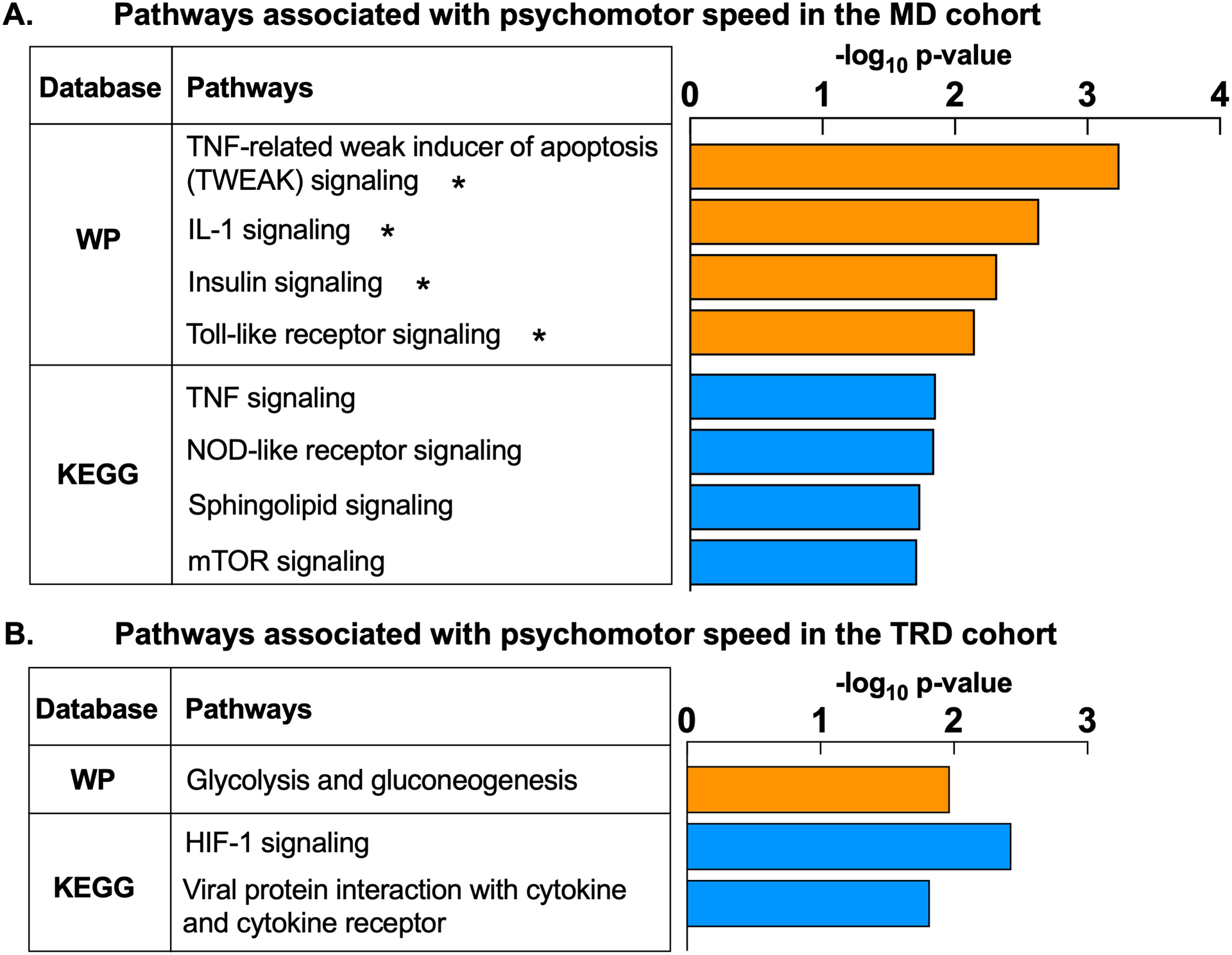
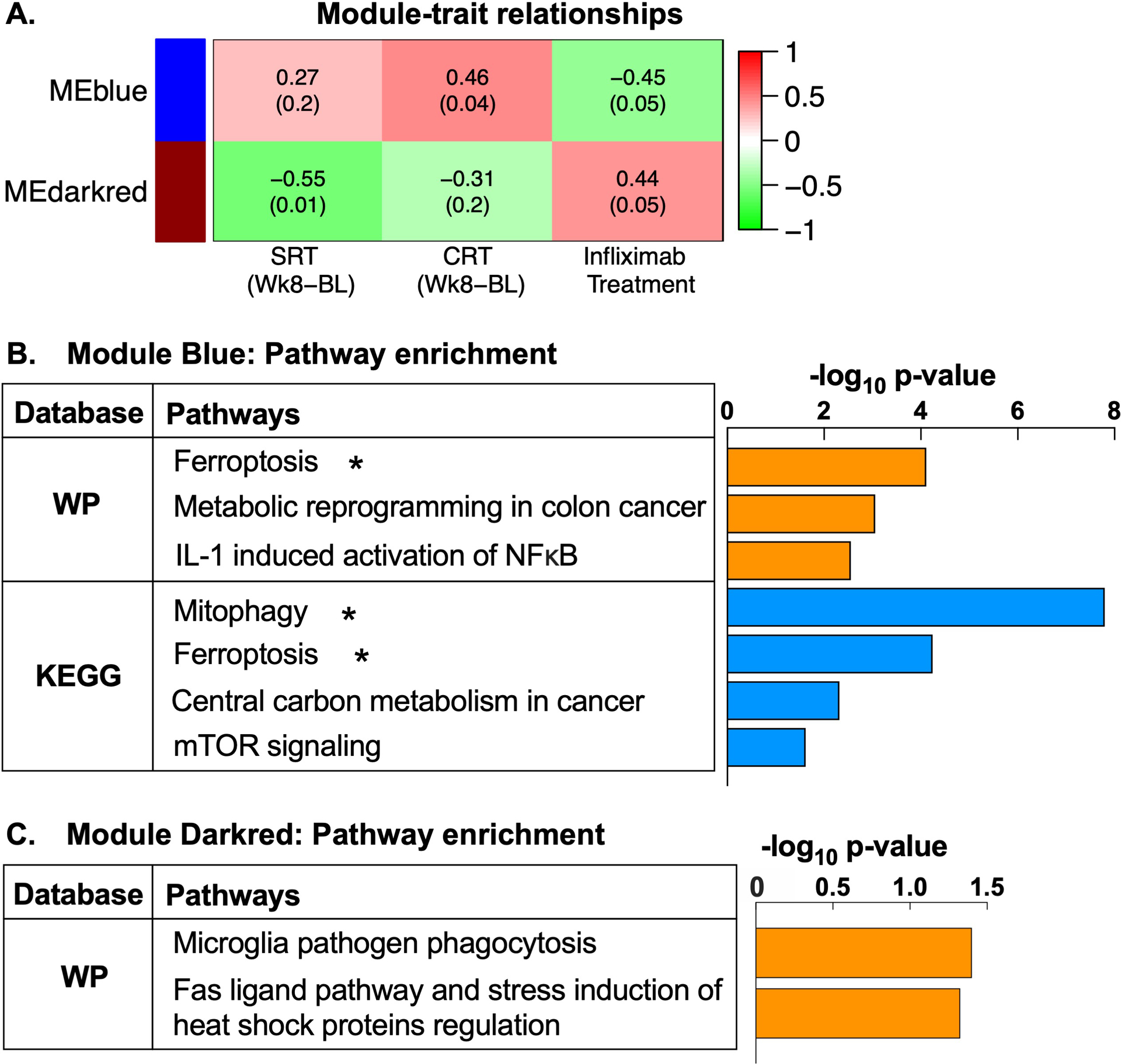
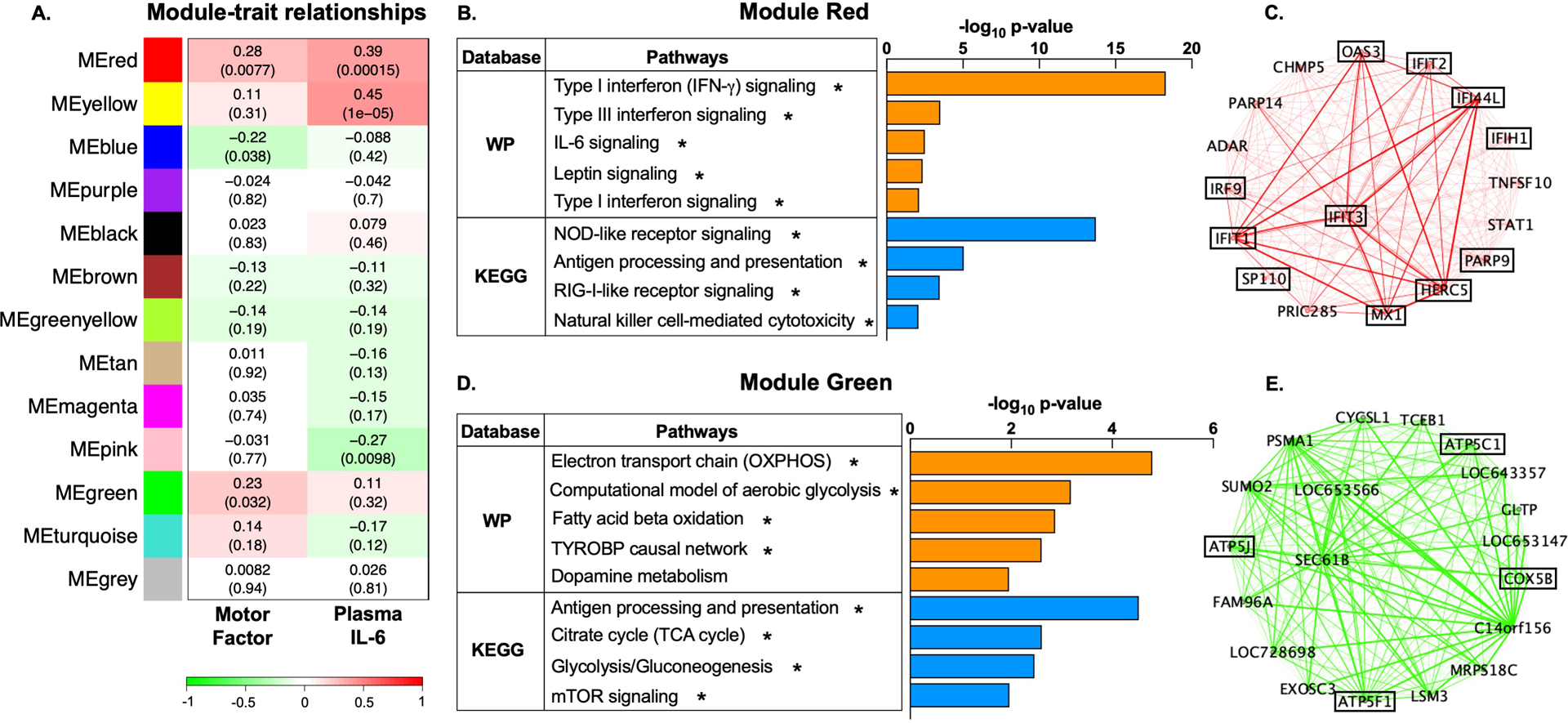
Inflammation impacts basal ganglia motor circuitry in association with psychomotor retardation, a key symptom of major depression (MD). We previously reported associations between circulating protein inflammatory biomarkers and psychomotor slowing as measured by neuropsychological tests probing psychomotor speed in patients with MD. To discover novel transcriptional signatures in peripheral blood immune cells related to psychomotor slowing, microarray data were analyzed in a primary cohort of 88 medically-stable, unmedicated, ambulatory MD patients. Results were confirmed and extended in a second cohort of 57 patients with treatment resistant depression (TRD) before and after anti-inflammatory challenge with the tumor necrosis factor antagonist infliximab versus placebo. Composite scores reflecting pure motor and cognitive-motor processing speed were linearly associated with 403 and 266 gene transcripts in each cohort, respectively (|R| > 0.30, p < 0.01), that were enriched for cytokine signaling and glycolysis-related pathways (p < 0.05). Unsupervised clustering in the primary cohort revealed two psychomotor slowing-associated gene co-expression modules that were enriched for interferon, interleukin-6, aerobic glycolysis, and oxidative phosphorylation pathways (p < 0.05, q < 0.1). Transcripts were predominantly derived from monocytes, plasmacytoid dendritic cells, and natural killer cells (p's < 0.05). In infliximab-treated TRD patients with high plasma C-reactive protein concentrations (>5 mg/L), two differential co-expression modules enriched for oxidative stress and mitochondrial degradation were associated with improvements in psychomotor reaction time (p < 0.05). These results indicate that inflammatory signaling and associated metabolic reprogramming in peripheral blood immune cells are associated with systemic inflammation in depression and may affect relevant brain circuits to promote psychomotor slowing.
炎症会影响基底神经节运动回路,与精神运动迟滞有关,精神运动迟滞是重度抑郁症(MD)的一个关键症状。我们之前曾报道过循环蛋白炎症生物标志物与精神运动速度之间的关联,这些标志物是通过测量 MD 患者的神经心理学测试来测量的。为了发现与精神运动迟缓相关的外周血免疫细胞中的新型转录特征,我们对 88 名病情稳定、未接受药物治疗、能走动的 MD 患者的主要队列进行了微阵列数据分析。结果在第二个队列中得到了证实和扩展,该队列包括 57 名接受抗 TNF 拮抗剂英夫利昔单抗或安慰剂治疗的难治性抑郁症(TRD)患者,在接受抗炎治疗前后。反映纯运动和认知运动处理速度的综合评分分别与两个队列中的 403 个和 266 个基因转录物呈线性相关(|R| > 0.30,p < 0.01),这些转录物与细胞因子信号和糖酵解相关途径富集(p < 0.05)。在主要队列中的无监督聚类显示,两个与精神运动迟缓相关的基因共表达模块与干扰素、白细胞介素 6、有氧糖酵解和氧化磷酸化途径富集(p < 0.05,q < 0.1)。转录物主要来自单核细胞、浆细胞样树突状细胞和自然杀伤细胞(p < 0.05)。在接受英夫利昔单抗治疗且血浆 C 反应蛋白浓度较高(>5mg/L)的 TRD 患者中,两个与氧化应激和线粒体降解相关的差异共表达模块与精神运动反应时间的改善相关(p < 0.05)。这些结果表明,外周血免疫细胞中的炎症信号和相关的代谢重编程与抑郁症中的全身炎症有关,可能会影响相关的大脑回路,促进精神运动迟缓。