Southern Marine Science and Engineering Guangdong Laboratory, Zhuhai, China; Guangdong Provincial Key Laboratory of Biomedical Imaging and Guangdong Provincial Engineering Research Center of Molecular Imaging, The Fifth Affiliated Hospital, Sun Yat-sen University, Zhuhai, 519000, China.
Guangdong Provincial Key Laboratory of Biomedical Imaging and Guangdong Provincial Engineering Research Center of Molecular Imaging, The Fifth Affiliated Hospital, Sun Yat-sen University, Zhuhai, 519000, China.
Anal Chim Acta. 2021 Oct 2;1180:338881. doi: 10.1016/j.aca.2021.338881. Epub 2021 Jul 26.
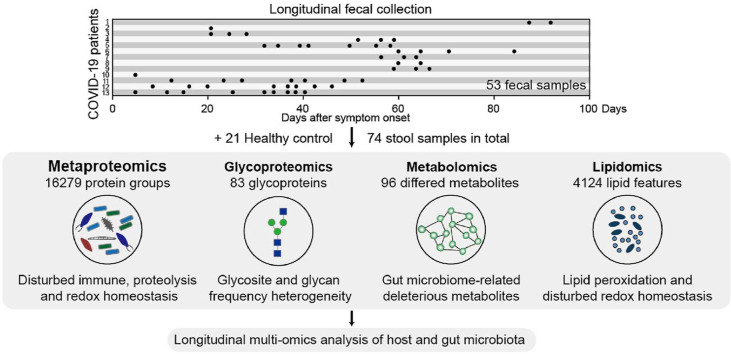
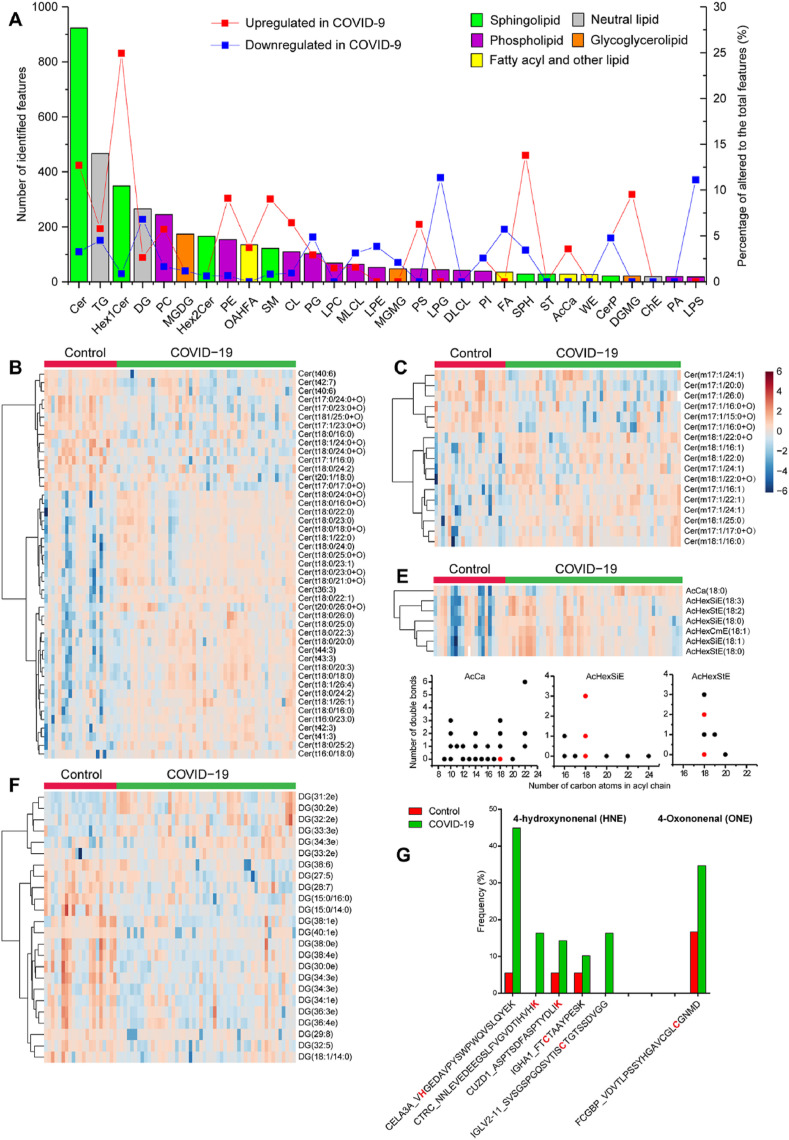
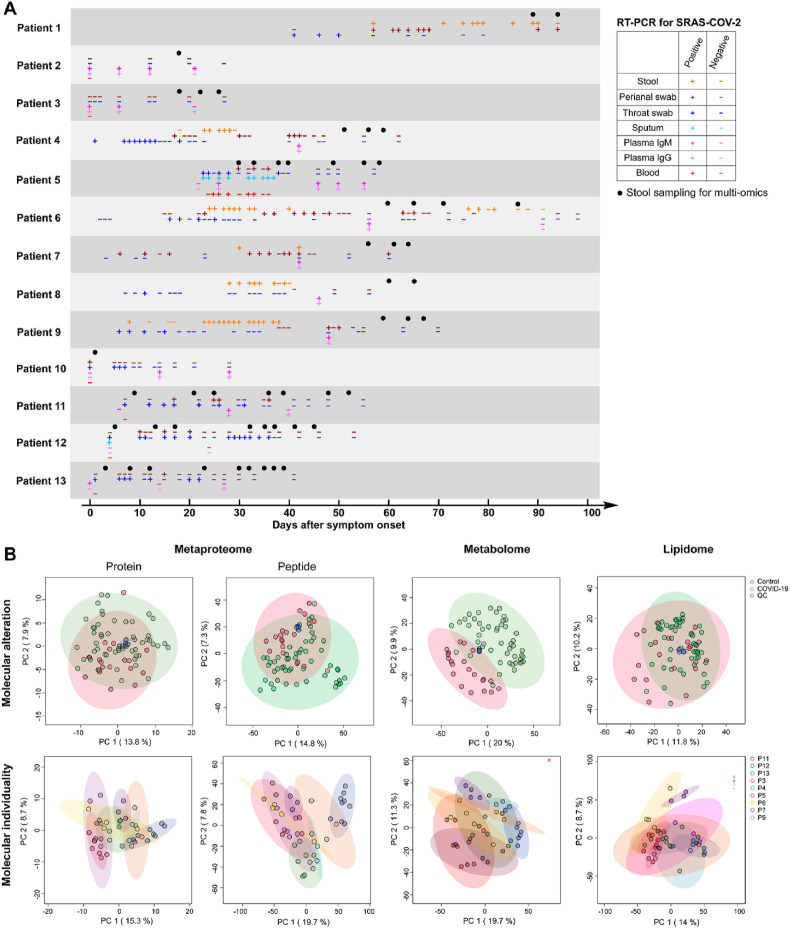
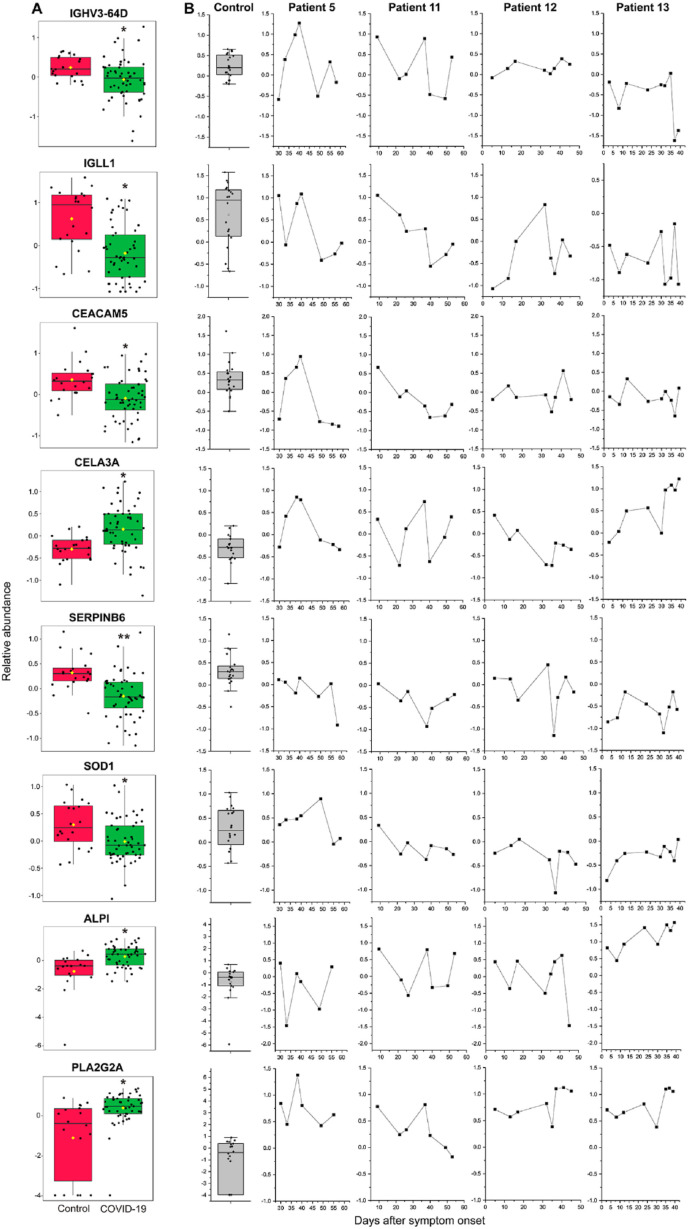
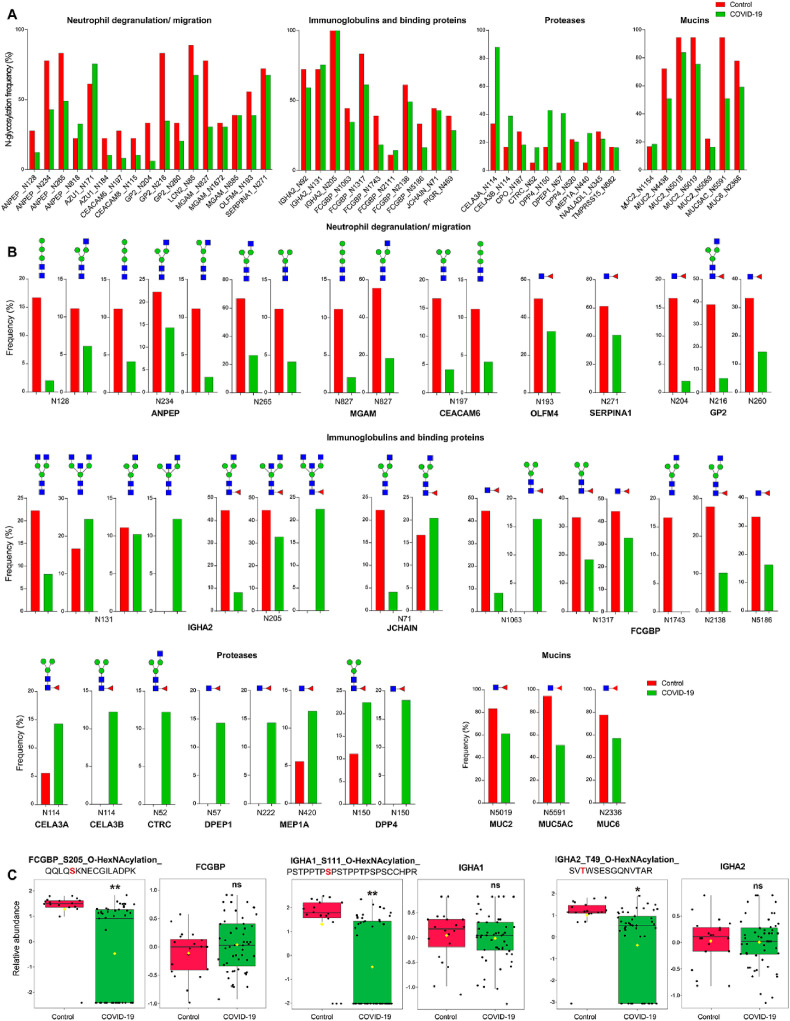
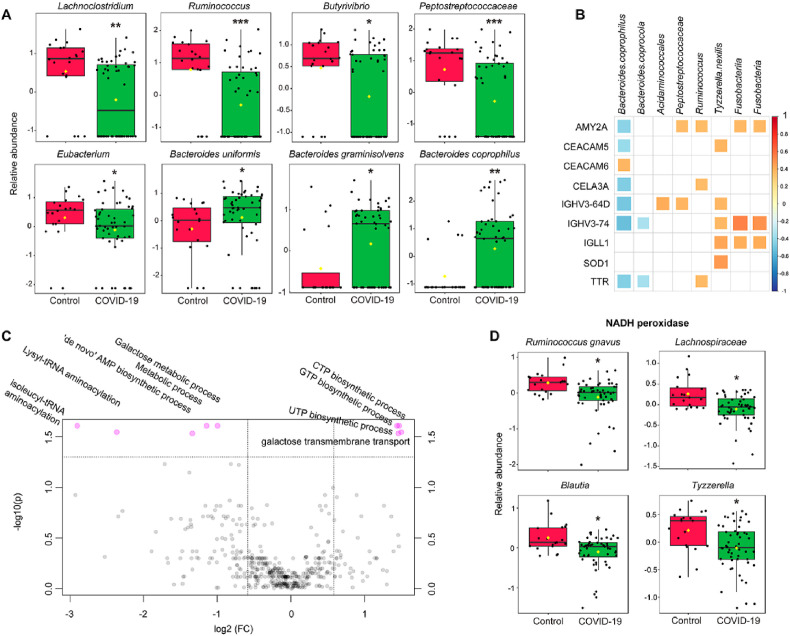
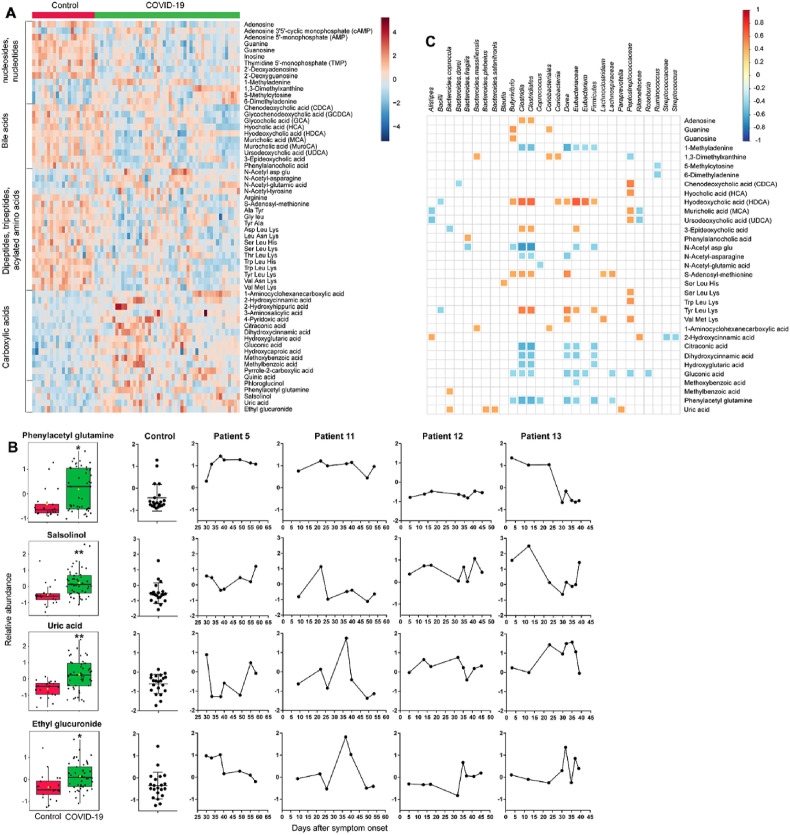
Gut ecosystem has profound effects on host physiology and health. Gastrointestinal (GI) symptoms were frequently observed in patients with COVID-19. Compared with other organs, gut antiviral response can result in more complicated immune responses because of the interactions between the gut microbiota and host immunity. However, there are still large knowledge gaps in the impact of COVID-19 on gut molecular profiles and commensal microbiome, hindering our comprehensive understanding of the pathogenesis of SARS-CoV-2 and the treatment of COVID-19. We performed longitudinal stool multi-omics profiling to systemically investigate the molecular phenomics alterations of gut ecosystem in COVID-19. Gut proteomes of COVID-19 were characterized by disturbed immune, proteolysis and redox homeostasis. The expression and glycosylation of proteins involved in neutrophil degranulation and migration were suppressed, while those of proteases were upregulated. The variable domains of Ig heavy chains were downregulated and the overall glycosylation of IgA heavy chain constant regions, IgGFc-binding protein, and J chain were suppressed with glycan-specific variations. There was a reduction of beneficial gut bacteria and an enrichment of bacteria derived deleterious metabolites potentially associated with multiple types of diseases (such as ethyl glucuronide). The reduction of Ig heave chain variable domains may contribute to the increase of some Bacteroidetes species. Many bacteria ceramide lipids with a C17-sphingoid based were downregulated in COVID-19. In many cases, the gut phenome did not restore two months after symptom onset. Our study indicates widely disturbed gut molecular profiles which may play a role in the development of symptoms in COVID-19. Our findings also emphasis the need for ongoing investigation of the long-term gut molecular and microbial alterations during COVID-19 recovery process. Considering the gut ecosystem as a potential target could offer a valuable approach in managing the disease.
肠道生态系统对宿主生理和健康有深远的影响。胃肠道(GI)症状在 COVID-19 患者中经常观察到。与其他器官相比,由于肠道微生物群和宿主免疫之间的相互作用,肠道抗病毒反应会导致更复杂的免疫反应。然而,COVID-19 对肠道分子谱和共生微生物组的影响仍然存在很大的知识空白,这阻碍了我们对 SARS-CoV-2 发病机制和 COVID-19 治疗的全面理解。我们进行了纵向粪便多组学分析,系统地研究了 COVID-19 中肠道生态系统的分子表型改变。COVID-19 的肠道蛋白质组学特征为免疫、蛋白水解和氧化还原平衡失调。涉及中性粒细胞脱颗粒和迁移的蛋白质的表达和糖基化受到抑制,而蛋白酶的表达上调。Ig 重链可变区表达下调,IgA 重链恒定区、IgGFc 结合蛋白和 J 链的整体糖基化受到抑制,并且存在聚糖特异性变化。有益肠道细菌减少,有害细菌衍生的代谢物富集,可能与多种疾病(如乙基葡萄糖醛酸苷)有关。Ig 重链可变区的减少可能导致某些拟杆菌的增加。许多细菌神经酰胺脂质以基于 C17- 神经酰胺的方式下调。在许多情况下,症状出现两个月后肠道表型仍未恢复。我们的研究表明,肠道分子谱广泛失调,这可能在 COVID-19 症状的发展中起作用。我们的发现还强调了在 COVID-19 恢复过程中需要持续研究肠道分子和微生物的长期改变。将肠道生态系统作为一个潜在的靶点可能是管理该疾病的一种有价值的方法。