Department of Gastroenterological Endoscopy, Tokyo Medical University, Tokyo, Japan; Department of Gastroenterology and Hepatology, National Center for Global Health and Medicine, Tokyo, Japan.
Laboratory for Intestinal Ecosystem, RIKEN Center for Integrative Medical Sciences, Yokohama, Japan.
Gastroenterology. 2023 Feb;164(2):272-288. doi: 10.1053/j.gastro.2022.09.024. Epub 2022 Sep 23.
BACKGROUND & AIMS: We investigate interrelationships between gut microbes, metabolites, and cytokines that characterize COVID-19 and its complications, and we validate the results with follow-up, the Japanese 4D (Disease, Drug, Diet, Daily Life) microbiome cohort, and non-Japanese data sets.
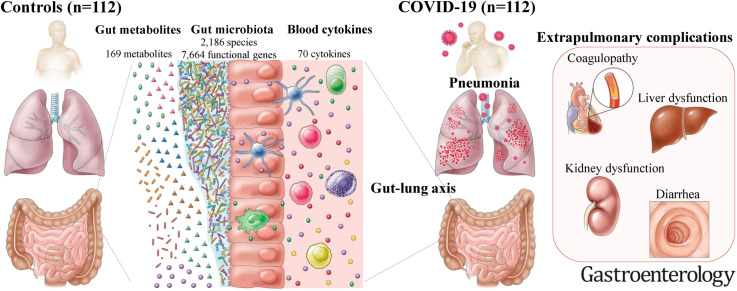
We performed shotgun metagenomic sequencing and metabolomics on stools and cytokine measurements on plasma from 112 hospitalized patients with SARS-CoV-2 infection and 112 non-COVID-19 control individuals matched by important confounders.
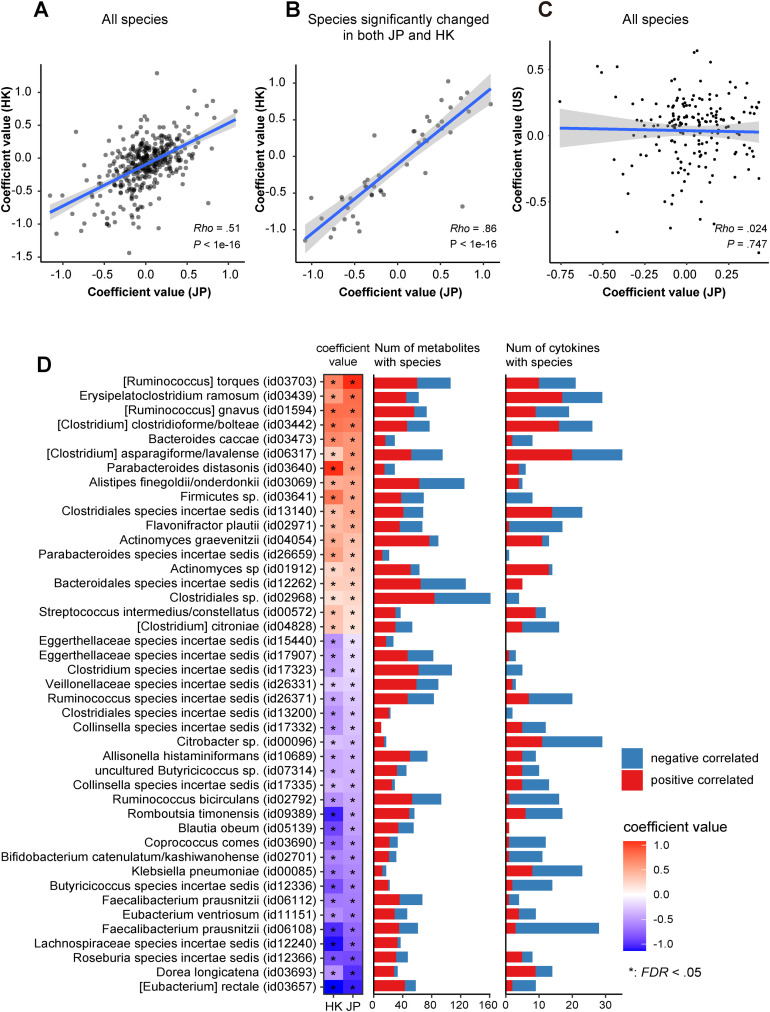
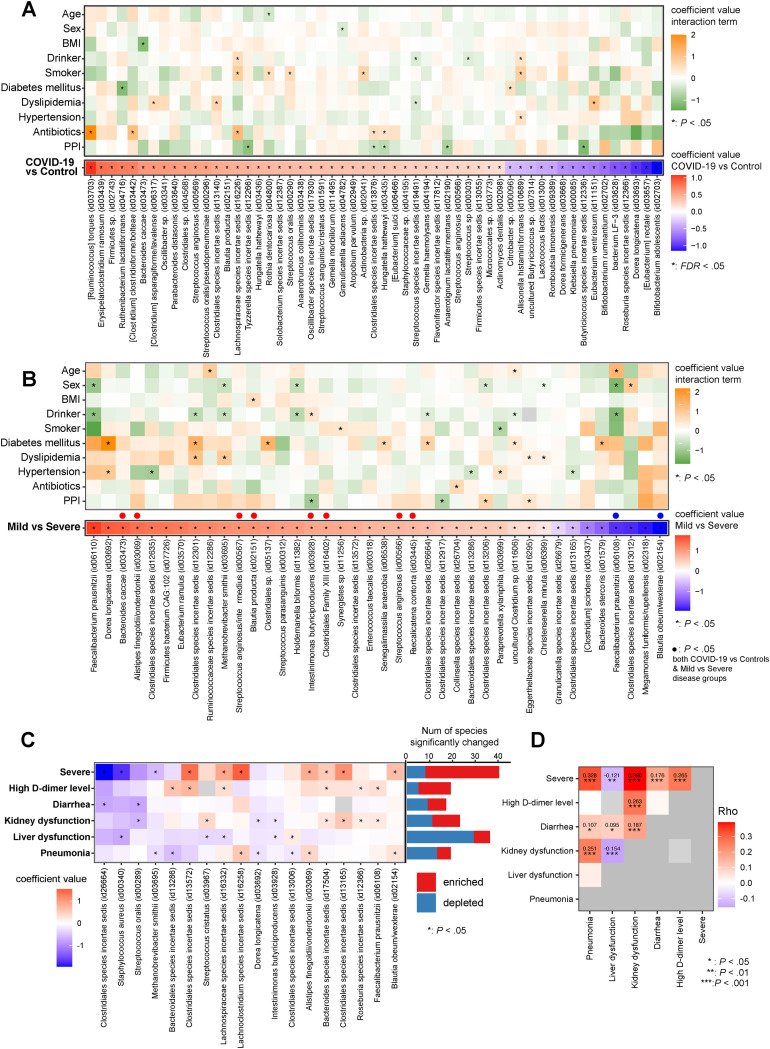
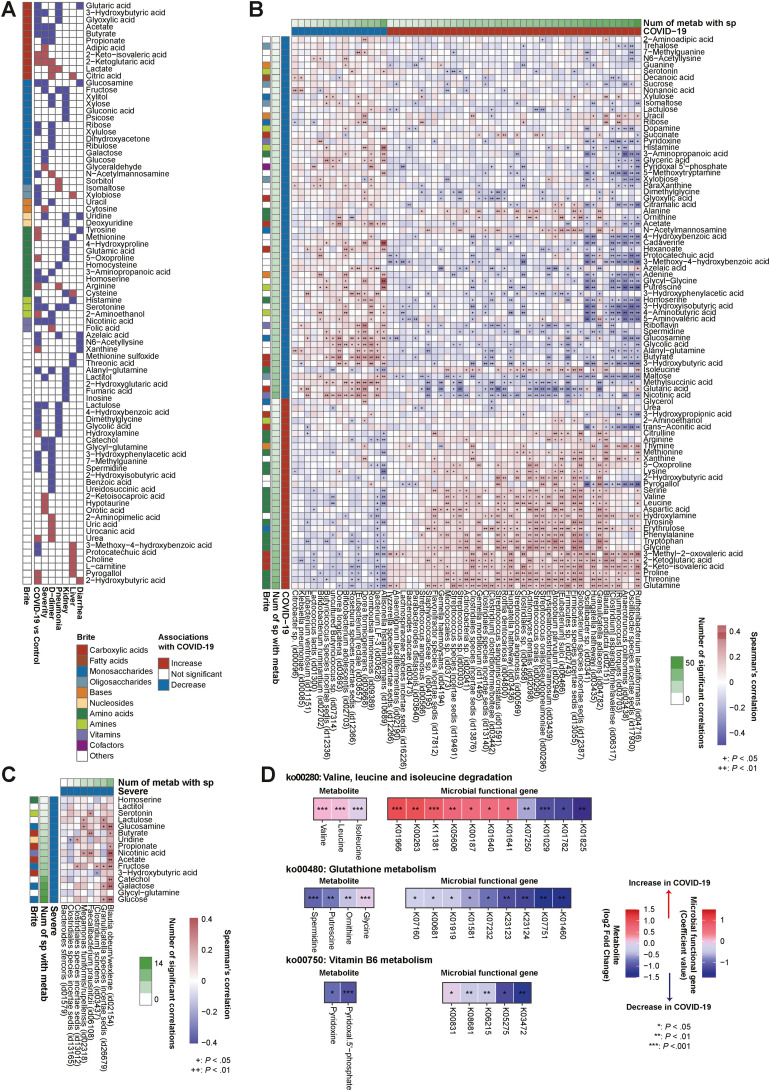
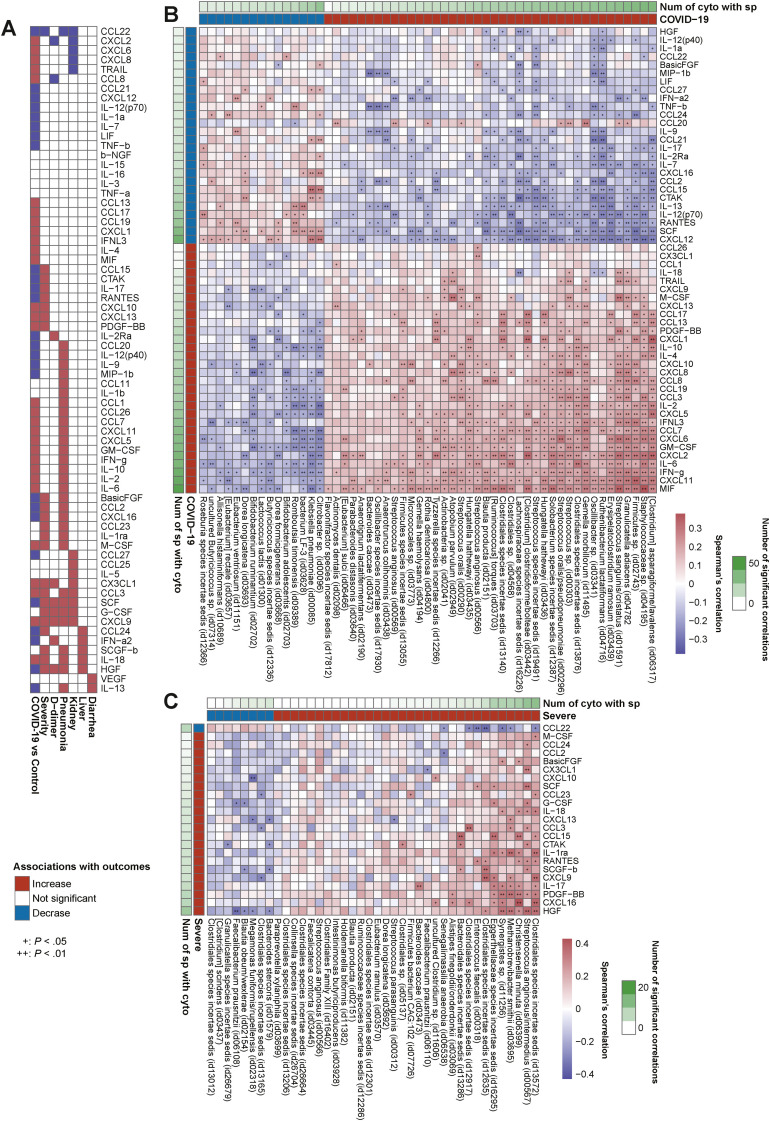
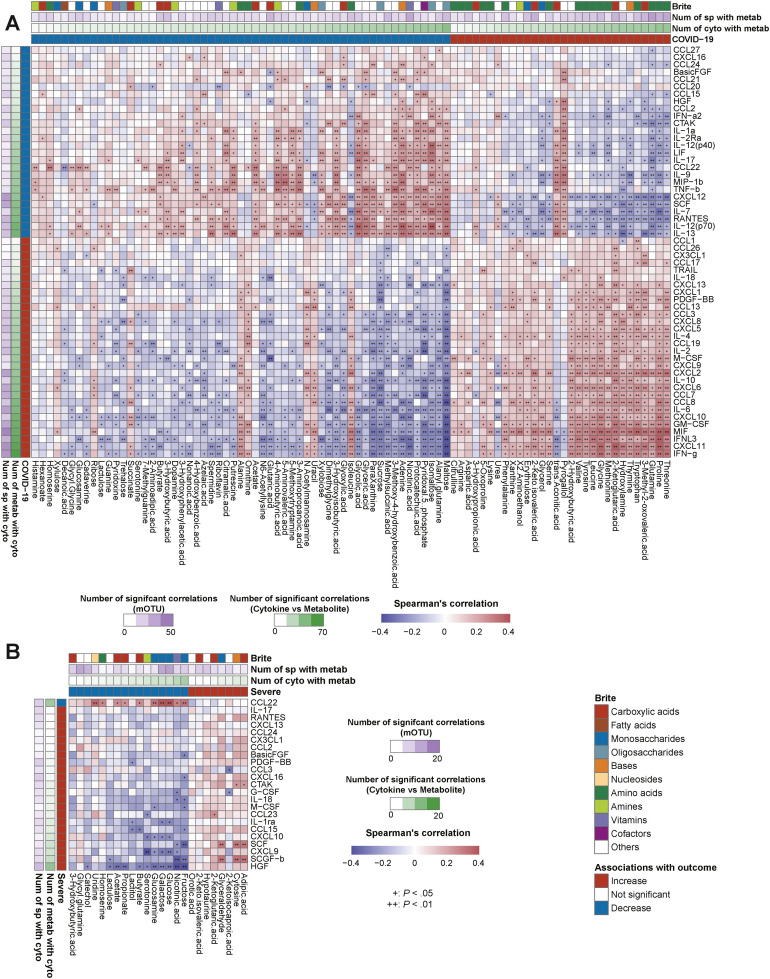
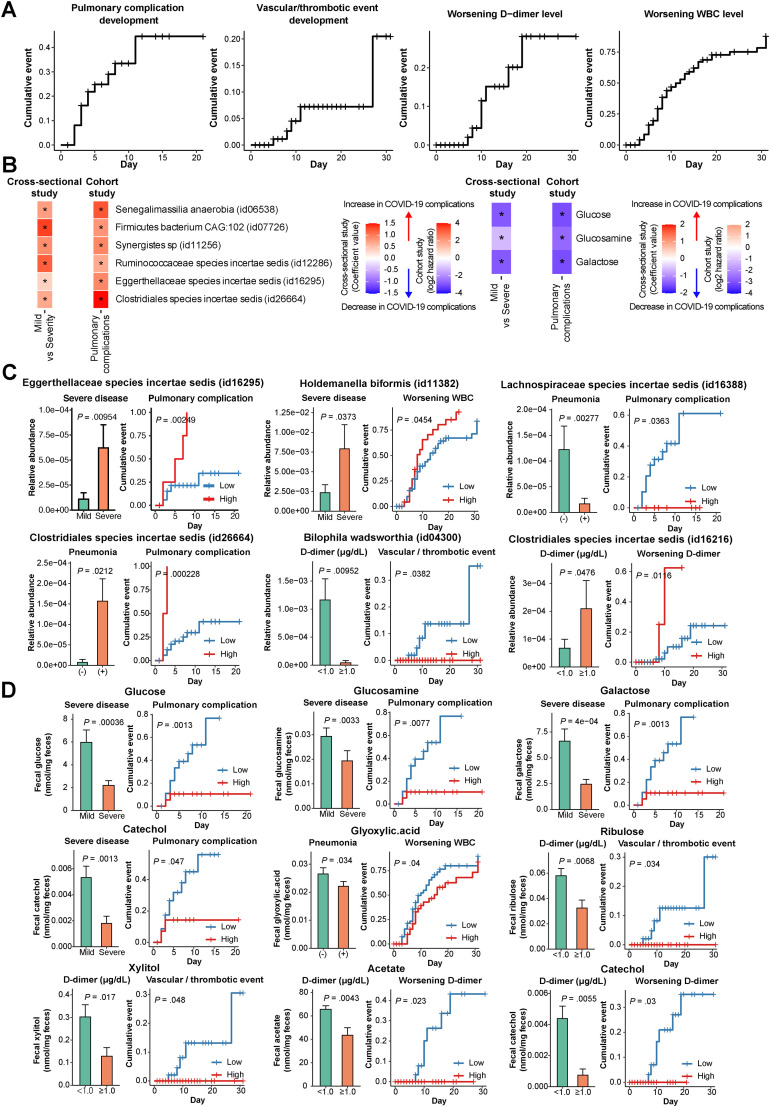
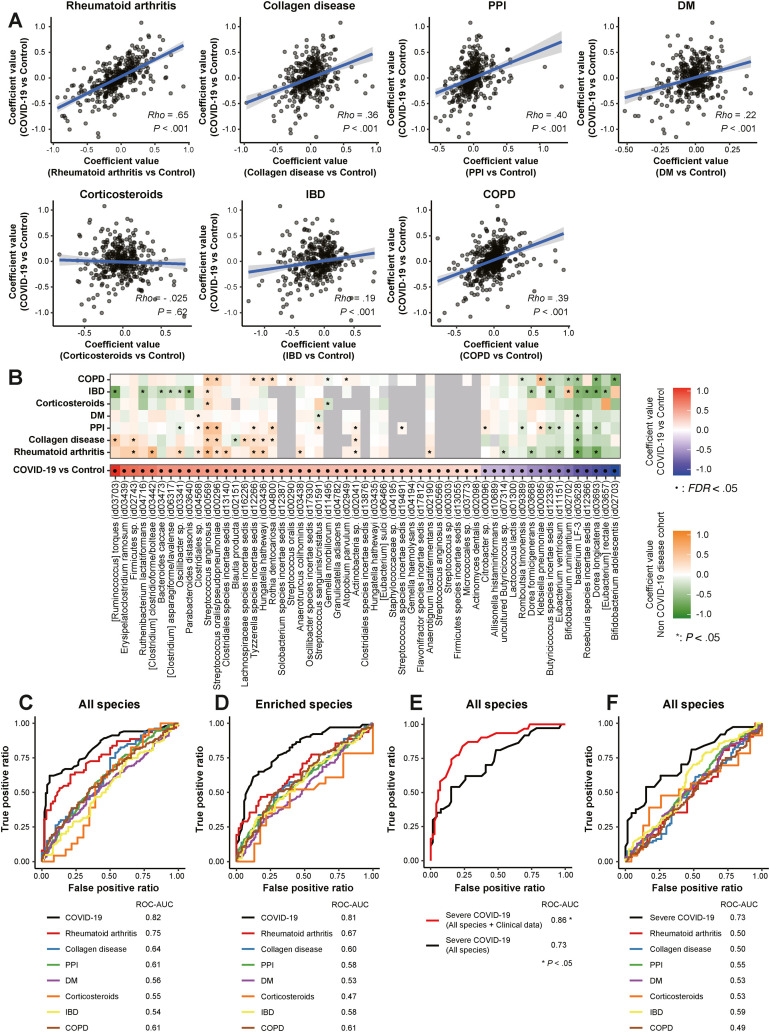
Multiple correlations were found between COVID-19-related microbes (eg, oral microbes and short-chain fatty acid producers) and gut metabolites (eg, branched-chain and aromatic amino acids, short-chain fatty acids, carbohydrates, neurotransmitters, and vitamin B6). Both were also linked to inflammatory cytokine dynamics (eg, interferon γ, interferon λ3, interleukin 6, CXCL-9, and CXCL-10). Such interrelationships were detected highly in severe disease and pneumonia; moderately in the high D-dimer level, kidney dysfunction, and liver dysfunction groups; but rarely in the diarrhea group. We confirmed concordances of altered metabolites (eg, branched-chain amino acids, spermidine, putrescine, and vitamin B6) in COVID-19 with their corresponding microbial functional genes. Results in microbial and metabolomic alterations with severe disease from the cross-sectional data set were partly concordant with those from the follow-up data set. Microbial signatures for COVID-19 were distinct from diabetes, inflammatory bowel disease, and proton-pump inhibitors but overlapping for rheumatoid arthritis. Random forest classifier models using microbiomes can highly predict COVID-19 and severe disease. The microbial signatures for COVID-19 showed moderate concordance between Hong Kong and Japan.
Multiomics analysis revealed multiple gut microbe-metabolite-cytokine interrelationships in COVID-19 and COVID-19related complications but few in gastrointestinal complications, suggesting microbiota-mediated immune responses distinct between the organ sites. Our results underscore the existence of a gut-lung axis in COVID-19.
我们研究了与 COVID-19 及其并发症相关的肠道微生物、代谢物和细胞因子之间的相互关系,并通过后续研究、日本 4D(疾病、药物、饮食、日常生活)微生物组队列和非日本数据集进行了验证。
我们对 112 名住院的 SARS-CoV-2 感染患者的粪便进行了 shotgun 宏基因组测序和代谢组学分析,对 112 名非 COVID-19 对照个体的血浆进行了细胞因子测量,并对重要的混杂因素进行了匹配。
在 COVID-19 相关微生物(例如口腔微生物和短链脂肪酸产生菌)和肠道代谢物(例如支链和芳香族氨基酸、短链脂肪酸、碳水化合物、神经递质和维生素 B6)之间发现了多种相关性。两者也与炎症细胞因子动力学有关(例如干扰素 γ、干扰素 λ3、白细胞介素 6、CXCL-9 和 CXCL-10)。这些相互关系在严重疾病和肺炎中检测到较高;在高 D-二聚体水平、肾功能不全和肝功能不全组中检测到中度;但在腹泻组中很少检测到。我们证实了 COVID-19 中改变的代谢物(例如支链氨基酸、亚精胺、腐胺和维生素 B6)与其相应的微生物功能基因之间的一致性。横断面数据集严重疾病中微生物和代谢组学改变的结果与随访数据集的结果部分一致。COVID-19 的微生物特征与糖尿病、炎症性肠病和质子泵抑制剂不同,但与类风湿关节炎重叠。使用微生物组的随机森林分类器模型可以高度预测 COVID-19 和严重疾病。COVID-19 的微生物特征在香港和日本之间有一定的一致性。
多组学分析揭示了 COVID-19 及其相关并发症中多种肠道微生物-代谢物-细胞因子相互关系,但胃肠道并发症较少,提示不同器官部位之间存在微生物介导的免疫反应。我们的研究结果强调了 COVID-19 中存在的肠道-肺部轴。