Parlier-Ahmad Anna Beth, Martin Caitlin E, Radic Maja, Svikis Dace
Department of Psychology, Virginia Commonwealth University.
Department of Obstetrics and Gynecology and Institute for Drug and Alcohol Studies, Virginia Commonwealth University.
Transl Issues Psychol Sci. 2021 Jun;7(2):141-153. doi: 10.1037/tps0000250. Epub 2021 Feb 4.
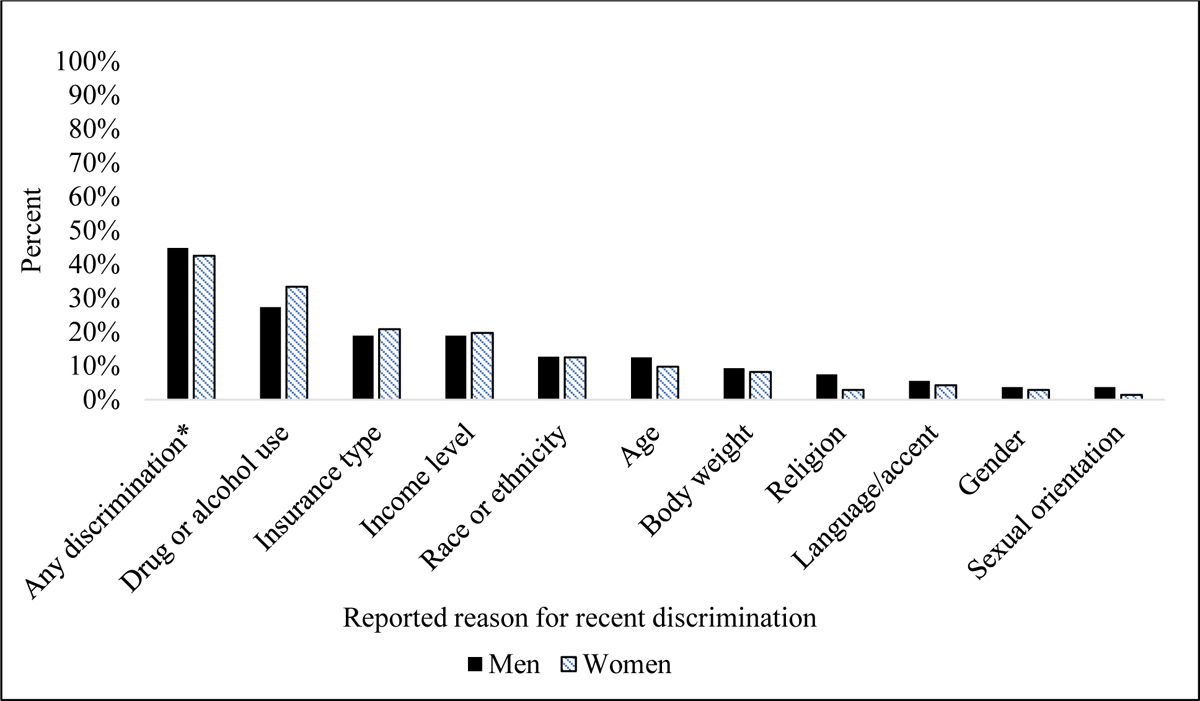
As treatment expansion in the opioid epidemic continues, it is important to examine how the makeup of individuals with opioid use disorder (OUD) is evolving. Treatment programs are increasingly utilizing buprenorphine, an effective OUD medication. This exploratory study examines sex and gender differences in psychosocial, clinical and substance use treatment characteristics of a clinical population in outpatient medication treatment for OUD with buprenorphine. This is a secondary data analysis from a cross-sectional survey study with retrospective medical record review conducted with patients recruited from an office-based opioid treatment clinic between July-September 2019. Participants on buprenorphine for at least 28 days at time of survey completion were included (n=133). Differences between men and women were explored with Pearson χ and Fisher's Exact Tests for categorical variables and T-Tests for continuous variables. The sample was 55.6% women and nearly three-fourths Black (70.7%). Mean days in current treatment episode was 431.6 (SD=244.82). Women were younger and more likely to be unemployed, identify as a sexual minority, and live alone with children than men. More women than men had a psychiatric comorbidity. Women reported more prescription opioid misuse while men had more heroin only opioid use. More men reported comorbid alcohol use and a history of drug overdose. One-third of participants reported recent discrimination in a healthcare setting due to substance use. As buprenorphine-based outpatient treatment programs continue to expand, present study findings support evaluation of the unique needs of men and women in order to better tailor OUD-related services and improve treatment outcomes.
随着阿片类药物流行期间治疗范围的不断扩大,审视阿片类药物使用障碍(OUD)患者的构成如何演变至关重要。治疗项目越来越多地使用丁丙诺啡,这是一种有效的OUD药物。这项探索性研究考察了在使用丁丙诺啡进行门诊药物治疗的临床人群中,心理社会、临床和物质使用治疗特征方面的性别差异。这是一项二次数据分析,来自一项横断面调查研究,并对2019年7月至9月从一家门诊阿片类药物治疗诊所招募的患者进行了回顾性病历审查。纳入了在调查完成时服用丁丙诺啡至少28天的参与者(n = 133)。对于分类变量,使用Pearson χ检验和Fisher精确检验来探索男性和女性之间的差异;对于连续变量,使用t检验。样本中女性占55.6%,近四分之三为黑人(70.7%)。当前治疗阶段的平均天数为431.6天(标准差 = 244.82)。与男性相比,女性更年轻,更有可能失业,认同自己为性少数群体,并且独自与孩子生活。患有精神疾病合并症的女性比男性更多。女性报告的处方阿片类药物滥用情况更多,而男性仅使用海洛因的阿片类药物使用情况更多。更多男性报告有合并酒精使用和药物过量史。三分之一的参与者报告最近在医疗环境中因物质使用而受到歧视。随着以丁丙诺啡为基础的门诊治疗项目不断扩大,本研究结果支持评估男性和女性的独特需求,以便更好地调整与OUD相关的服务并改善治疗效果。