Villy M-C, Masliah-Planchon J, Melaabi S, Trabelsi Grati O, Girard E, Bataillon G, Vincent-Salomon A, Le Gall J, Golmard L, Stoppa-Lyonnet D, Bieche I, Colas C
Department of Genetics, Institut Curie, Paris, France.
Paris Sciences & Lettres Research University, Paris, France.
Gynecol Oncol Rep. 2021 Sep 2;37:100855. doi: 10.1016/j.gore.2021.100855. eCollection 2021 Aug.
Tumors harboring a pathogenic variant, associated with high tumor mutational burden, are good candidates for immunotherapy. However, pathogenic variants are not currently screened in routine clinical practice. Can these tumors be identified by means of an already available test?
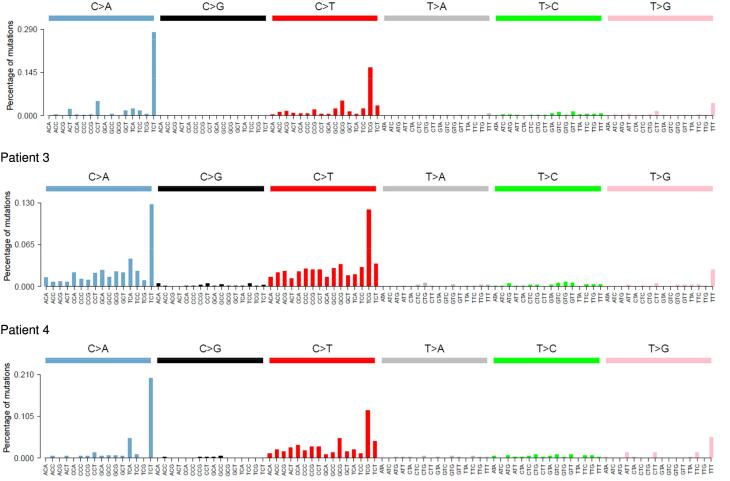
We describe seven tumors harboring a pathogenic variant, among eight patients with tumors harboring multiple variants (from 4 to 20). All patients were managed at Institut Curie, Paris. Five patients were selected because of unexpected tumor testing results with multiple variants and another three patients were selected because of a pathogenic variant detected by large tumor testing. We looked for other tumor variants by Next-Generation Sequencing in tumors harboring multiple variants, and for multiple variants in tumors harboring a pathogenic variant.
Four of the five tumors selected because of multiple variants exhibited a pathogenic variant, and all three tumors selected for pathogenic variants exhibited multiple variants.
Tumor testing could be a way to detect tumors harboring a highly mutagenic pathogenic variant.
携带与高肿瘤突变负荷相关的致病变异的肿瘤是免疫治疗的良好候选对象。然而,目前在常规临床实践中并未对致病变异进行筛查。能否通过一种已有的检测方法来识别这些肿瘤?
我们描述了8例携带多种变异(4至20种)的肿瘤患者中的7例携带致病变异的肿瘤。所有患者均在巴黎居里研究所接受治疗。5例患者因多种变异的肿瘤检测结果意外而被选中,另外3例患者因通过大型肿瘤检测发现致病变异而被选中。我们通过下一代测序在携带多种变异的肿瘤中寻找其他肿瘤变异,并在携带致病变异的肿瘤中寻找多种变异。
因多种变异而被选中的5例肿瘤中有4例表现出致病变异,而因致病变异而被选中的所有3例肿瘤均表现出多种变异。
肿瘤检测可能是检测携带高度诱变致病变异的肿瘤的一种方法。