Postgraduate Program in Health Sciences at the Faculty of Health Sciences, University of Brasília, Brasília, DF, Brazil.
Institute of Otorhinolaryngology, Brasília, DF, Brazil.
PLoS One. 2021 Sep 20;16(9):e0256275. doi: 10.1371/journal.pone.0256275. eCollection 2021.
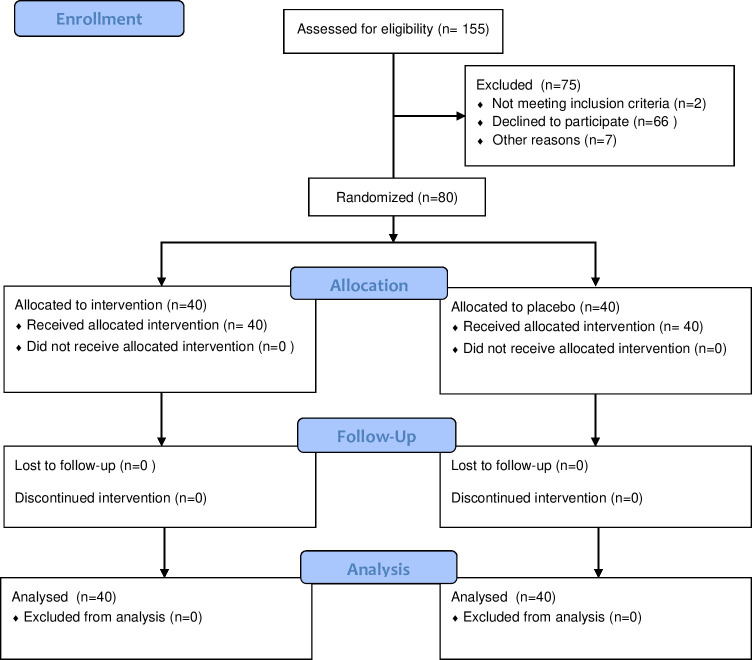
To test the hypothesis that caffeine can influence tinnitus, we recruited 80 patients with chronic tinnitus and randomly allocated them into two groups (caffeine and placebo) to analyze the self-perception of tinnitus symptoms after caffeine consumption, assuming that this is an adequate sample for generalization.
The participants were randomized into two groups: one group was administered a 300-mg capsule of caffeine, and the other group was given a placebo capsule (cornstarch). A diet that restricted caffeine consumption for 24 hours was implemented. The participants answered questionnaires (the Tinnitus Handicap Inventory-THI, the Visual Analog Scale-VAS, the profile of mood state-POMS) and underwent examinations (tonal and high frequency audiometry, acufenometry (frequency measure; intensity measure and the minimum level of tinnitus masking), transient otoacoustic emissions-TEOAE and distortion product otoacoustic emissions-DPOAE assessments) at two timepoints: at baseline and after capsule ingestion.
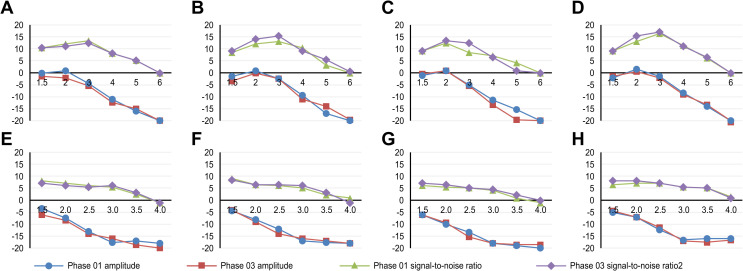
There was a significant change in mood (measured by the POMS) after caffeine consumption. The THI and VAS scores were improved at the second timepoint in both groups. The audiometry assessment showed a significant difference in some frequencies between baseline and follow-up measurements in both groups, but these differences were not clinically relevant. Similar findings were observed for the amplitude and signal-to-noise ratio in the TEOAE and DPOAE measurements.
Caffeine (300 mg) did not significantly alter the psychoacoustic measures, electroacoustic measures or the tinnitus-related degree of discomfort.
为了验证咖啡因是否会影响耳鸣这一假说,我们招募了 80 名慢性耳鸣患者,并将他们随机分为两组(咖啡因组和安慰剂组),以分析摄入咖啡因后耳鸣症状的自我感知,假设这是一个足够用于推广的样本。
参与者被随机分为两组:一组服用 300 毫克咖啡因胶囊,另一组服用安慰剂胶囊(玉米淀粉)。同时实行了限制 24 小时内咖啡因摄入的饮食。参与者回答了问卷(耳鸣残疾量表-THI、视觉模拟量表-VAS、心境状态问卷-POMS)并接受了检查(纯音和高频测听、耳鸣计(频率测量;强度测量和耳鸣掩蔽的最小水平)、瞬态耳声发射-TEOAE 和畸变产物耳声发射-DPOAE 评估),分别在两个时间点:基线和胶囊摄入后。
摄入咖啡因后情绪(通过 POMS 测量)发生了显著变化。两组在第二次时间点的 THI 和 VAS 评分均有所改善。两组的测听评估均显示基线和随访测量之间某些频率的差异具有统计学意义,但这些差异无临床意义。TEOAE 和 DPOAE 测量中的振幅和信噪比也观察到了类似的发现。
咖啡因(300 毫克)并未显著改变心理声学测量、电声测量或与耳鸣相关的不适程度。