He Bing, Xiao Yao, Liang Haodong, Huang Qianhui, Du Yuheng, Li Yijun, Garmire David, Sun Duxin, Garmire Lana X
Department of Computational Medicine and Bioinformatics, Medical School, University of Michigan, Ann Arbor, MI, USA.
Department of Statistics, College of Literature, Science, and the Arts, University of Michigan, Ann Arbor, MI, USA.
ArXiv. 2021 Sep 14:arXiv:2109.06377v4.
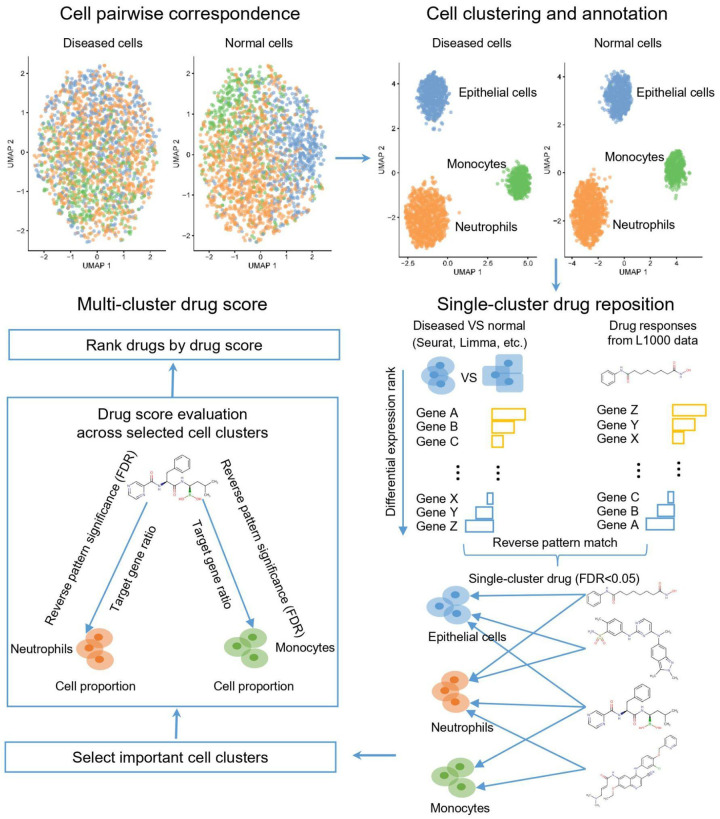
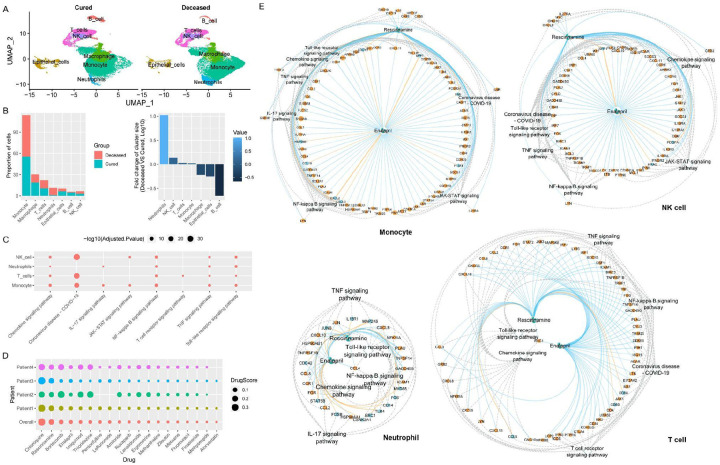
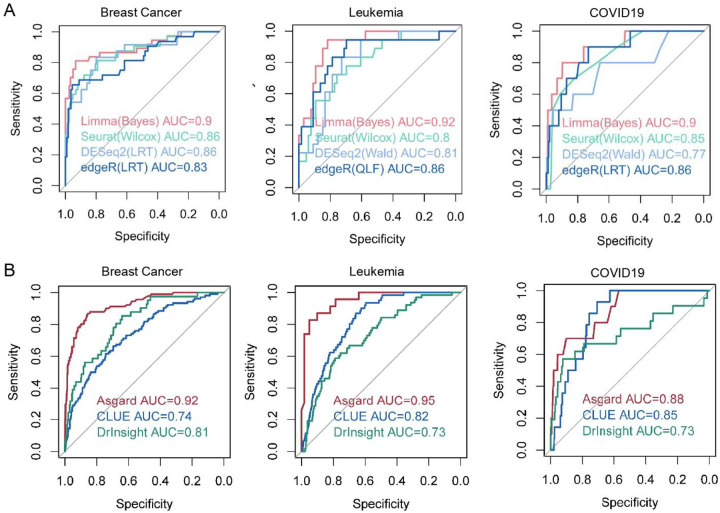
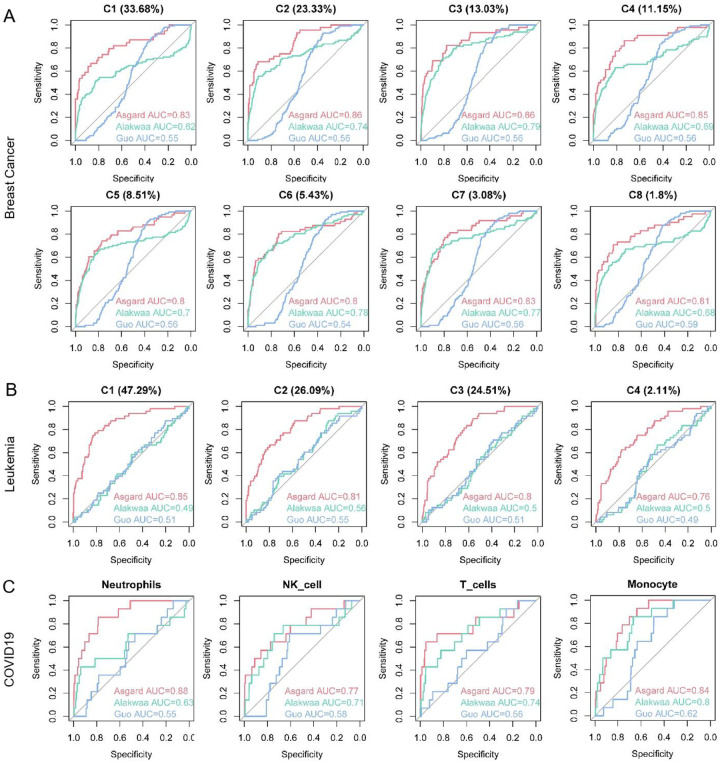
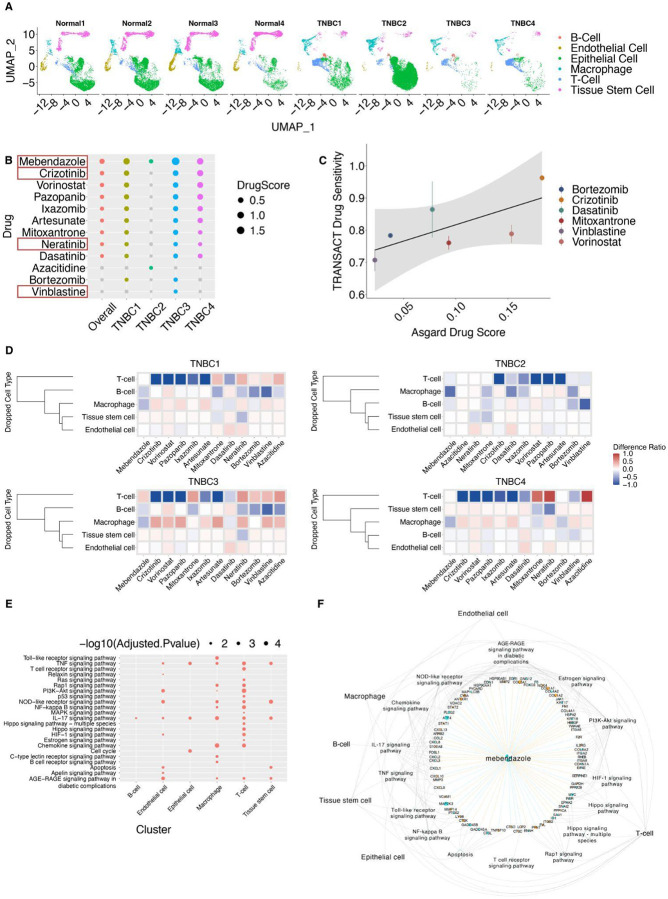
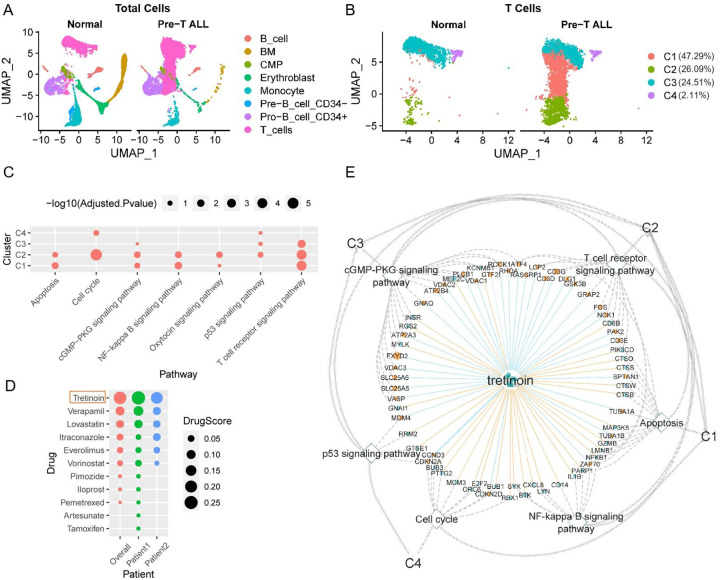
Intercellular heterogeneity is a major obstacle to successful precision medicine. Single-cell RNA sequencing (scRNA-seq) technology has enabled in-depth analysis of intercellular heterogeneity in various diseases. However, its full potential for precision medicine has yet to be reached. Towards this, we propose a new drug recommendation system called: A Single-cell Guided Pipeline to Aid Repurposing of Drugs (ASGARD). ASGARD defines a novel drug score predicting drugs by considering all cell clusters to address the intercellular heterogeneity within each patient. We tested ASGARD on multiple diseases, including breast cancer, acute lymphoblastic leukemia, and coronavirus disease 2019 (COVID-19). On single-drug therapy, ASGARD shows significantly better average accuracy (AUC of 0.92) compared to two other bulk-cell-based drug repurposing methods (AUC of 0.80 and 0.76). It is also considerably better (AUC of 0.82) than other cell cluster level predicting methods (AUC of 0.67 and 0.55). In addition, ASGARD is also validated by the drug response prediction method TRANSACT with Triple-Negative-Breast-Cancer patient samples. Many top-ranked drugs are either approved by FDA or in clinical trials treating corresponding diseases. In silico cell-type specific drop-out experiments using triple-negative breast cancers show the importance of T cells in the tumor microenvironment in affecting drug predictions. In conclusion, ASGARD is a promising drug repurposing recommendation tool guided by single-cell RNA-seq for personalized medicine. ASGARD is free for educational use at https://github.com/lanagarmire/ASGARD.
细胞间异质性是精准医学取得成功的主要障碍。单细胞RNA测序(scRNA-seq)技术能够深入分析各种疾病中的细胞间异质性。然而,其在精准医学方面的全部潜力尚未得到充分发挥。为此,我们提出了一种新的药物推荐系统,称为:单细胞指导的药物再利用辅助管道(ASGARD)。ASGARD通过考虑所有细胞簇来定义一种预测药物的新药物评分,以解决每个患者体内的细胞间异质性问题。我们在多种疾病上测试了ASGARD,包括乳腺癌、急性淋巴细胞白血病和2019冠状病毒病(COVID-19)。在单药治疗方面,与其他两种基于群体细胞的药物再利用方法(AUC分别为0.80和0.76)相比,ASGARD显示出显著更高的平均准确率(AUC为0.92)。它也比其他细胞簇水平的预测方法(AUC分别为0.67和0.55)要好得多(AUC为0.82)。此外,ASGARD还通过三阴乳腺癌患者样本的药物反应预测方法TRANSACT得到了验证。许多排名靠前的药物要么已获得美国食品药品监督管理局(FDA)批准,要么正在进行治疗相应疾病的临床试验。使用三阴乳腺癌进行的计算机模拟细胞类型特异性缺失实验表明,肿瘤微环境中的T细胞在影响药物预测方面具有重要作用。总之,ASGARD是一种由单细胞RNA测序指导的、用于个性化医疗的有前景的药物再利用推荐工具。ASGARD可在https://github.com/lanagarmire/ASGARD上免费用于教育目的。