The Department of Cardiovascular Medicine, The Affiliated Dongguan Hospital of Southern Medical University, Dongguan, Guangdong, China.
The Department of Cardiovascular Medicine, The Second Affiliated Hospital of Nanchang University, Nanchang, Jiangxi, China.
Aging (Albany NY). 2021 Sep 21;13(18):22412-22431. doi: 10.18632/aging.203547.
Inflammatory immunity theory has raised considerable concern in the pathogenesis of atherosclerosis. Proviral integration site of murine 2 (Pim-2) kinases functions in apoptosis pathways and the anti-inflammatory response. Here, we investigated whether Pim-2 kinase inhibits atherosclerotic inflammation by suppressing the mTORC1 pathway.
An atherosclerosis animal model was established by feeding ApoE mice a high-fat diet. THP-1-derived macrophages were subjected to ox-LDL (50 μg/ml, 24h) conditions to mimic the conditions.
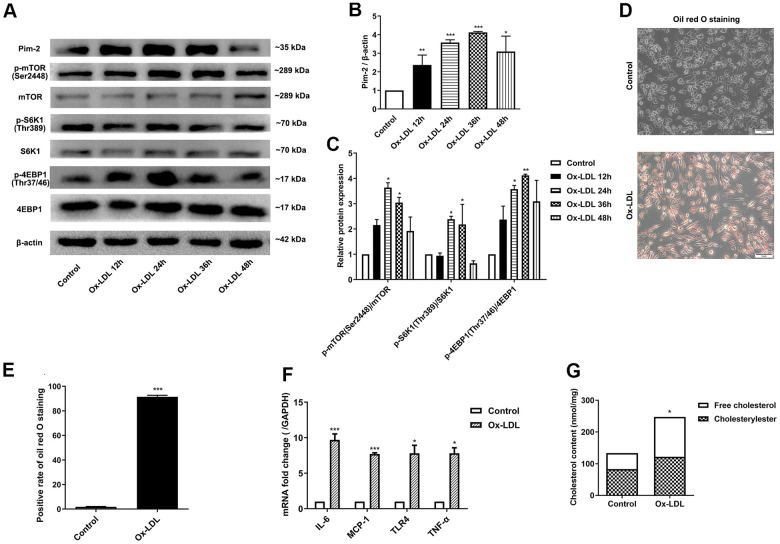
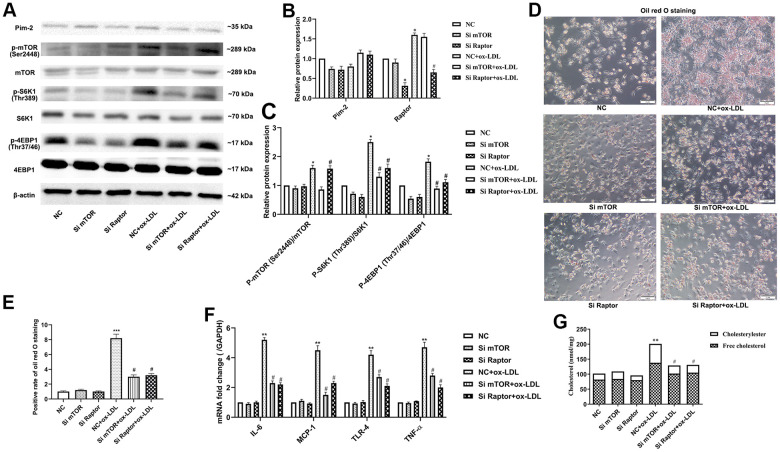
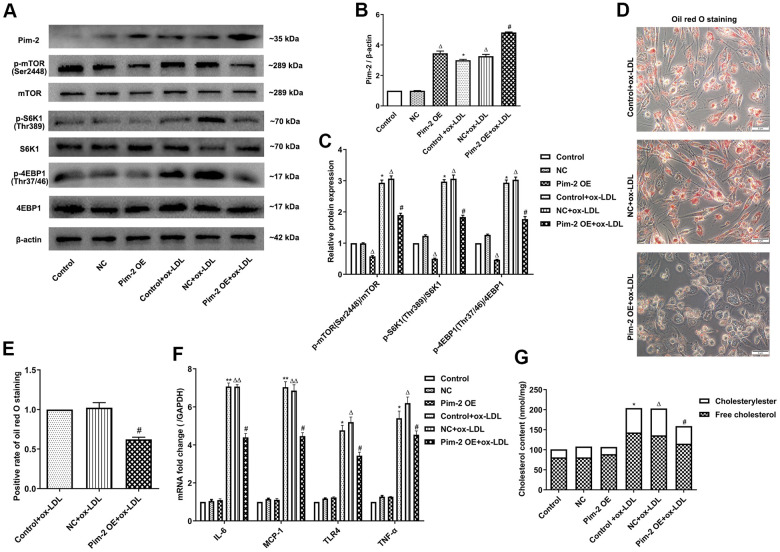
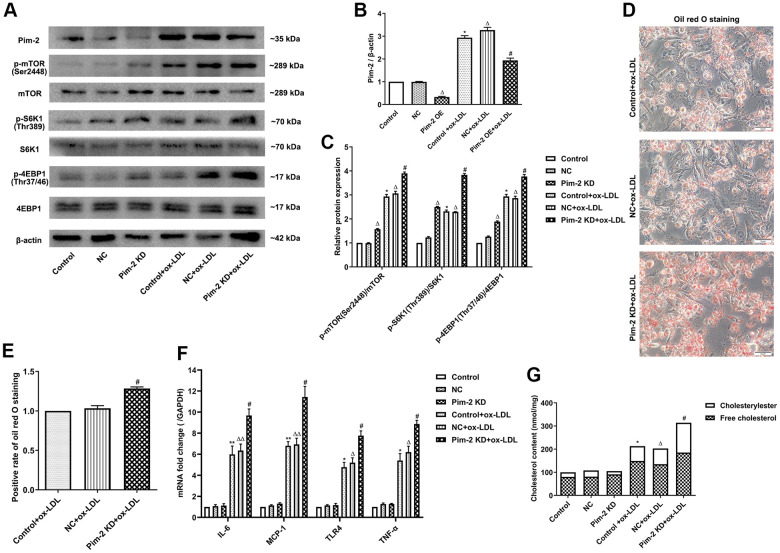
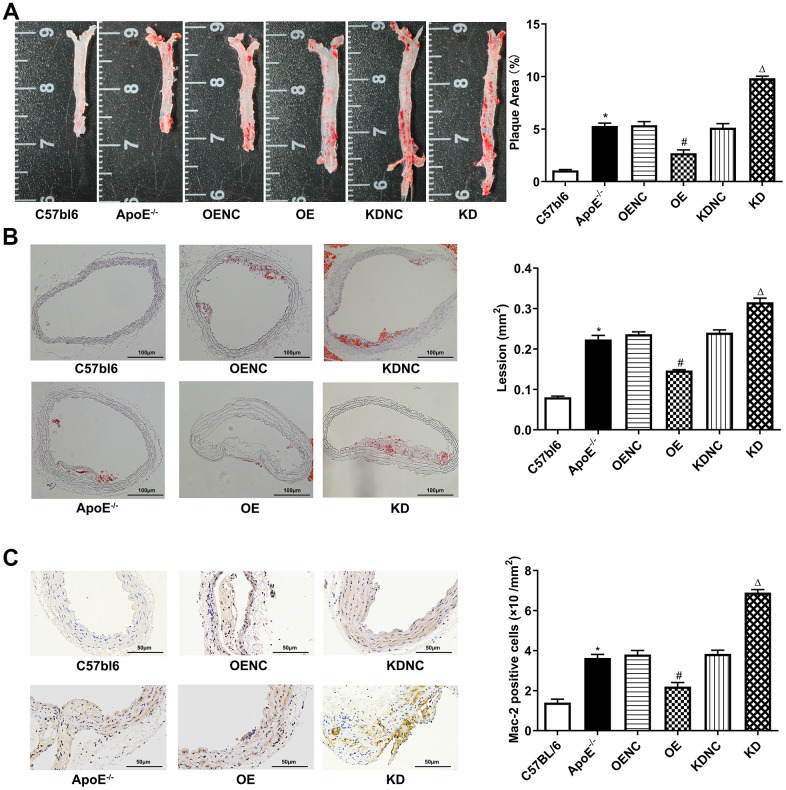
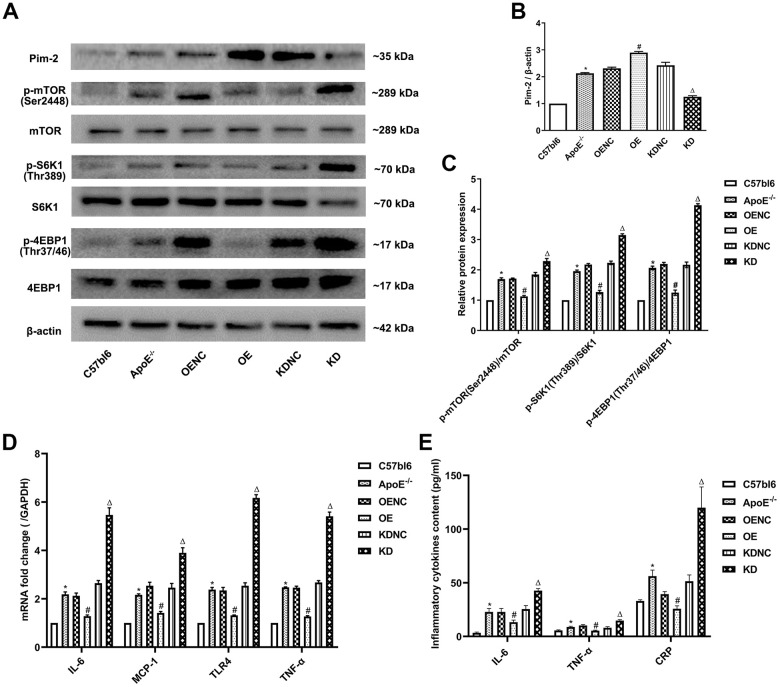
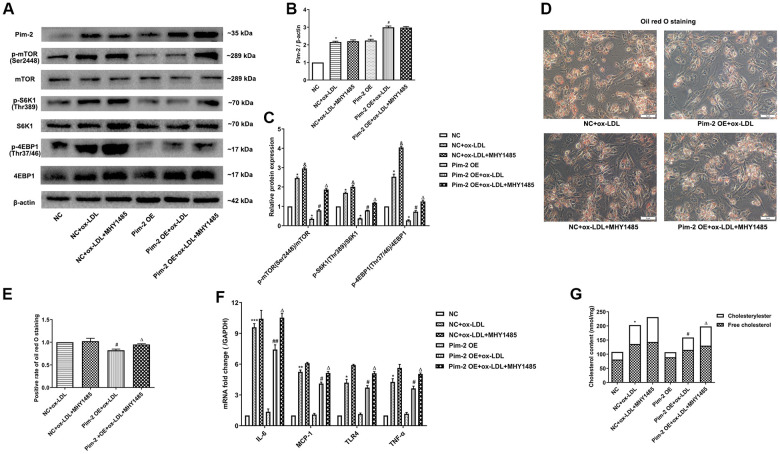
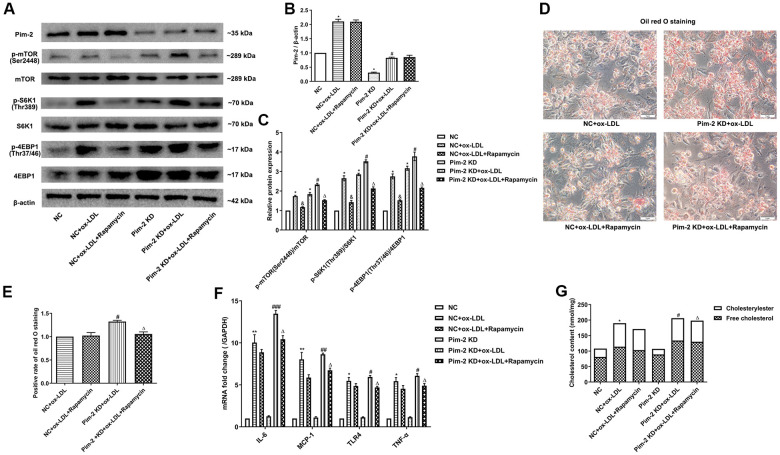
The protein expression of Pim-2 was upregulated in ox-LDL-treated THP-1-derived macrophages and an atherosclerotic mouse model. Additionally, ox-LDL upregulated the protein expression of p-mTOR, p-S6K1 and p-4EBP1, intracellular lipid droplets, free cholesterol and cholesterylester and the mRNA expression of inflammatory cytokines, including IL-6, MCP-1, TLR-4 and TNF-α, in THP-1-derived macrophages. Functionally, overexpressed Pim-2 (Pim-2 OE) attenuated atherosclerotic inflammation associated with the mTORC1 signaling pathway and , whereas knocked down Pim-2 (Pim-2 KD) markedly promoted atherosclerotic inflammation associated with upregulation of the mTORC1 signaling pathway. The plaque areas and lesions in the whole aorta and aortic root sections were alleviated in ApoE mice with Pim-2 OE, but aggravated by Pim-2 KD. Additionally, an mTOR agonist (MHY1485) counteracted the anti-inflammatory effect of Pim-2 in ox-LDL-treated THP-1-derived macrophages after Pim-2 OE, whereas rapamycin rescued atherosclerotic inflammation in ox-LDL-treated THP-1-derived macrophages after Pim-2 KD. Furthermore, si-mTOR and si-Raptor alleviated the atherosclerotic proinflammatory effect in ox-LDL-treated THP-1-derived macrophages in a the background of Pim-2 KD.
These results indicated that Pim-2 kinase inhibits atherosclerotic inflammation by suppressing the mTORC1 pathway.
炎症免疫理论在动脉粥样硬化的发病机制中引起了相当大的关注。原病毒整合位点的鼠 2(Pim-2)激酶在细胞凋亡途径和抗炎反应中发挥作用。在这里,我们研究了 Pim-2 激酶是否通过抑制 mTORC1 通路来抑制动脉粥样硬化炎症。
通过用高脂肪饮食喂养 ApoE-/-小鼠建立动脉粥样硬化动物模型。THP-1 衍生的巨噬细胞用 ox-LDL(50μg/ml,24h)处理以模拟条件。
在 ox-LDL 处理的 THP-1 衍生巨噬细胞和动脉粥样硬化小鼠模型中,Pim-2 的蛋白表达上调。此外,ox-LDL 上调了 p-mTOR、p-S6K1 和 p-4EBP1 的蛋白表达、细胞内脂滴、游离胆固醇和胆固醇酯以及炎症细胞因子的 mRNA 表达,包括 IL-6、MCP-1、TLR-4 和 TNF-α,在 THP-1 衍生的巨噬细胞中。功能上,过表达 Pim-2(Pim-2 OE)减轻了与 mTORC1 信号通路相关的动脉粥样硬化炎症,而敲低 Pim-2(Pim-2 KD)则显著促进了与 mTORC1 信号通路上调相关的动脉粥样硬化炎症。在 ApoE-/-小鼠中,Pim-2 OE 减轻了斑块面积和整个主动脉和主动脉根部切片的病变,但 Pim-2 KD 则加重了这些病变。此外,mTOR 激动剂(MHY1485)在 Pim-2 OE 后逆转了 ox-LDL 处理的 THP-1 衍生巨噬细胞中 Pim-2 的抗炎作用,而 rapamycin 则挽救了 ox-LDL 处理的 Pim-2 KD 后的 THP-1 衍生巨噬细胞中的动脉粥样硬化炎症。此外,在 Pim-2 KD 的背景下,si-mTOR 和 si-Raptor 减轻了 ox-LDL 处理的 THP-1 衍生巨噬细胞中的动脉粥样硬化促炎作用。
这些结果表明,Pim-2 激酶通过抑制 mTORC1 通路抑制动脉粥样硬化炎症。