Department of Veterinary Microbiology and Pathology, College of Veterinary Medicine, Washington State University, Pullman, Washington, United States of America.
PLoS One. 2021 Sep 22;16(9):e0257576. doi: 10.1371/journal.pone.0257576. eCollection 2021.
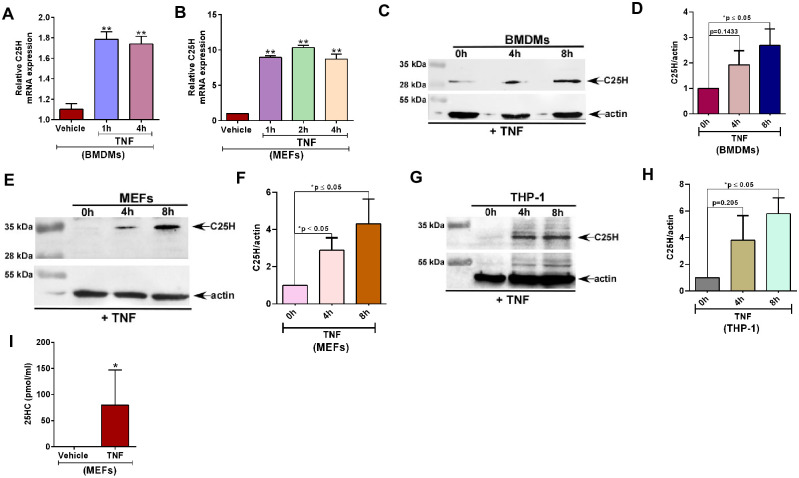
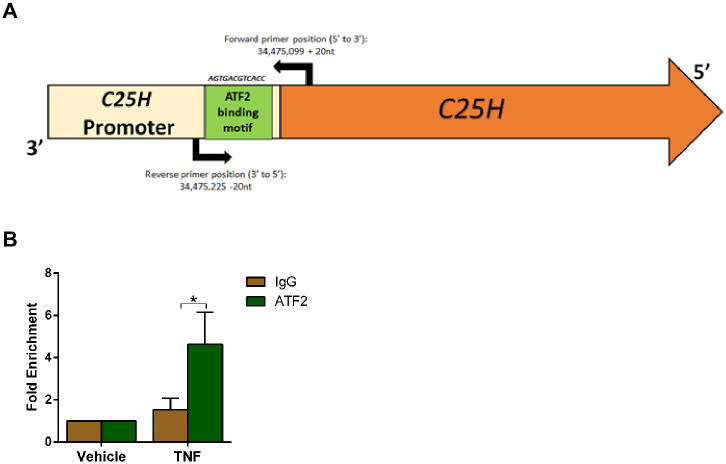
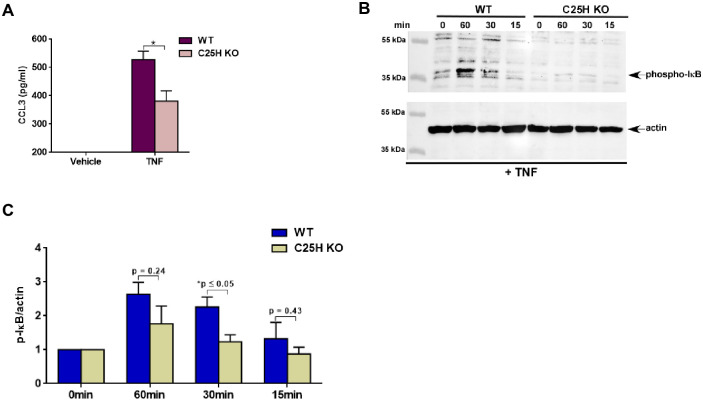
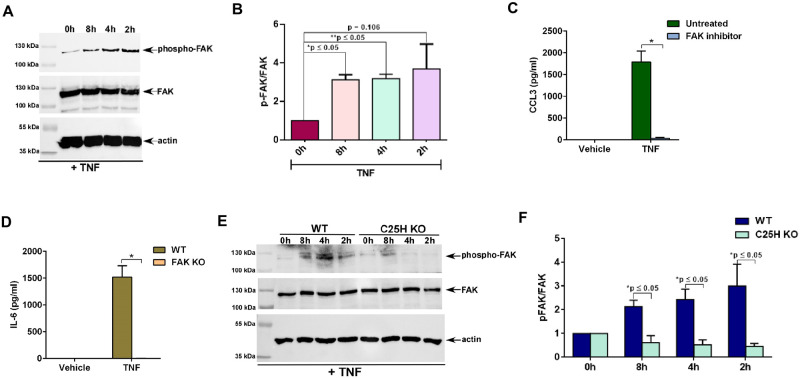
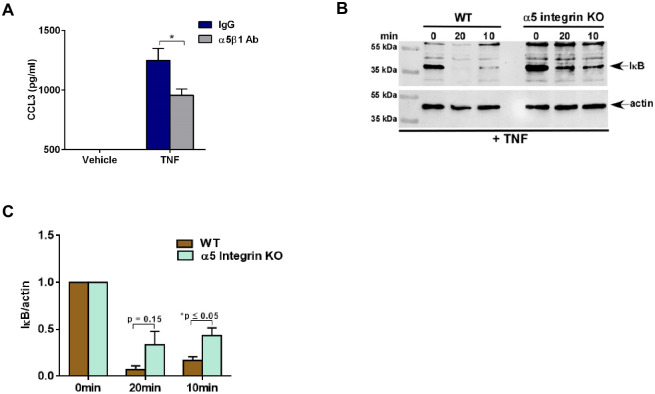
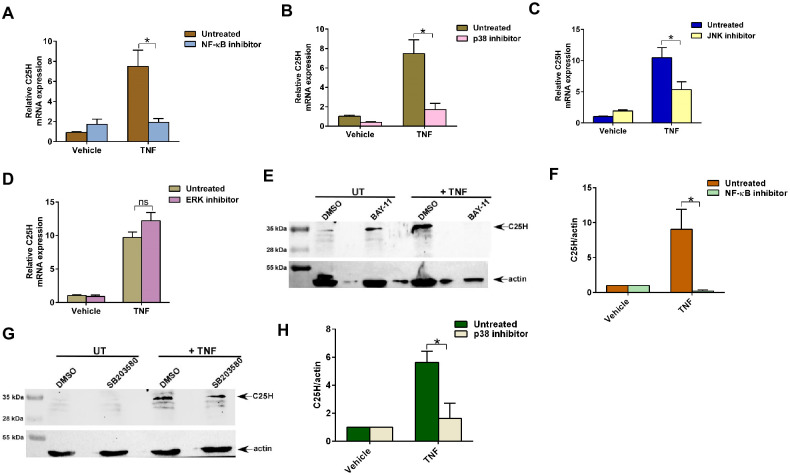
Exaggerated inflammatory response results in pathogenesis of various inflammatory diseases. Tumor Necrosis Factor-alpha (TNF) is a multi-functional pro-inflammatory cytokine regulating a wide spectrum of physiological, biological, and cellular processes. TNF induces Focal Adhesion Kinase (FAK) for various activities including induction of pro-inflammatory response. The mechanism of FAK activation by TNF is unknown and the involvement of cell surface integrins in modulating TNF response has not been determined. In the current study, we have identified an oxysterol 25-hydroxycholesterol (25HC) as a soluble extracellular lipid amplifying TNF mediated innate immune pro-inflammatory response. Our results demonstrated that 25HC-integrin-FAK pathway amplifies and optimizes TNF-mediated pro-inflammatory response. 25HC generating enzyme cholesterol 25-hydroxylase (C25H) was induced by TNF via NFκB and MAPK pathways. Specifically, chromatin immunoprecipitation assay identified binding of AP-1 (Activator Protein-1) transcription factor ATF2 (Activating Transcription Factor 2) to the C25H promoter following TNF stimulation. Furthermore, loss of C25H, FAK and α5 integrin expression and inhibition of FAK and α5β1 integrin with inhibitor and blocking antibody, respectively, led to diminished TNF-mediated pro-inflammatory response. Thus, our studies show extracellular 25HC linking TNF pathway with integrin-FAK signaling for optimal pro-inflammatory activity and MAPK/NFκB-C25H-25HC-integrin-FAK signaling network playing an essential role to amplify TNF dependent pro-inflammatory response. Thus, we have identified 25HC as the key factor involved in FAK activation during TNF mediated response and further demonstrated a role of cell surface integrins in positively regulating TNF dependent pro-inflammatory response.
过度的炎症反应导致各种炎症性疾病的发病机制。肿瘤坏死因子-α(TNF)是一种多功能的促炎细胞因子,调节广泛的生理、生物和细胞过程。TNF 诱导黏着斑激酶(FAK)进行各种活动,包括诱导促炎反应。TNF 激活 FAK 的机制尚不清楚,细胞表面整合素在调节 TNF 反应中的作用尚未确定。在本研究中,我们发现一种氧化固醇 25-羟胆固醇(25HC)作为一种可溶性细胞外脂质,可放大 TNF 介导的先天免疫促炎反应。我们的结果表明,25HC-整合素-FAK 途径放大和优化了 TNF 介导的促炎反应。TNF 通过 NFκB 和 MAPK 途径诱导 25HC 生成酶胆固醇 25-羟化酶(C25H)。具体来说,染色质免疫沉淀分析鉴定出 TNF 刺激后,AP-1(激活蛋白-1)转录因子 ATF2(激活转录因子 2)与 C25H 启动子结合。此外,C25H、FAK 和 α5 整合素表达的缺失以及 FAK 和 α5β1 整合素的抑制剂和阻断抗体的抑制,导致 TNF 介导的促炎反应减弱。因此,我们的研究表明,细胞外 25HC 将 TNF 途径与整合素-FAK 信号联系起来,以实现最佳的促炎活性,MAPK/NFκB-C25H-25HC-整合素-FAK 信号网络在放大 TNF 依赖性促炎反应中发挥着重要作用。因此,我们已经确定 25HC 是 TNF 介导反应中 FAK 激活的关键因素,并进一步证明了细胞表面整合素在正向调节 TNF 依赖性促炎反应中的作用。