
用于识别 Kelch 样蛋白 11 脑炎的免疫发病机制及拟议临床评分
Immunopathogenesis and proposed clinical score for identifying Kelch-like protein-11 encephalitis.
作者信息
Vogrig Alberto, Péricart Sarah, Pinto Anne-Laurie, Rogemond Véronique, Muñiz-Castrillo Sergio, Picard Géraldine, Selton Marion, Mittelbronn Michel, Lanoiselée Hélène-Marie, Michenet Patrick, Benaiteau Marie, Pariente Jérémie, Zéphir Helene, Giordana Caroline, Montaut Solveig, Salhi Hayet, Bachoumas Panagiotis, Montcuquet Alexis, Letovanec Igor, Uro-Coste Emmanuelle, Honnorat Jérôme
机构信息
French Reference Center for Paraneoplastic Neurological Syndromes and Autoimmune Encephalitis, Hospices Civils de Lyon, Hôpital Neurologique, 69677 Bron, France.
NeuroMyoGene Institute, INSERM U1217/CNRS UMR5310, 69008 Lyon, France.
出版信息
Brain Commun. 2021 Aug 26;3(3):fcab185. doi: 10.1093/braincomms/fcab185. eCollection 2021.
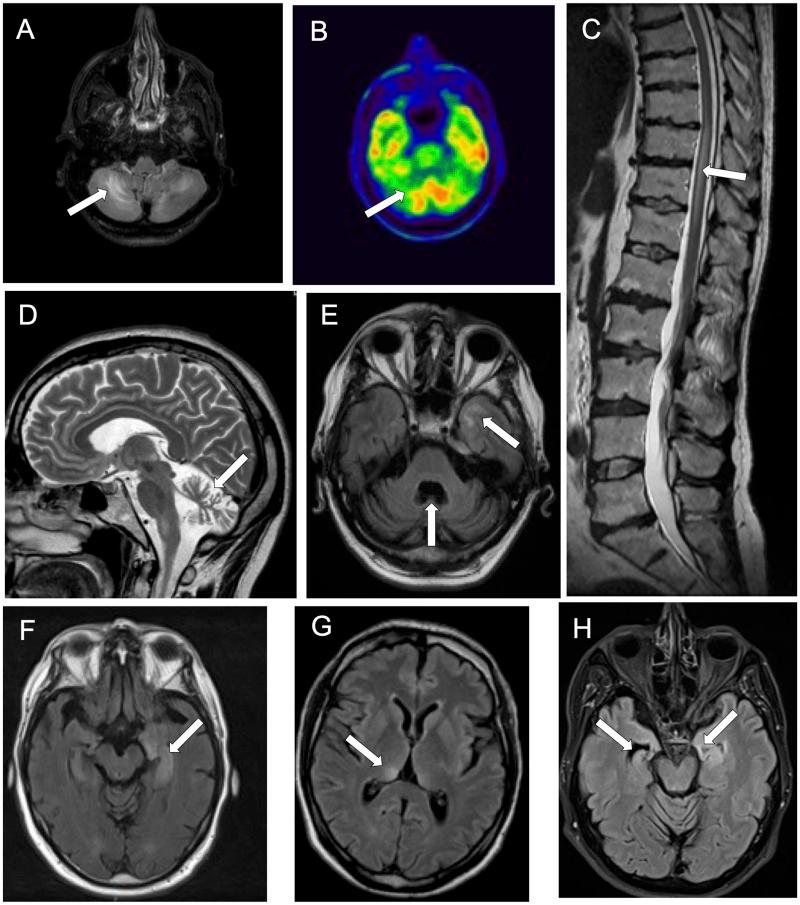
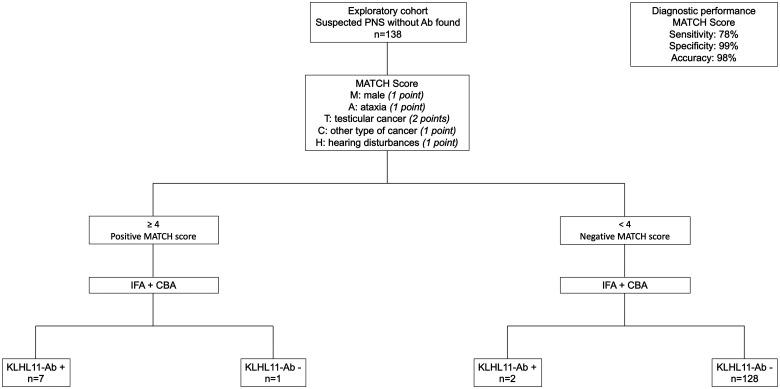
In this study, we report the clinical features of Kelch-like protein 11 antibody-associated paraneoplastic neurological syndrome, design and validate a clinical score to facilitate the identification of patients that should be tested for Kelch-like protein 11 antibodies, and examine in detail the nature of the immune response in both the brain and the tumour samples for a better characterization of the immunopathogenesis of this condition. The presence of Kelch-like protein 11 antibodies was retrospectively assessed in patients referred to the French Reference Center for paraneoplastic neurological syndrome and autoimmune encephalitis with (i) antibody-negative paraneoplastic neurological syndrome [limbic encephalitis ( = 105), cerebellar degeneration ( = 33)] and (ii) antibody-positive paraneoplastic neurological syndrome [Ma2-Ab encephalitis ( = 34), antibodies targeting N-methyl-D-aspartate receptor encephalitis with teratoma ( = 49)]. Additionally, since 1 January 2020, patients were prospectively screened for Kelch-like protein 11 antibodies as new usual clinical practice. Overall, Kelch-like protein 11 antibodies were detected in 11 patients [11/11, 100% were male; their median (range) age was 44 (35-79) years], 9 of them from the antibody-negative paraneoplastic neurological syndrome cohort, 1 from the antibody-positive (Ma2-Ab) cohort and 1 additional prospectively detected patient. All patients manifested a cerebellar syndrome, either isolated (4/11, 36%) or part of a multi-system neurological disorder (7/11, 64%). Additional core syndromes were limbic encephalitis (5/11, 45%) and myelitis (2/11, 18%). Severe weight loss (7/11, 64%) and hearing loss/tinnitus (5/11, 45%) were common. Rarer neurologic manifestations included hypersomnia and seizures (2/11, 18%). Two patients presented phenotypes resembling primary neurodegenerative disorders (progressive supranuclear palsy and flail arm syndrome, respectively). An associated cancer was found in 9/11 (82%) patients; it was most commonly (7/9, 78%) a spontaneously regressed ('burned-out') testicular germ cell tumour. A newly designed clinical score (MATCH score: male, ataxia, testicular cancer, hearing alterations) with a cut-off ≥4 successfully identified patients with Kelch-like protein 11 antibodies (sensitivity 78%, specificity 99%). Pathological findings (three testicular tumours, three lymph node metastases of testicular tumours, one brain biopsy) showed the presence of a T-cell inflammation with resulting anti-tumour immunity in the testis and one chronic, exhausted immune response-demonstrated by immune checkpoint expression-in the metastases and the brain. In conclusion, these findings suggest that Kelch-like protein 11 antibody paraneoplastic neurological syndrome is a homogeneous clinical syndrome and its detection can be facilitated using the MATCH score. The pathogenesis is probably T-cell mediated, but the stages of inflammation are different in the testis, metastases and the brain.
在本研究中,我们报告了 Kelch 样蛋白 11 抗体相关副肿瘤性神经综合征的临床特征,设计并验证了一种临床评分系统,以帮助识别应检测 Kelch 样蛋白 11 抗体的患者,并详细研究脑和肿瘤样本中的免疫反应性质,以便更好地描述这种疾病的免疫发病机制。对转诊至法国副肿瘤性神经综合征和自身免疫性脑炎参考中心的患者进行回顾性评估,以确定 Kelch 样蛋白 11 抗体的存在情况,这些患者包括:(i)抗体阴性的副肿瘤性神经综合征 [边缘性脑炎(n = 105)、小脑变性(n = 33)] 和(ii)抗体阳性的副肿瘤性神经综合征 [Ma2 抗体脑炎(n = 34)、伴有畸胎瘤的靶向 N-甲基-D-天冬氨酸受体脑炎抗体(n = 49)]。此外,自 2020 年 1 月 1 日起,按照新的常规临床实践对患者进行前瞻性 Kelch 样蛋白 11 抗体筛查。总体而言,在 11 名患者中检测到 Kelch 样蛋白 11 抗体 [11/11,100% 为男性;他们的年龄中位数(范围)为 44(35 - 79)岁],其中 9 名来自抗体阴性的副肿瘤性神经综合征队列,1 名来自抗体阳性(Ma2 抗体)队列,另有 1 名是前瞻性检测到的患者。所有患者均表现出小脑综合征,要么是孤立性的(4/11,36%),要么是多系统神经疾病的一部分(7/11,64%)。其他核心综合征包括边缘性脑炎(5/11,45%)和脊髓炎(2/11,18%)。严重体重减轻(7/11,64%)和听力丧失/耳鸣(5/11,45%)很常见。较罕见的神经表现包括嗜睡和癫痫发作(2/11,18%)。两名患者表现出类似于原发性神经退行性疾病的表型(分别为进行性核上性麻痹和连枷臂综合征)。在 9/11(82%)的患者中发现了相关癌症;最常见的是(7/9,78%)自发消退的(“消退性”)睾丸生殖细胞瘤。新设计的临床评分(MATCH 评分:男性、共济失调、睾丸癌、听力改变),截断值≥4 能够成功识别出 Kelch 样蛋白 11 抗体阳性的患者(敏感性 78%,特异性 99%)。病理结果(三个睾丸肿瘤、三个睾丸肿瘤的淋巴结转移、一次脑活检)显示,睾丸中存在 T 细胞炎症并由此产生抗肿瘤免疫,而在转移灶和脑中存在一种慢性、耗竭的免疫反应——通过免疫检查点表达证实。总之,这些发现表明 Kelch 样蛋白 11 抗体相关副肿瘤性神经综合征是一种同质的临床综合征,使用 MATCH 评分有助于其检测。发病机制可能是 T 细胞介导的,但睾丸、转移灶和脑中的炎症阶段有所不同。




 Zotero 插件