Division of HepatologyDepartment of Medicine IILeipzig University Medical CenterLeipzigGermany.
Hepatol Commun. 2021 Oct;5(10):1632-1648. doi: 10.1002/hep4.1708. Epub 2021 Jun 18.
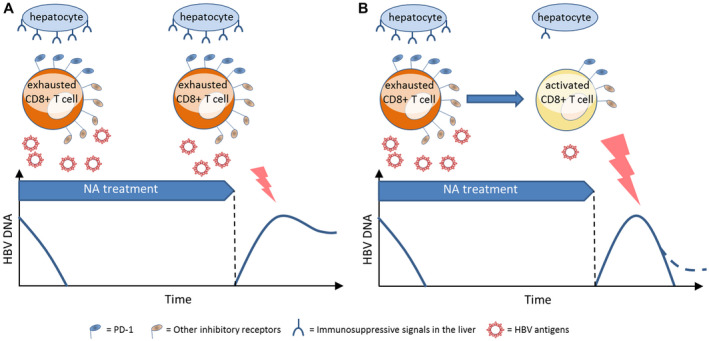
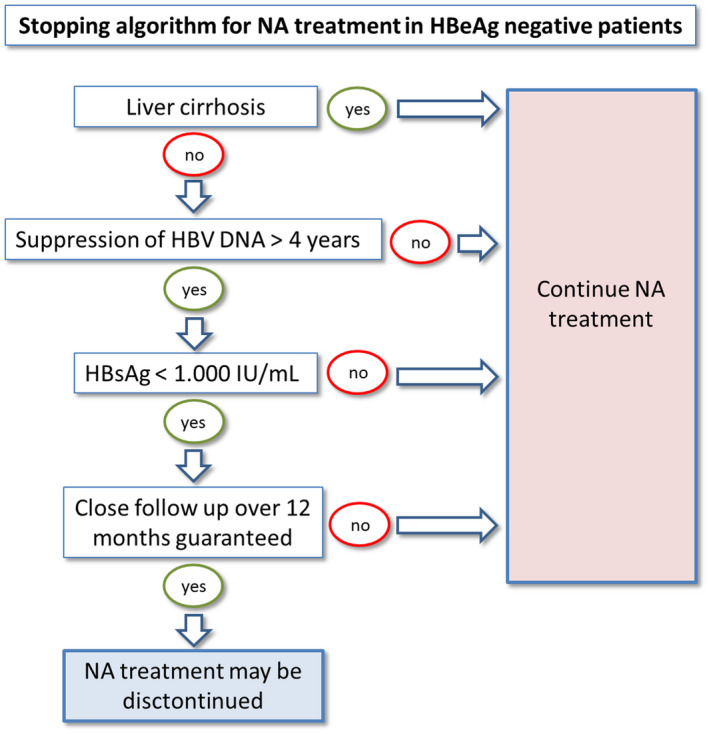
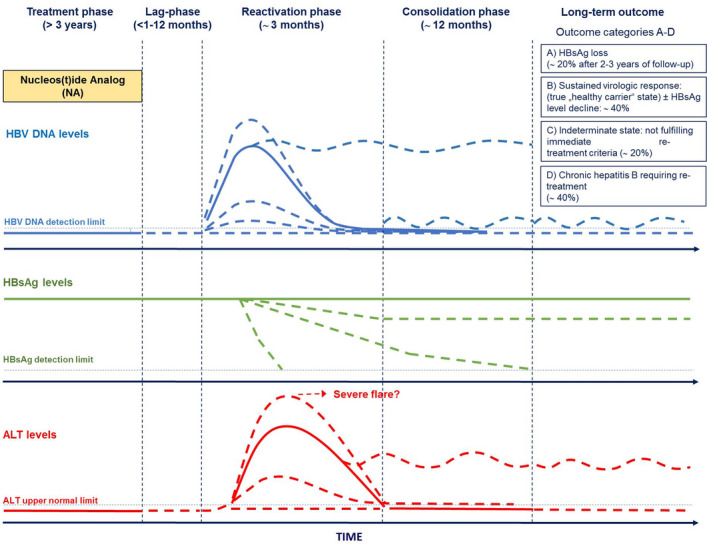
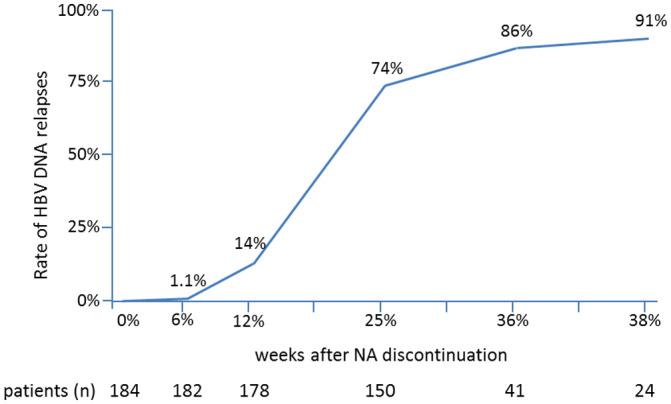
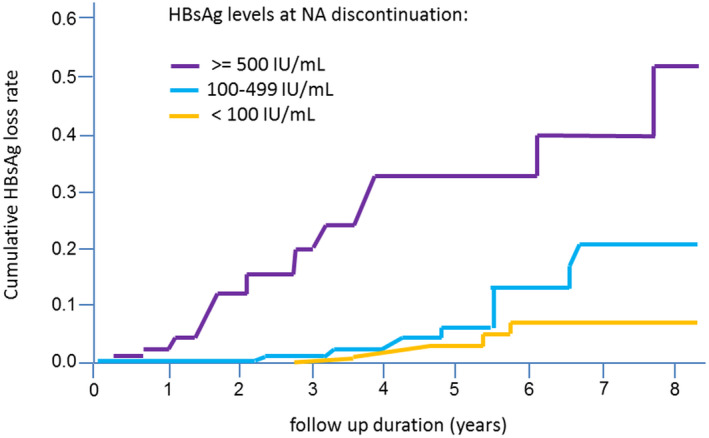
Systematic discontinuation of long-term treatment with nucleos(t)ide analogues (NAs) is one strategy to increase functional cure rates in patients with chronic hepatitis B e antigen (HBeAg)-negative hepatitis B. Currently, available study results are heterogeneous; however, long-term hepatitis B surface antigen (HBsAg) loss rates of up to 20% have been reported in prospective trials. This review proposes criteria that can be used when considering NA discontinuation in patients with chronic hepatitis B virus (HBV). Discontinuing NA treatment frequently results in a virologic and biochemical relapse that runs through different phases: the lag phase, reactivation phase, and consolidation phase. The HBV-DNA flares observed during the reactivation phase are often transient and most likely represent a trigger for inducing a long-term immune control by specific CD8+ T cells, and therefore do not need immediate interventions but close follow-up evaluation. Low HBsAg levels at the time of treatment cessation predict a positive long-term response to NA discontinuation associated with a higher likelihood of HBsAg clearance. Other host and viral biomarkers are currently under evaluation that may prove to be helpful to further characterize the population that may benefit most from the finite NA treatment concept. Potential harmful biochemical flares during the reactivation phase need to be identified early and can be effectively terminated by reintroducing NA treatment. Hepatic decompensation represents a risk to patients with cirrhosis undergoing NA discontinuation. Therefore, the finite NA approach should only be considered after excluding advanced fibrosis and cirrhosis and if a close follow-up of the patient and supervision by an experienced physician can be guaranteed. Conclusion: For selected patients, NA discontinuation has become a powerful tool to achieve control over HBeAg-negative HBV infections. Its significant effect represents a challenge to novel treatment approaches, but it may also serve as their enhancer.
核苷(酸)类似物(NAs)长期治疗的系统停药是增加慢性乙型肝炎 e 抗原(HBeAg)阴性乙型肝炎患者功能性治愈率的策略之一。目前,可用的研究结果存在异质性;然而,前瞻性试验报告的长期乙型肝炎表面抗原(HBsAg)丢失率高达 20%。本综述提出了在考虑慢性乙型肝炎病毒(HBV)患者停止使用 NAs 时可以使用的标准。停止 NAs 治疗后,经常会出现病毒学和生化复发,经历不同的阶段:潜伏期、再激活期和巩固期。再激活期观察到的 HBV-DNA 爆发通常是短暂的,很可能代表诱导特异性 CD8+T 细胞长期免疫控制的触发因素,因此不需要立即干预,但需要密切随访评估。治疗停止时的低 HBsAg 水平预测对 NAs 停药的长期阳性反应,与 HBsAg 清除的可能性更高相关。目前正在评估其他宿主和病毒生物标志物,这些标志物可能有助于进一步确定最有可能从有限 NAs 治疗概念中获益的人群。再激活期的潜在有害生化爆发需要早期识别,并通过重新引入 NAs 治疗可以有效地终止。肝失代偿是接受 NAs 停药的肝硬化患者的风险。因此,只有在排除晚期纤维化和肝硬化并能保证对患者的密切随访和由经验丰富的医生监督的情况下,才能考虑有限 NAs 方法。结论:对于选定的患者,NAs 停药已成为控制 HBeAg 阴性 HBV 感染的有力工具。它的显著效果对新的治疗方法构成了挑战,但也可能成为它们的增强剂。