Psychology, Faculty of Natural Sciences, University of Stirling, Cottrell Building, Stirling, FK9 4LA, UK.
Cogn Res Princ Implic. 2021 Sep 24;6(1):63. doi: 10.1186/s41235-021-00326-w.
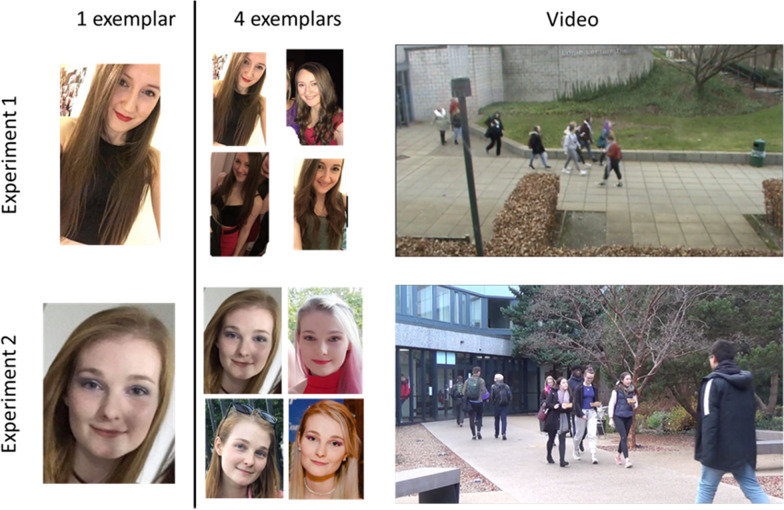
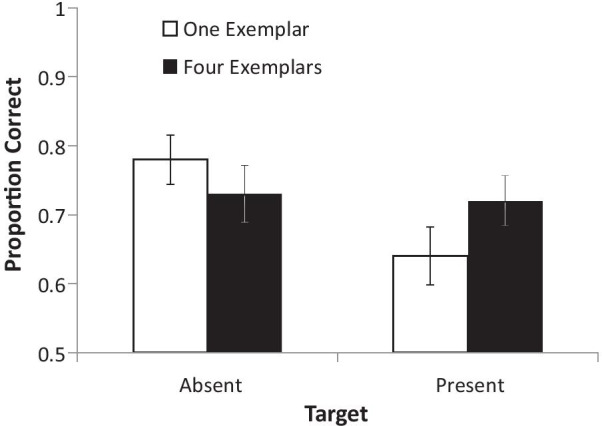
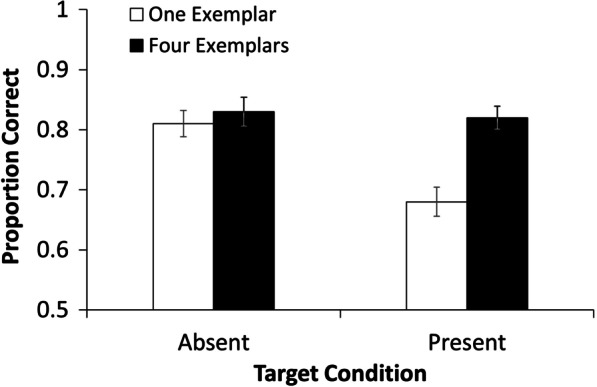
Finding an unfamiliar person in a crowd of others is an integral task for police officers, CCTV-operators, and security staff who may be looking for a suspect or missing person; however, research suggests that it is difficult and accuracy in such tasks is low. In two real-world visual-search experiments, we examined whether being provided with four images versus one image of an unfamiliar target person would help improve accuracy when searching for that person through video footage. In Experiment 1, videos were taken from above and at a distance to simulate CCTV, and images of the target showed their face and torso. In Experiment 2, videos were taken from approximately shoulder height, such as one would expect from body-camera or mobile phone recordings, and target images included only the face. Our findings suggest that having four images as exemplars leads to higher accuracy in the visual search tasks, but this only reached significance in Experiment 2. There also appears to be a conservative bias whereby participants are more likely to respond that the target is not in the video when presented with only one image as opposed to 4. These results point to there being an advantage for providing multiple images of targets for use in video visual-search.
在人群中找到一个不熟悉的人是警察、CCTV 操作人员和安全人员的一项基本任务,他们可能在寻找嫌疑人或失踪人员;然而,研究表明,这项任务很困难,准确性也很低。在两个真实世界的视觉搜索实验中,我们研究了在通过视频片段搜索目标人物时,提供四张还是一张不熟悉目标人物的图像是否有助于提高准确性。在实验 1 中,从上方和远处拍摄视频,以模拟 CCTV,目标图像显示其面部和躯干。在实验 2 中,从大约肩部高度拍摄视频,例如人们期望从身体摄像头或手机录制中获得的视频,目标图像仅包括面部。我们的研究结果表明,提供四张图像作为范例会导致视觉搜索任务的准确性更高,但这仅在实验 2 中达到显著水平。似乎还存在一种保守偏见,即当只呈现一张图像而不是四张图像时,参与者更有可能回答目标不在视频中。这些结果表明,为视频视觉搜索提供多个目标图像会有优势。