Department of Drug Design and Pharmacology, Faculty of Health and Medical Sciences, University of Copenhagen, Copenhagen Ø 2100, Denmark.
Department of Neuroscience, Tufts University School of Medicine, Boston, MA, United States.
Biochem Pharmacol. 2021 Nov;193:114781. doi: 10.1016/j.bcp.2021.114781. Epub 2021 Sep 21.
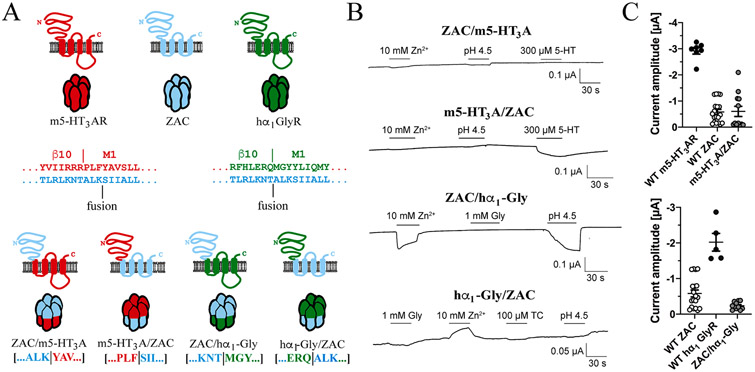
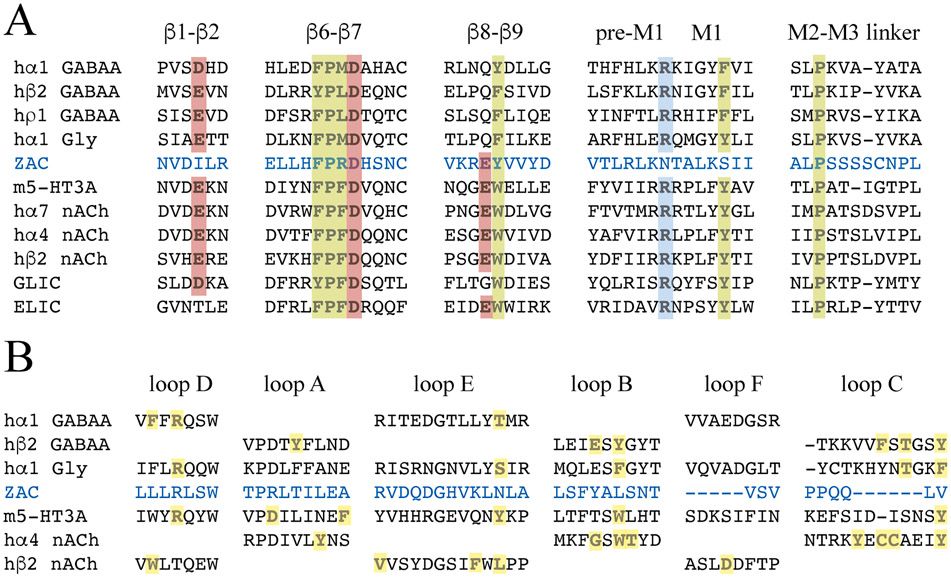
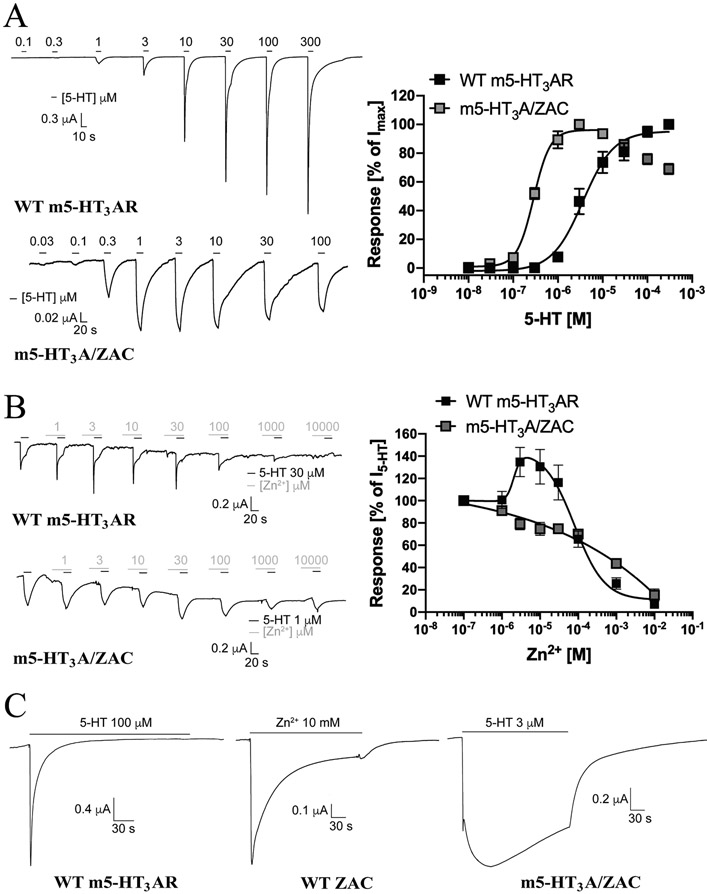
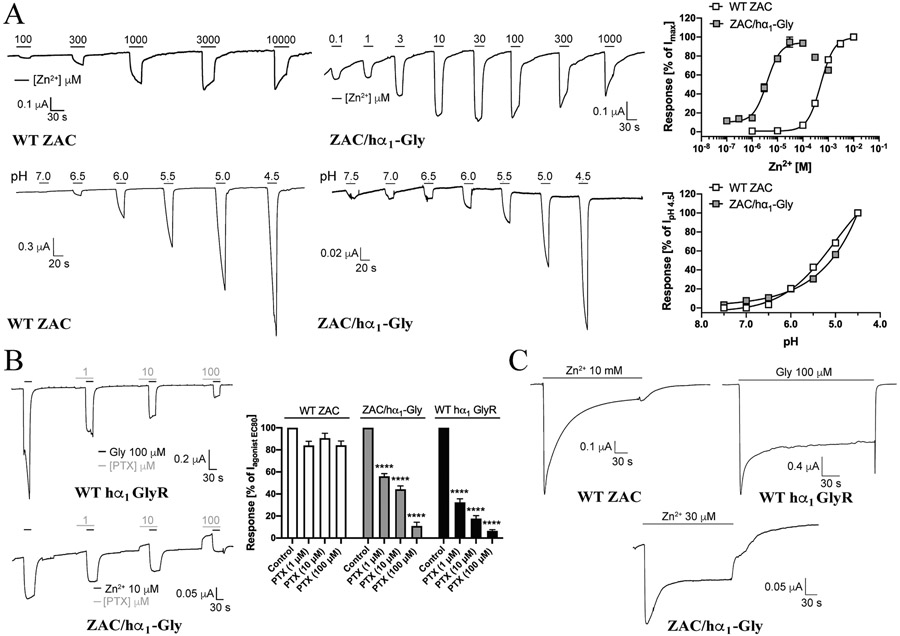
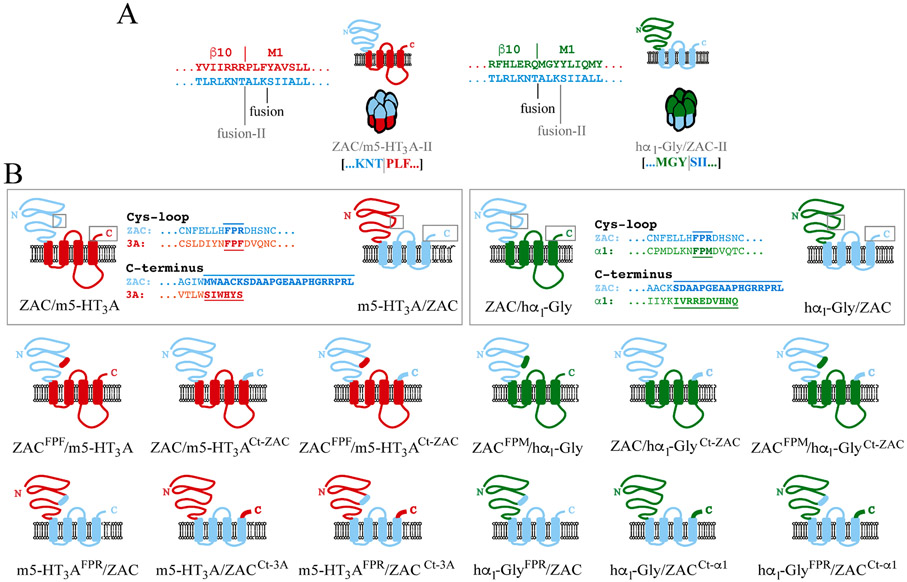
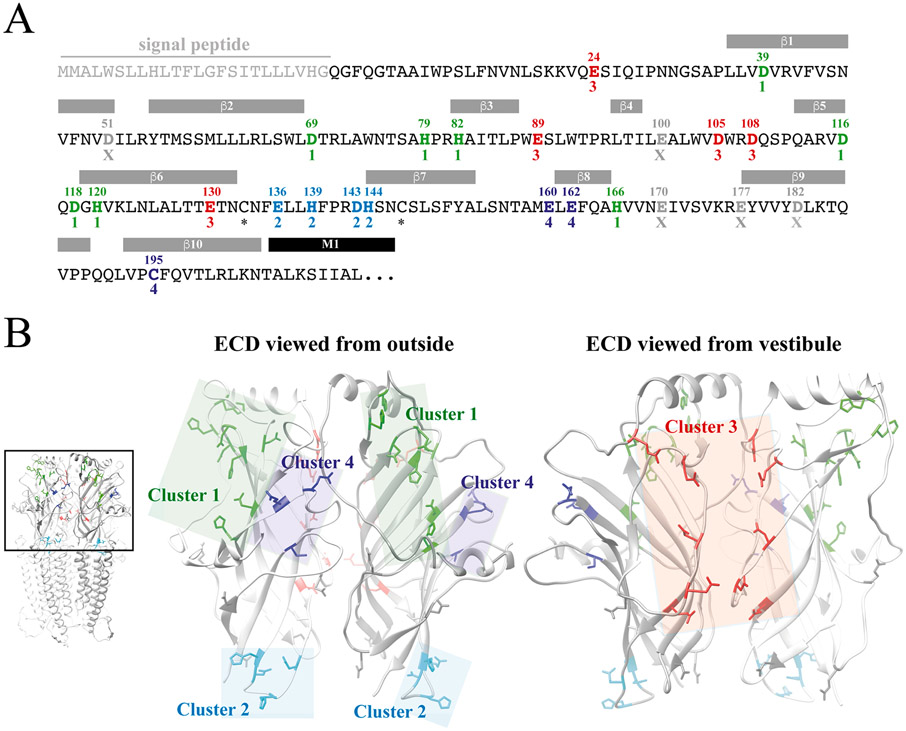
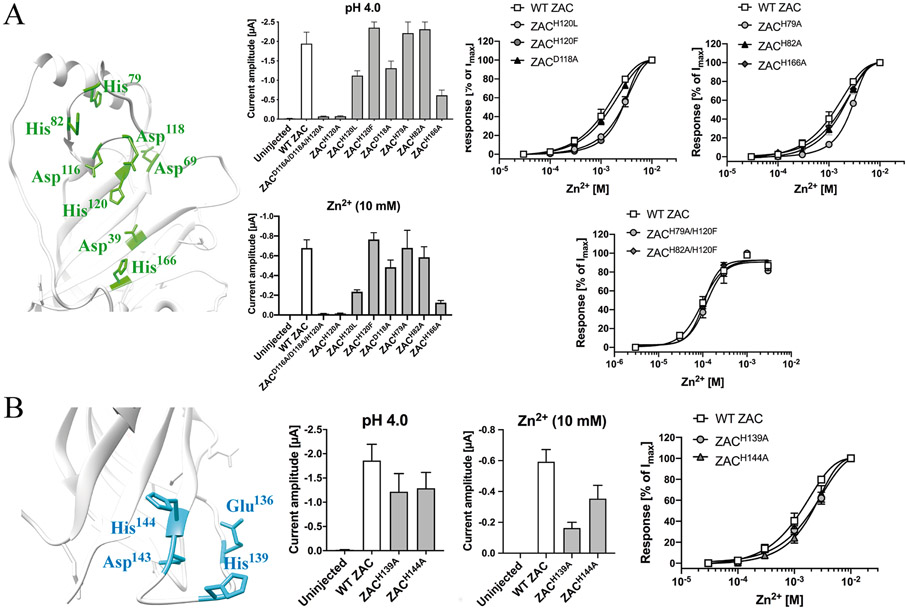
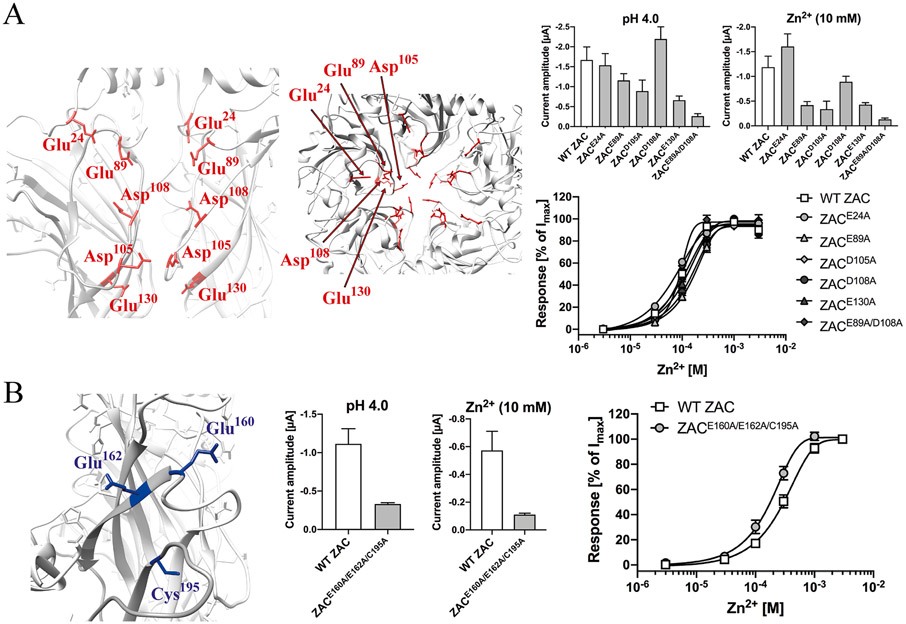
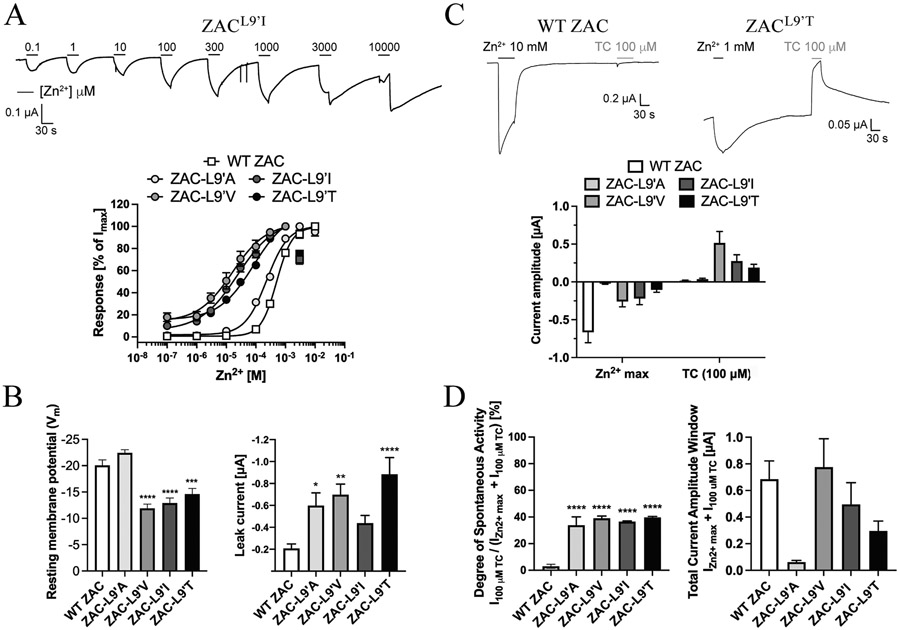
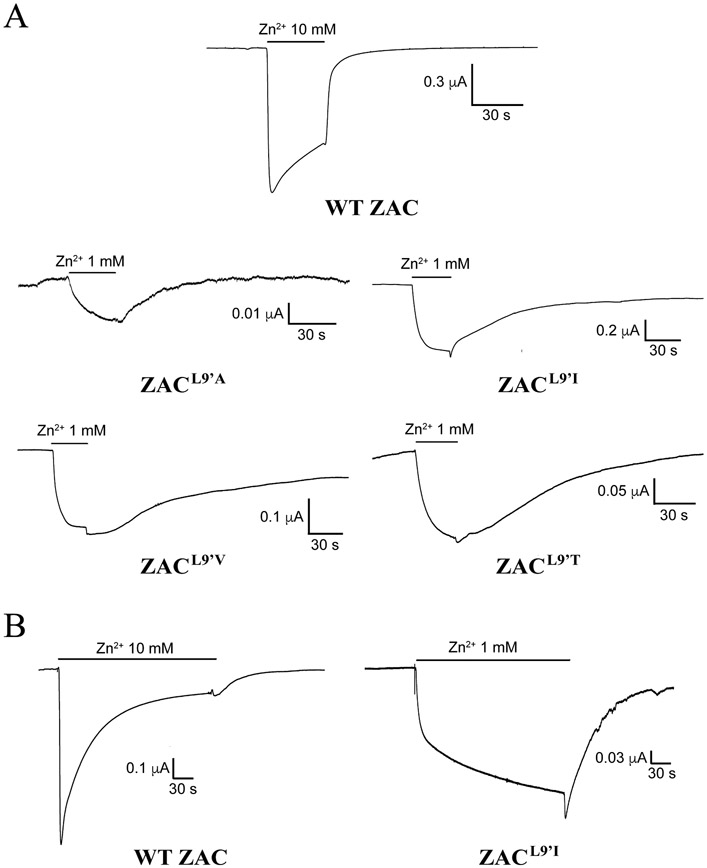
The molecular basis for the signal transduction through the classical Cys-loop receptors (CLRs) has been delineated in great detail. The Zinc-Activated Channel (ZAC) constitutes a so far poorly elucidated fifth branch of the CLR superfamily, and in this study we explore the molecular mechanisms underlying ZAC signaling in Xenopus oocytes by two-electrode voltage clamp electrophysiology. In studies of chimeric receptors fusing either the extracellular domain (ECD) or the transmembrane/intracellular domain (TMD-ICD) of ZAC with the complementary domains of 5-HTA serotonin or α glycine receptors, serotonin and Zn/H evoked robust concentration-dependent currents in 5-HTA/ZAC- and ZAC/α-Gly-expressing oocytes, respectively, suggesting that Zn and protons activate ZAC predominantly through its ECD. The molecular basis for Zn-mediated ZAC signaling was probed further by introduction of mutations of His, Cys, Glu and Asp residues in this domain, but as none of the mutants tested displayed substantially impaired Zn functionality compared to wild-type ZAC, the location of the putative Zn binding site(s) in the ECD was not identified. Finally, the functional importance of Leu (Leu9') in the transmembrane M2 α-helix of ZAC was investigated by Ala, Val, Ile and Thr substitutions. In concordance with findings for this highly conserved residue in classical CLRs, the ZAC mutants exhibited left-shifted agonist concentration-response relationships, markedly higher degrees of spontaneous activity and slower desensitization kinetics compared to wild-type ZAC. In conclusion, while ZAC is an atypical CLR in terms of its (identified) agonists and channel characteristics, its signal transduction seems to undergo similar conformational transitions as those in the classical CLR.
经典 Cys 环受体 (CLR) 的信号转导的分子基础已经被详细阐明。锌激活通道 (ZAC) 构成了 CLR 超家族中一个迄今为止尚未阐明的第五分支,在这项研究中,我们通过双电极电压钳电生理学探索 Xenopus 卵母细胞中 ZAC 信号转导的分子机制。在研究融合 ZAC 的细胞外结构域 (ECD) 或跨膜/细胞内结构域 (TMD-ICD) 与 5-HTA 血清素或α甘氨酸受体的互补结构域的嵌合受体时,血清素和 Zn/H 在 5-HTA/ZAC- 和 ZAC/α-Gly 表达卵母细胞中引发了强大的浓度依赖性电流,分别表明 Zn 和质子主要通过其 ECD 激活 ZAC。通过引入该结构域中 His、Cys、Glu 和 Asp 残基的突变,进一步探究了 Zn 介导的 ZAC 信号转导的分子基础,但由于测试的突变体与野生型 ZAC 相比,Zn 功能没有明显受损,因此无法确定 ECD 中假定的 Zn 结合位点 (s) 的位置。最后,通过 Ala、Val、Ile 和 Thr 取代研究 ZAC 跨膜 M2 α-螺旋中 Leu (Leu9') 的功能重要性。与经典 CLR 中该高度保守残基的发现一致,ZAC 突变体表现出激动剂浓度反应关系的左移、自发活性程度显著增加以及脱敏动力学变慢。总之,虽然 ZAC 在其 (已确定) 激动剂和通道特征方面是一种非典型的 CLR,但它的信号转导似乎经历了与经典 CLR 相似的构象转变。