Department of Hematology/HCT, City of Hope Comprehensive Cancer Center and the Beckman Research Institute of City of Hope, 1500 E. Duarte Road, Duarte, CA, 91010, USA.
Int J Hematol. 2021 Nov;114(5):544-553. doi: 10.1007/s12185-021-03215-6. Epub 2021 Sep 24.
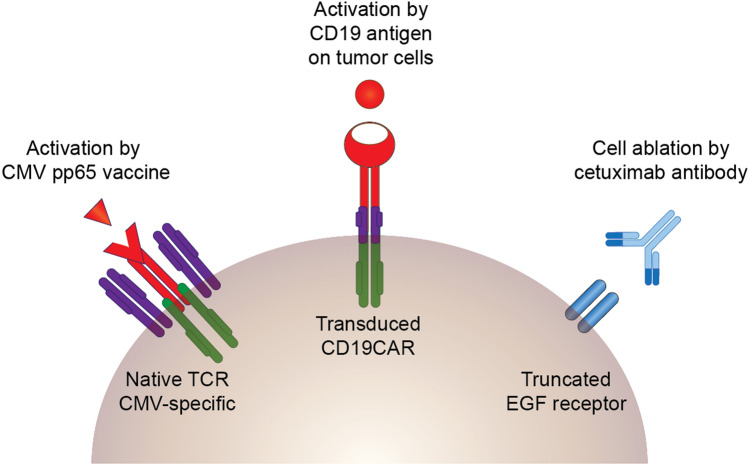
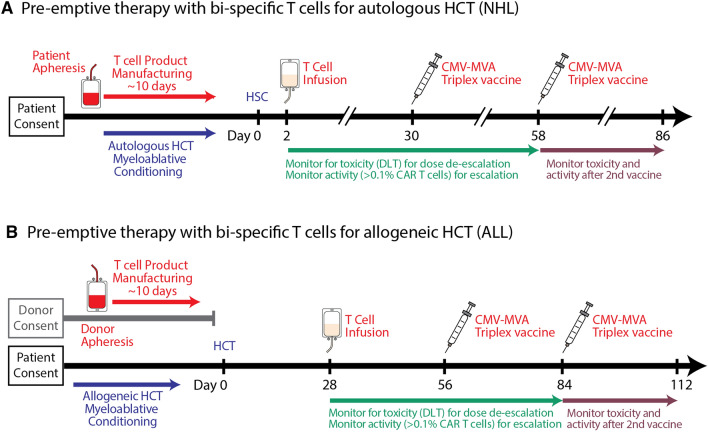
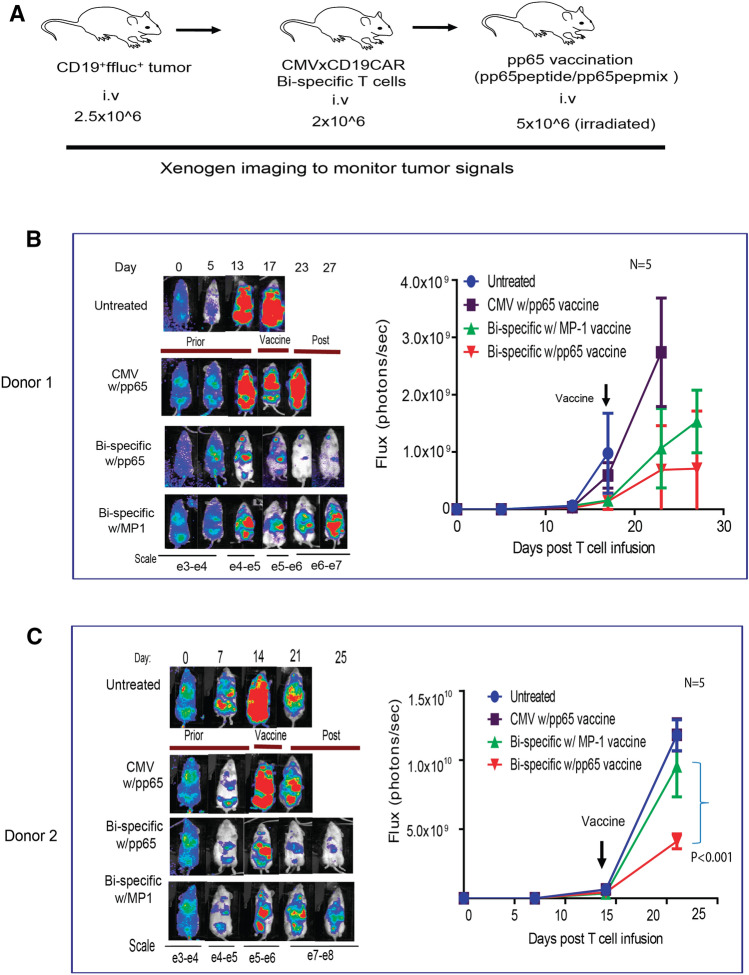
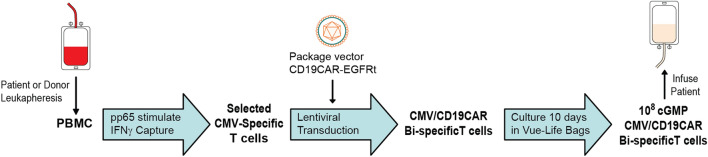
Adoptive transfer of in vitro expanded, chimeric antigen receptor (CAR)-redirected CD19-specific T cells can induce dramatic disease regression in patients with leukemia and lymphomas. However, the full potential of this emerging modality is hampered in some cancer settings by a significant rate of therapeutic failure arising from the attenuated engraftment and persistence of CAR-redirected T cells, and tumor relapse following adoptive transfer. Here, we discuss an advanced strategy that facilitates post-infusion in vivo boosting of CAR T cells via CMV vaccination, to mediate durable remission of B cell malignancies by engrafting a CAR molecule onto a CMV-specific T cell. We also discuss a feasible and unique platform for the generation of the CMV-CD19CAR T cells for clinical application. This new approach would overcome multiple challenges in current CAR T cell technology including: short T cell persistence, limited duration of response, and inability to re-stimulate T cells after relapse or persistent disease.
体外扩增的嵌合抗原受体 (CAR) 靶向 CD19 特异性 T 细胞的过继转移可诱导白血病和淋巴瘤患者疾病的显著消退。然而,在某些癌症环境中,由于 CAR 靶向 T 细胞的植入和持久性减弱以及过继转移后肿瘤复发,这种新兴治疗模式的全部潜力受到阻碍。在这里,我们讨论了一种先进的策略,通过 CMV 疫苗接种促进输注后 CAR T 细胞的体内扩增,通过将 CAR 分子导入到 CMV 特异性 T 细胞上,介导 B 细胞恶性肿瘤的持久缓解。我们还讨论了用于临床应用的 CMV-CD19CAR T 细胞的可行且独特的生成平台。这种新方法将克服当前 CAR T 细胞技术中的多个挑战,包括:T 细胞持久性短、反应持续时间有限以及在复发或持续性疾病后无法重新刺激 T 细胞。