School of Pharmacy and Institute of New Drug Development, Jeonbuk National University, 54896, Jeonju, Republic of Korea; Department of Pharmaceutical Sciences, St. Jude Children's Research Hospital, 38105, Memphis, TN, USA.
School of Pharmacy and Institute of New Drug Development, Jeonbuk National University, 54896, Jeonju, Republic of Korea.
Redox Biol. 2021 Nov;47:102128. doi: 10.1016/j.redox.2021.102128. Epub 2021 Sep 9.
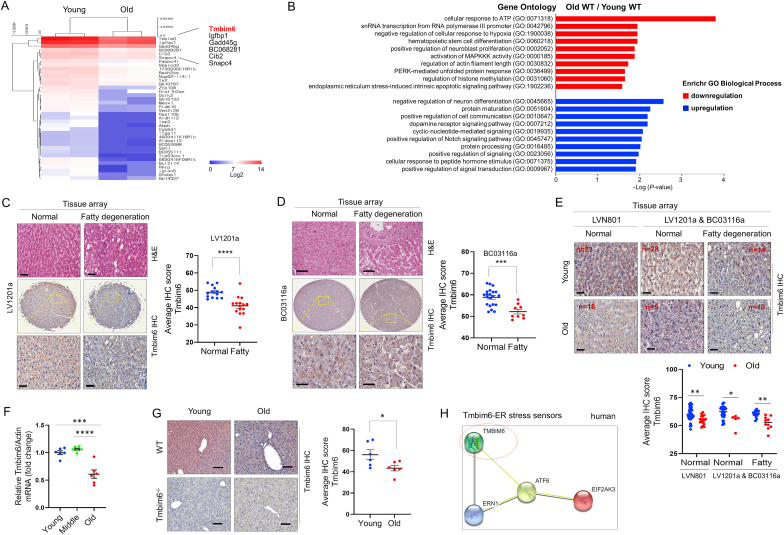
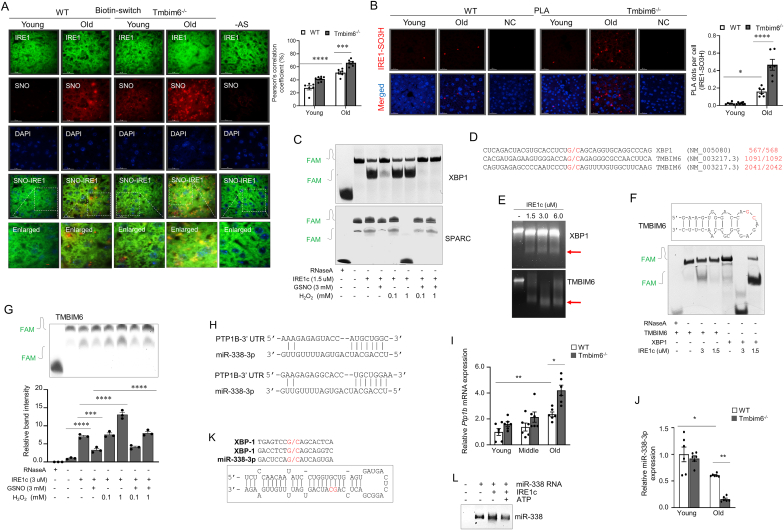
Age-associated persistent ER stress is the result of declining chaperone systems of the ER that reduces cellular functions, induces apoptosis, and leads to age-related diseases. This study investigated the previously unknown regulatory mechanism of TMBIM6 during age-associated hepatic abnormalities. Wild-type (WT) and the TMBIM6 knockout (TMBIM6) mice liver, human liver samples from different age groups were used to demonstrate the effect of physiological aging on liver. For TMBIM6 rescue experiments, TMBIM6 old mice and stable human hepatic cell lines expressing TMBIM 6 were used to study the functional role of TMBIM6 on aging-associated steatosis and its associated mechanisms. In aging humans and mice, we observed declined expression of TMBIM6 and aberrant UPR expression, which were associated with high hepatic lipid accumulation. During aging, TMBIM6-deficient mice had increased senescence than their WT counterparts. We identified redox-mediated posttranslational modifications of IRE1α such as S-nitrosylation and sulfonation were higher in TMBIM6-deficient aging mice and humans, which impaired the ER stress response signaling. Sulfonation of IRE1α enhanced regulated IRE1α-dependent decay (RIDD) activity inducing TMBIM6 decay, whereas S-nitrosylation of IRE1α inhibited XBP1 splicing enhancing the cell death. Moreover, the degradation of miR-338-3p by strong IRE1α cleavage activity enhanced the expression of PTP1B, resulting in diminishing phosphorylation of PERK. The re-expression of TMBIM6 reduced IRE1α modifications, preserved ER homeostasis, reduced senescence and senescence-associated lipid accumulation in human hepatic cells and TMBIM6-depleted mice. S-nitrosylation or sulfonation of IRE1α and its controller, the TMBIM6, might be the potential therapeutic targets for maintaining ER homeostasis in aging and aging-associated liver diseases.
年龄相关的持续内质网应激是内质网伴侣系统下降的结果,这降低了细胞功能,诱导细胞凋亡,并导致与年龄相关的疾病。本研究调查了 TMBIM6 在与年龄相关的肝异常中的先前未知的调节机制。使用野生型(WT)和 TMBIM6 敲除(TMBIM6)小鼠的肝以及来自不同年龄组的人类肝样本,以证明生理衰老对肝脏的影响。对于 TMBIM6 挽救实验,使用 TMBIM6 老年小鼠和稳定表达 TMBIM6 的人类肝细胞系来研究 TMBIM6 对与衰老相关的脂肪变性及其相关机制的功能作用。在衰老的人类和小鼠中,我们观察到 TMBIM6 的表达下降和异常的 UPR 表达,这与高肝脂质积累有关。在衰老过程中,TMBIM6 缺陷型小鼠比其 WT 对应物具有更高的衰老。我们确定了 IRE1α 的氧化还原介导的翻译后修饰,如 S-亚硝基化和磺化,在 TMBIM6 缺陷型衰老小鼠和人类中更高,这损害了内质网应激反应信号。IRE1α 的磺化增强了调节的 IRE1α 依赖性衰减(RIDD)活性,诱导 TMBIM6 衰减,而 IRE1α 的 S-亚硝基化增强了 XBP1 剪接,增强了细胞死亡。此外,强烈的 IRE1α 切割活性降解 miR-338-3p 增强了 PTP1B 的表达,导致 PERK 的磷酸化减少。TMBIM6 的重新表达减少了 IRE1α 的修饰,维持了内质网的平衡,减少了人类肝细胞和 TMBIM6 耗尽的小鼠中的衰老和衰老相关的脂质积累。IRE1α 和其控制器 TMBIM6 的 S-亚硝基化或磺化可能是维持衰老和与衰老相关的肝脏疾病中内质网平衡的潜在治疗靶点。