Chun Wang, Tian Jilai, Zhang Ying
Department of Rheumatology and Immunology, Nanjing Drum Tower Hospital Clinical College of Traditional Chinese and Western Medicine, Nanjing University of Chinese Medicine, Nanjing, 210008, China.
Department of Biochemistry and Molecular Biology, School of Medicine and Holistic Integrative Medicine, Nanjing University of Chinese Medicine, Nanjing, 210023, China.
Stem Cell Res Ther. 2021 Sep 25;12(1):512. doi: 10.1186/s13287-021-02586-1.
Considerable experimental and clinical evidences have proved that human umbilical cord mesenchymal stem cells (UC-MSCs) transplantation was powerful in systemic lupus erythematosus (SLE) treatment. MSCs could upregulate regulatory B cells (Bregs) in the mice model of the other immune disease. However, the regulation of MSCs on Bregs in SLE environment remains unclear.
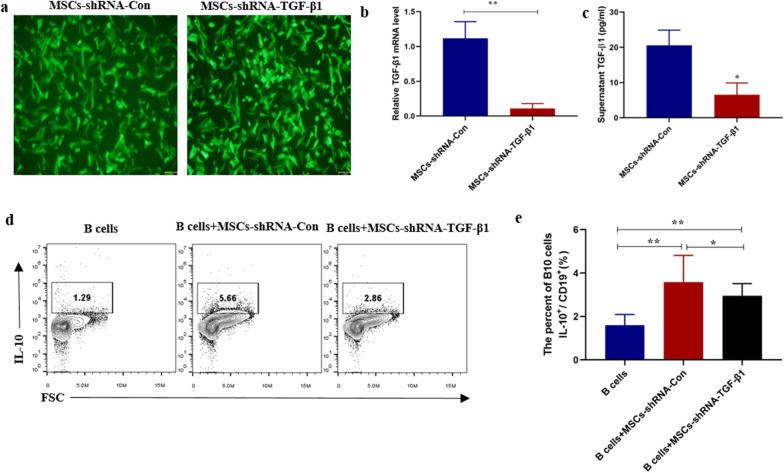
To assess the abilities of UC-MSCs to treat SLE, MSCs were transferred intravenously to 17- to 18-week-old MRL/lpr mice. Four weeks later, mice were sacrificed. Survival rates, anti-dsDNA antibodies and renal histology were evaluated. CD4 T helper (Th) cell subgroups and interleukin (IL)-10 Bregs (B10) in the spleen were quantitated by flow cytometry. The changes of transforming growth factor (TGF)-β1, IL-6 and indoleamine 2,3-dioxyenase (IDO) mRNAs expressed by MSCs after co-cultured with B cells were detected using real-time polymerase chain reaction (RT-PCR). MSCs were infected by lentivirus carrying TGF-β1 shRNAs, then MSCs with low expression of TGF-β1 were conducted for co-culture in vitro and transplantation experiments in vivo.
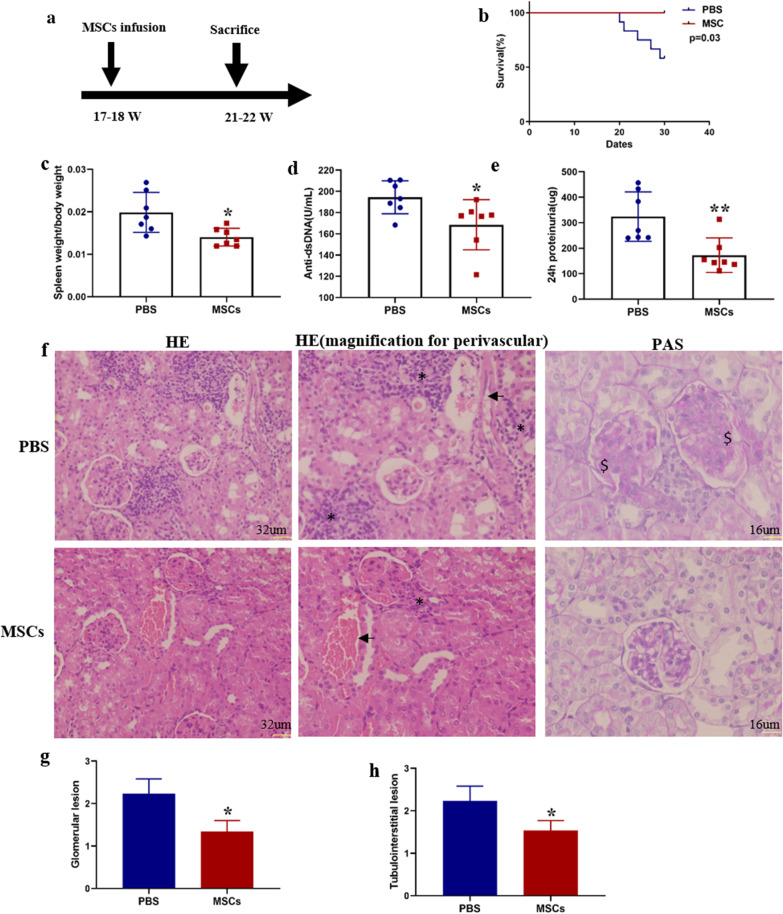
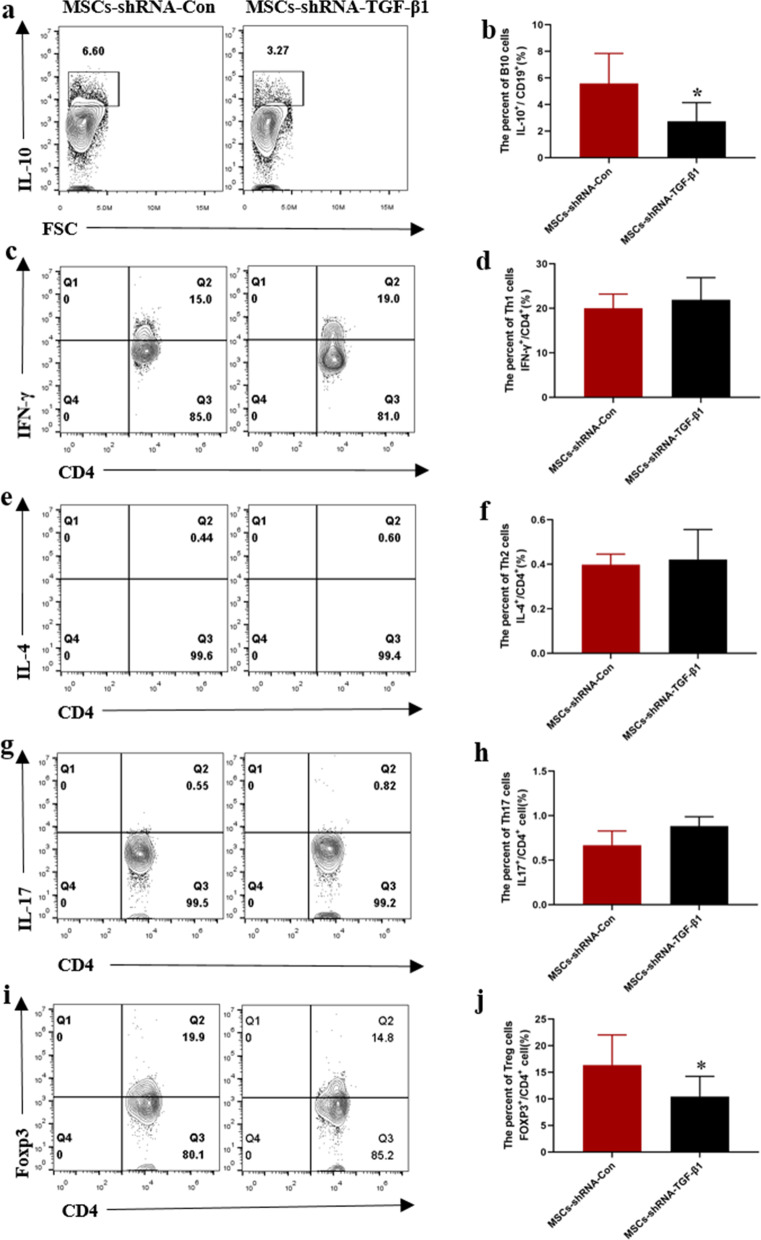
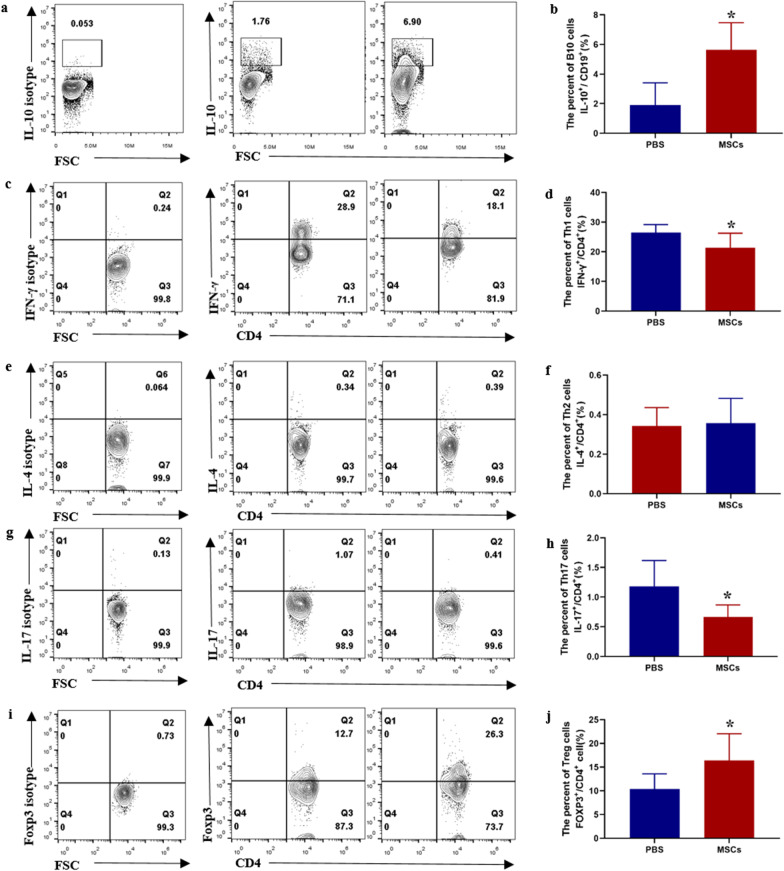
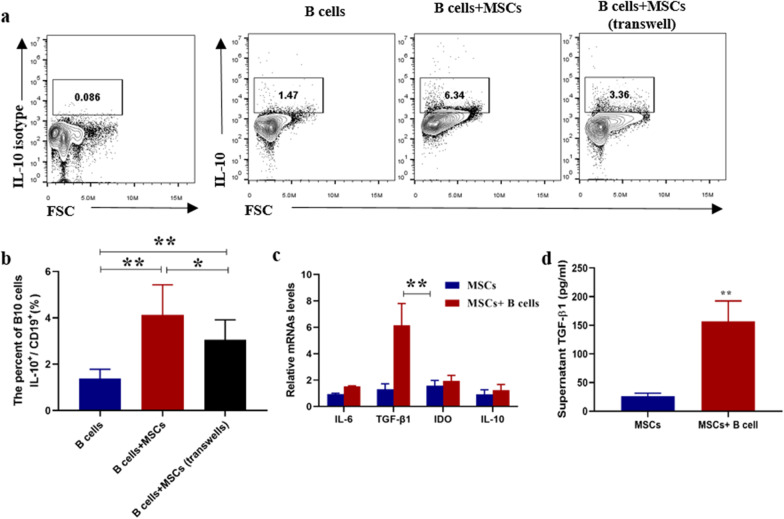
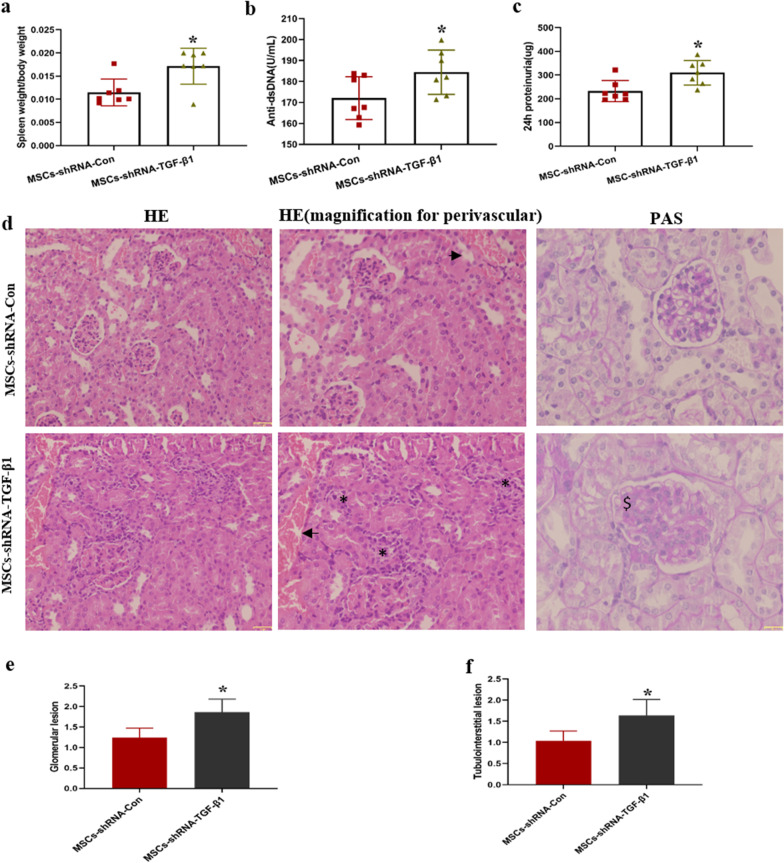
UC-MSCs transplantation could efficiently downregulate 24 h proteinuria and anti-dsDNA antibodies, correct Treg/Th17/Th1 imbalances and increase the frequency of B10 cells. The expression of TGF-β1 in MSCs was significantly increased after co-culture with B cells. Downregulation of TGF-β1 in MSCs could significantly attenuate the upregulation of B10 by MSCs in vitro and in vivo. Downregulation of TGF-β1 also compromised the immunomodulation effects of MSCs on Th17 and Treg cells and the therapeutic effects of MSC transplantation.
UC-MSCs could protect against SLE in mice and upregulate IL-10 Bregs via TGF-β1.
大量实验和临床证据证明,人脐带间充质干细胞(UC-MSCs)移植在系统性红斑狼疮(SLE)治疗中具有强大作用。在其他免疫疾病的小鼠模型中,间充质干细胞(MSCs)可上调调节性B细胞(Bregs)。然而,在SLE环境中MSCs对Bregs的调节作用仍不清楚。
为评估UC-MSCs治疗SLE的能力,将MSCs静脉注射到17至18周龄的MRL/lpr小鼠体内。四周后,处死小鼠。评估生存率、抗双链DNA抗体和肾脏组织学。通过流式细胞术对脾脏中的CD4辅助性T(Th)细胞亚群和白细胞介素(IL)-10 Bregs(B10)进行定量。使用实时聚合酶链反应(RT-PCR)检测MSCs与B细胞共培养后转化生长因子(TGF)-β1、IL-6和吲哚胺2,3-双加氧酶(IDO)mRNA的变化。用携带TGF-β1短发夹RNA的慢病毒感染MSCs,然后将TGF-β1低表达的MSCs进行体外共培养和体内移植实验。
UC-MSCs移植可有效下调24小时蛋白尿和抗双链DNA抗体,纠正Treg/Th17/Th1失衡并增加B10细胞频率。MSCs与B细胞共培养后,TGF-β1在MSCs中的表达显著增加。MSCs中TGF-β1的下调可显著减弱MSCs在体外和体内对B10的上调作用。TGF-β1的下调也损害了MSCs对Th17和Treg细胞的免疫调节作用以及MSCs移植的治疗效果。
UC-MSCs可保护小鼠免受SLE侵害,并通过TGF-β1上调IL-10 Bregs。