Yang Dengcheng, Zheng Xuyang, Jiang Libo, Ye Meixia, He Xiaoqing, Jin Yi, Wu Rongling
Center for Computational Biology, College of Biological Sciences and Biotechnology, Beijing Forestry University, Beijing, China.
College of Biological Sciences and Biotechnology, Beijing Forestry University, Beijing, China.
Front Microbiol. 2021 Sep 9;12:696730. doi: 10.3389/fmicb.2021.696730. eCollection 2021.
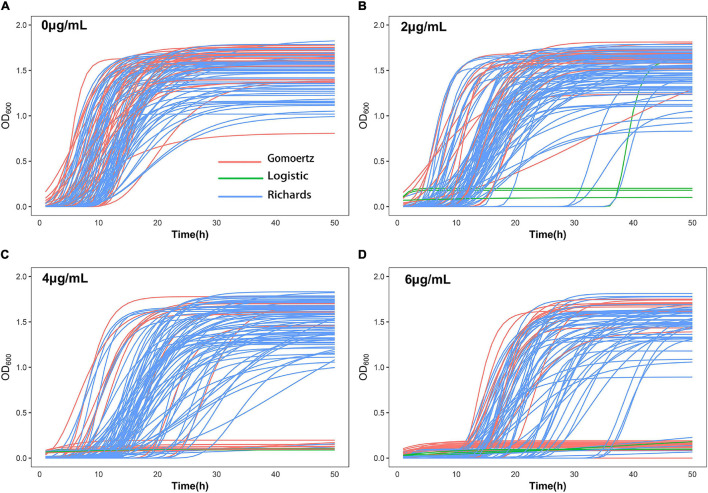
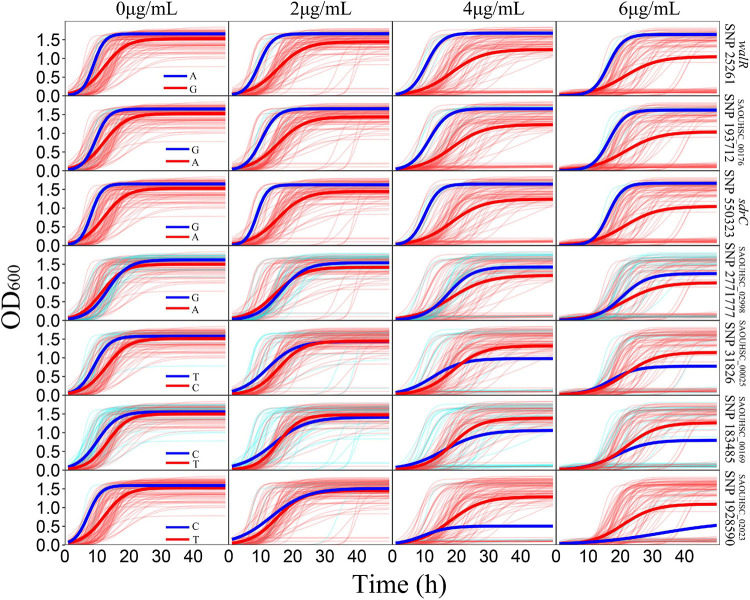
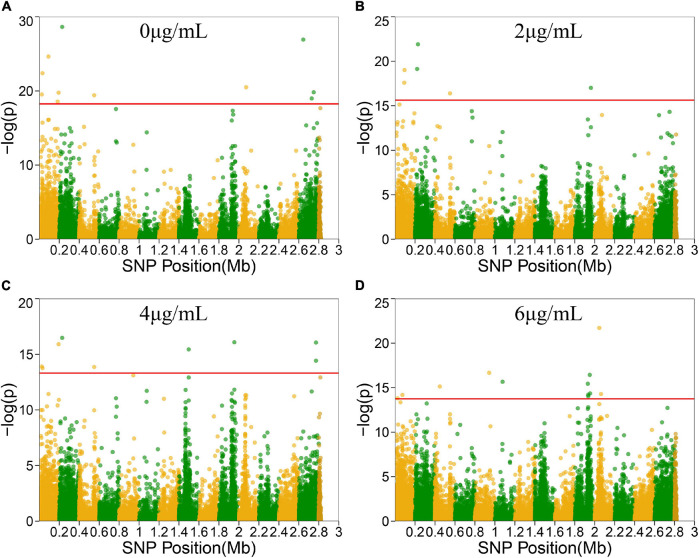
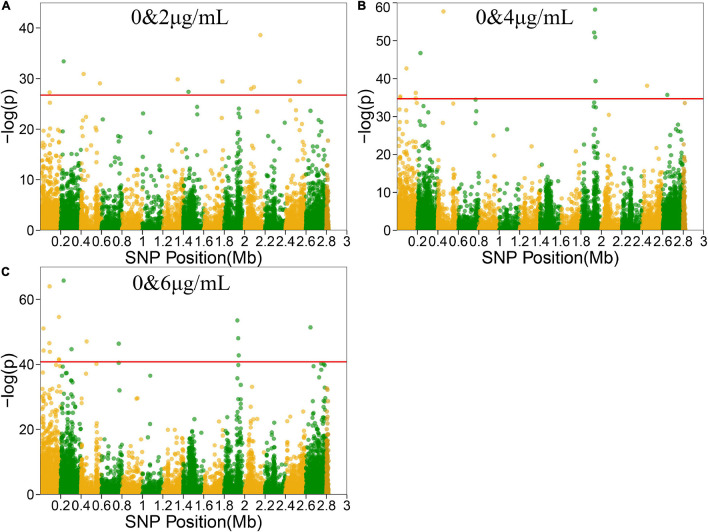
Phenotypic plasticity is the exhibition of various phenotypic traits produced by a single genotype in response to environmental changes, enabling organisms to adapt to environmental changes by maintaining growth and reproduction. Despite its significance in evolutionary studies, we still know little about the genetic control of phenotypic plasticity. In this study, we designed and conducted a genome-wide association study (GWAS) to reveal genetic architecture of how strains respond to increasing concentrations of vancomycin (0, 2, 4, and 6 μg/mL) in a time course. We implemented functional mapping, a dynamic model for genetic mapping using longitudinal data, to map specific loci that mediate the growth trajectories of abundance of vancomycin-exposed strains. 78 significant single nucleotide polymorphisms were identified following analysis of the whole growth and development process, and seven genes might play a pivotal role in governing phenotypic plasticity to the pressure of vancomycin. These seven genes, SAOUHSC_00020 (), SAOUHSC_00176, SAOUHSC_00544 (), SAOUHSC_02998, SAOUHSC_00025, SAOUHSC_00169, and SAOUHSC_02023, were found to help regulate antibiotic pressure. Our dynamic gene mapping technique provides a tool for dissecting the phenotypic plasticity mechanisms of under vancomycin pressure, emphasizing the feasibility and potential of functional mapping in the study of bacterial phenotypic plasticity.
表型可塑性是指单一基因型在响应环境变化时表现出的各种表型性状,使生物体能够通过维持生长和繁殖来适应环境变化。尽管其在进化研究中具有重要意义,但我们对表型可塑性的遗传控制仍知之甚少。在本研究中,我们设计并开展了一项全基因组关联研究(GWAS),以揭示菌株在时间进程中对万古霉素浓度增加(0、2、4和6μg/mL)的反应的遗传结构。我们实施了功能定位,这是一种利用纵向数据进行遗传定位的动态模型,以定位介导暴露于万古霉素的菌株丰度生长轨迹的特定基因座。在对整个生长和发育过程进行分析后,鉴定出78个显著的单核苷酸多态性,并且七个基因可能在控制对万古霉素压力的表型可塑性中起关键作用。发现这七个基因,即SAOUHSC_00020()、SAOUHSC_00176、SAOUHSC_00544()、SAOUHSC_02998、SAOUHSC_00025、SAOUHSC_00169和SAOUHSC_02023,有助于调节抗生素压力。我们的动态基因定位技术为剖析在万古霉素压力下的表型可塑性机制提供了一种工具,强调了功能定位在细菌表型可塑性研究中的可行性和潜力。