Kim Sun Chang, Sekhon Simranjeet Singh, Shin Woo-Ri, Ahn Gna, Cho Byung-Kwan, Ahn Ji-Young, Kim Yang-Hoon
Korea Advanced Institute of Science and Technology, 291 Daehak-ro, Yuseong-gu, Daejeon, 34141 South Korea.
School of Biological Sciences, Chungbuk National University, Chungdae-ro, Seowon-gu, Cheongju, 28644 South Korea.
Mol Cell Toxicol. 2022;18(1):1-8. doi: 10.1007/s13273-021-00171-4. Epub 2021 Sep 20.
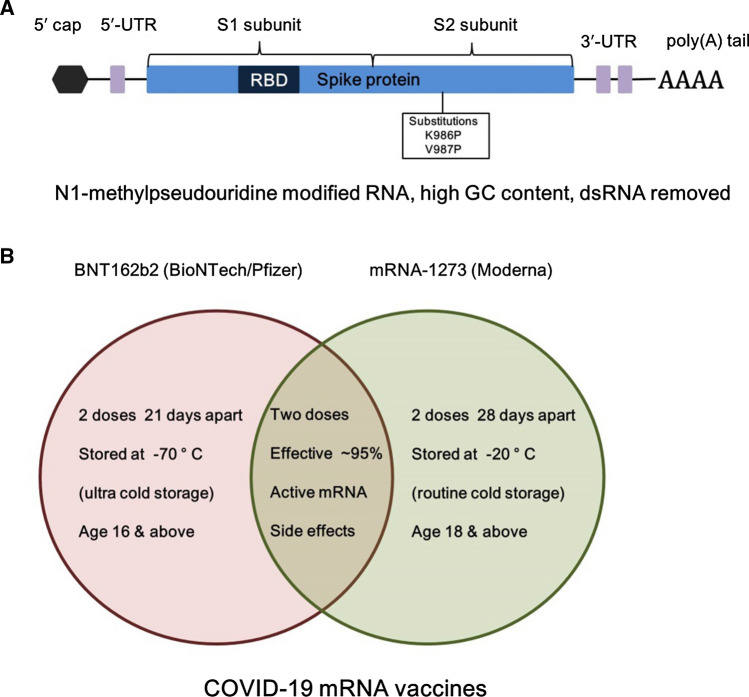
mRNA vaccines hold great potential as therapeutic techniques against viral infections due to their efficacy, safety, and large-scale production. mRNA vaccines offer flexibility in development as any protein can be produced from mRNA without altering the production or application process.
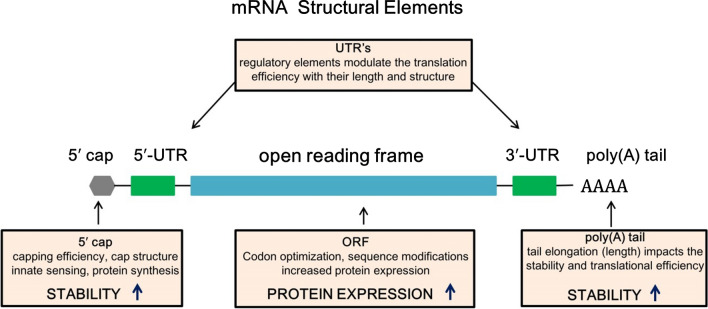
This review highlights the iterative optimization of mRNA vaccine structural elements that impact the type, specificity, and intensity of immune responses leading to higher translational potency and intracellular stability.
Modifying the mRNA structural elements particularly the 5' cap, 5'-and 3'-untranslated regions (UTRs), the coding region, and polyadenylation tail help reduce the excessive mRNA immunogenicity and consistently improve its intracellular stability and translational efficiency.
Further studies regarding mRNA-structural elements and their optimization are needed to create new opportunities for engineering mRNA vaccines.
信使核糖核酸(mRNA)疫苗因其有效性、安全性和大规模生产能力,作为抗病毒感染的治疗技术具有巨大潜力。mRNA疫苗在研发方面具有灵活性,因为任何蛋白质都可以从mRNA中产生,而无需改变生产或应用过程。
本综述强调了mRNA疫苗结构元件的迭代优化,这些元件会影响免疫反应的类型、特异性和强度,从而提高翻译效力和细胞内稳定性。
修饰mRNA结构元件,特别是5'帽、5'-和3'-非翻译区(UTR)、编码区和聚腺苷酸化尾,有助于降低mRNA过度的免疫原性,并持续提高其细胞内稳定性和翻译效率。
需要对mRNA结构元件及其优化进行进一步研究,以为设计mRNA疫苗创造新的机会。