Sun Yanan, Sangam Shreya, Guo Qiang, Wang Jian, Tang Haiyang, Black Stephen M, Desai Ankit A
College of Veterinary Medicine, Northwest A&F University, Xianyang, China.
State Key Laboratory of Respiratory Disease, National Clinical Research Center for Respiratory Disease, Guangdong Key Laboratory of Vascular Disease, Guangzhou Institute of Respiratory Health, The First Affiliated Hospital of Guangzhou Medical University, Guangzhou, China.
Front Cardiovasc Med. 2021 Sep 10;8:719058. doi: 10.3389/fcvm.2021.719058. eCollection 2021.
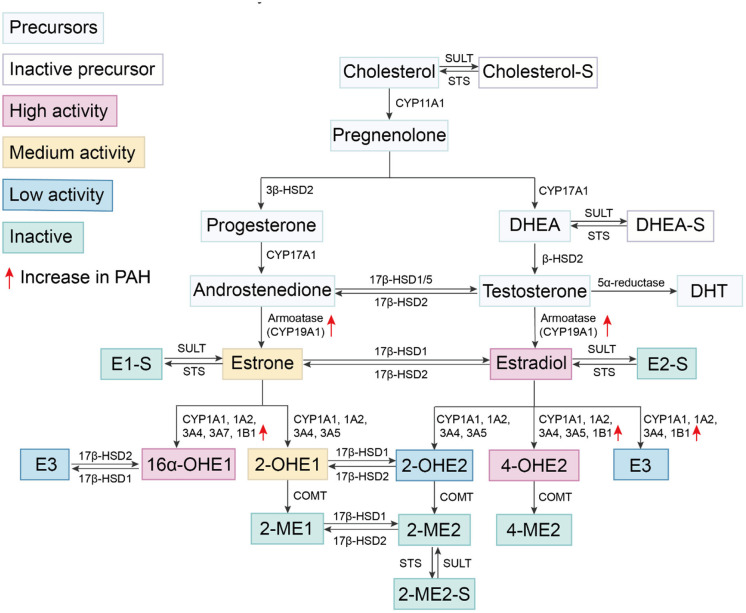
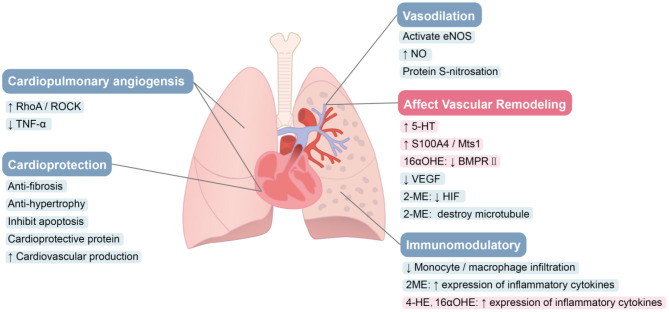
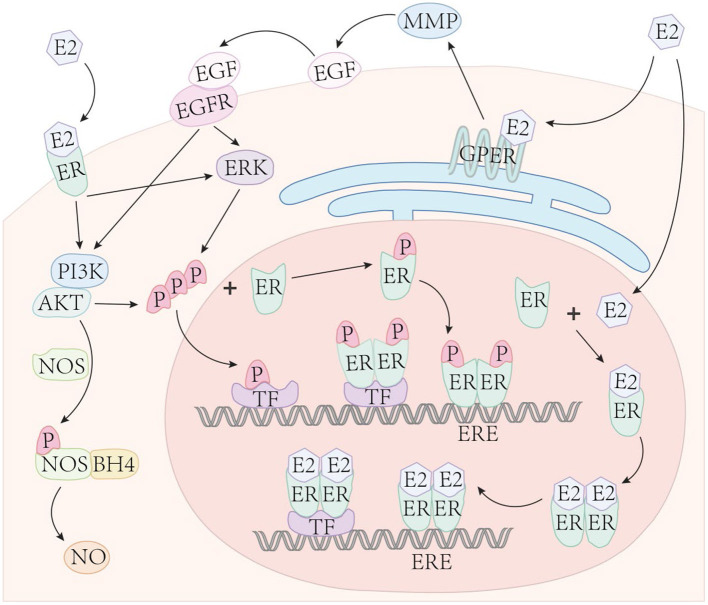
Pulmonary arterial hypertension (PAH) is a complex and devastating disease with a poor long-term prognosis. While women are at increased risk for developing PAH, they exhibit superior right heart function and higher survival rates than men. Susceptibility to disease risk in PAH has been attributed, in part, to estrogen signaling. In contrast to potential pathological influences of estrogen in patients, studies of animal models reveal estrogen demonstrates protective effects in PAH. Consistent with this latter observation, an ovariectomy in female rats appears to aggravate the condition. This discrepancy between observations from patients and animal models is often called the "estrogen paradox." Further, the tissue-specific interactions between estrogen, its metabolites and receptors in PAH and right heart function remain complex; nonetheless, these relationships are essential to characterize to better understand PAH pathophysiology and to potentially develop novel therapeutic and curative targets. In this review, we explore estrogen-mediated mechanisms that may further explain this paradox by summarizing published literature related to: (1) the synthesis and catabolism of estrogen; (2) activity and functions of the various estrogen receptors; (3) the multiple modalities of estrogen signaling in cells; and (4) the role of estrogen and its diverse metabolites on the susceptibility to, and progression of, PAH as well as their impact on right heart function.
肺动脉高压(PAH)是一种复杂且具有破坏性的疾病,长期预后较差。虽然女性患PAH的风险增加,但与男性相比,她们表现出更好的右心功能和更高的生存率。PAH疾病易感性部分归因于雌激素信号传导。与雌激素对患者潜在的病理影响相反,动物模型研究表明雌激素在PAH中具有保护作用。与后一观察结果一致,雌性大鼠卵巢切除似乎会加重病情。患者与动物模型观察结果之间的这种差异通常被称为“雌激素悖论”。此外,PAH中雌激素及其代谢产物与受体之间的组织特异性相互作用以及右心功能仍然复杂;尽管如此,这些关系对于更好地理解PAH病理生理学以及潜在开发新的治疗和治愈靶点至关重要。在本综述中,我们通过总结已发表的相关文献来探索可能进一步解释这一悖论的雌激素介导机制:(1)雌激素的合成与分解代谢;(2)各种雌激素受体的活性与功能;(3)细胞中雌激素信号传导的多种方式;(4)雌激素及其多种代谢产物对PAH易感性和进展的作用以及它们对右心功能的影响。