Neuroscience and Ageing Research Unit, Institute for Advanced Medical Research and Training, College of Medicine, University of Ibadan, Ibadan, Nigeria.
Centre for Genomic and Precision Medicine, College of Medicine, University of Ibadan, Ibadan, Nigeria.
Alzheimers Dement. 2022 Apr;18(4):790-809. doi: 10.1002/alz.12432. Epub 2021 Sep 27.
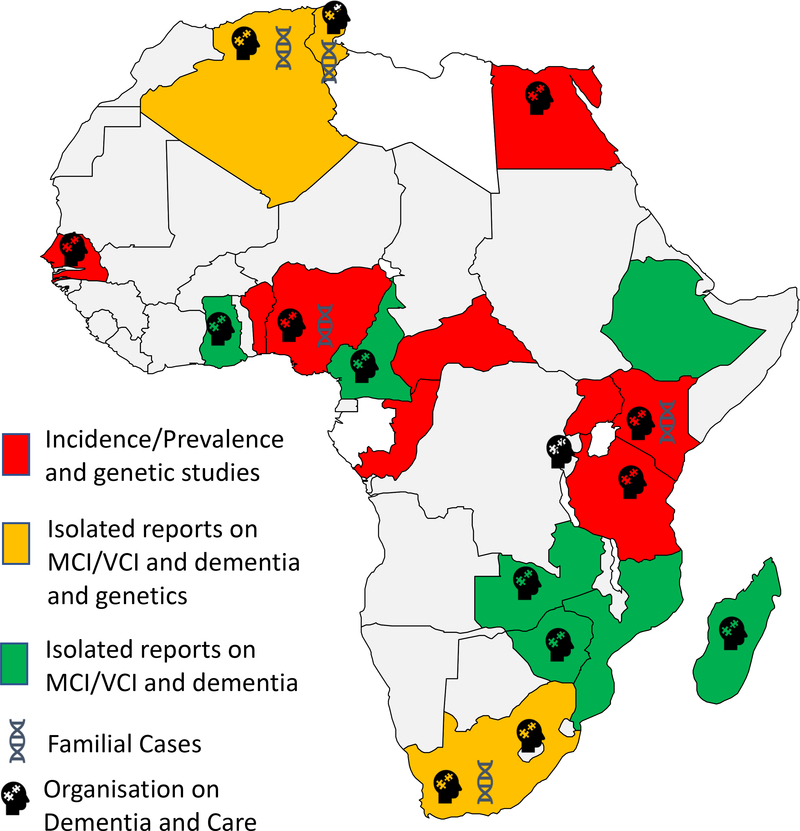
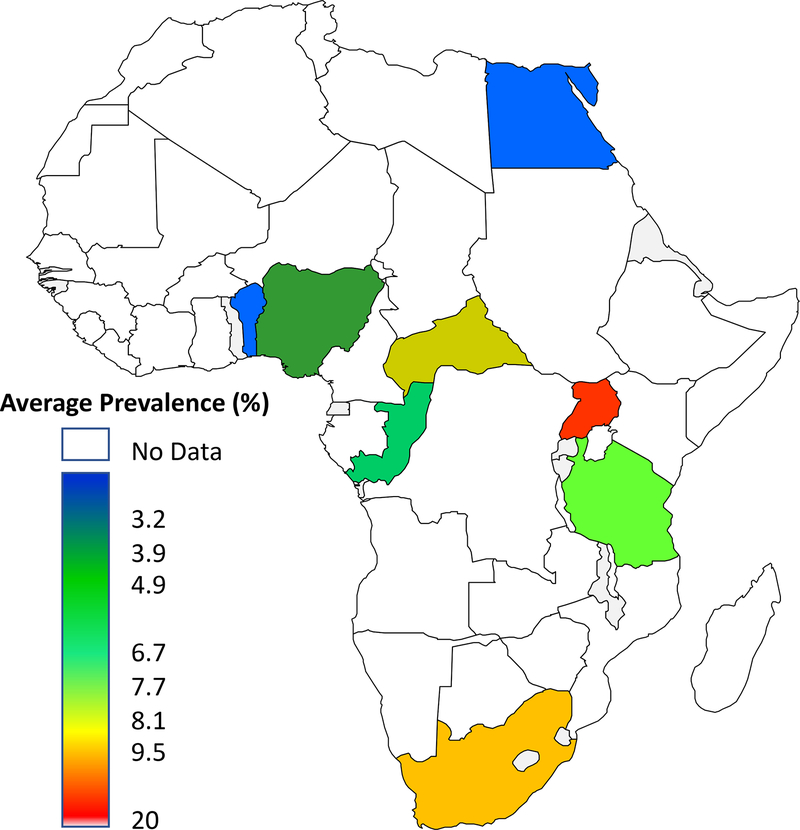
In tandem with the ever-increasing aging population in low and middle-income countries, the burden of dementia is rising on the African continent. Dementia prevalence varies from 2.3% to 20.0% and incidence rates are 13.3 per 1000 person-years with increasing mortality in parts of rapidly transforming Africa. Differences in nutrition, cardiovascular factors, comorbidities, infections, mortality, and detection likely contribute to lower incidence. Alzheimer's disease, vascular dementia, and human immunodeficiency virus/acquired immunodeficiency syndrome-associated neurocognitive disorders are the most common dementia subtypes. Comprehensive longitudinal studies with robust methodology and regional coverage would provide more reliable information. The apolipoprotein E (APOE) ε4 allele is most studied but has shown differential effects within African ancestry compared to Caucasian. More candidate gene and genome-wide association studies are needed to relate to dementia phenotypes. Validated culture-sensitive cognitive tools not influenced by education and language differences are critically needed for implementation across multidisciplinary groupings such as the proposed African Dementia Consortium.
随着中低收入国家人口老龄化的不断加剧,痴呆症的负担在非洲大陆不断增加。非洲大陆的痴呆症患病率在 2.3%至 20.0%之间不等,发病率为每 1000 人年 13.3 例,在快速转型的部分地区死亡率不断上升。营养、心血管因素、合并症、感染、死亡率和检测方面的差异可能导致发病率较低。阿尔茨海默病、血管性痴呆和人类免疫缺陷病毒/获得性免疫缺陷综合征相关的神经认知障碍是最常见的痴呆症亚型。具有稳健方法和区域覆盖范围的综合纵向研究将提供更可靠的信息。载脂蛋白 E (APOE) ε4 等位基因是研究最多的,但与白种人相比,在非洲血统中显示出不同的影响。需要更多的候选基因和全基因组关联研究来与痴呆症表型相关。需要经过验证的、对文化敏感的认知工具,不受教育和语言差异的影响,以便在拟议的非洲痴呆症联盟等多学科团体中实施。