Rodríguez-Fdez Sonia, Lorenzo-Martín L Francisco, Fabbiano Salvatore, Menacho-Márquez Mauricio, Sauzeau Vincent, Dosil Mercedes, Bustelo Xosé R
Molecular Mechanisms of Cancer Program, Centro de Investigación del Cáncer, CSIC-University of Salamanca, 37007 Salamanca, Spain.
Instituto de Biología Molecular y Celular del Cáncer, CSIC-University of Salamanca, 37007 Salamanca, Spain.
Biology (Basel). 2021 Sep 1;10(9):857. doi: 10.3390/biology10090857.
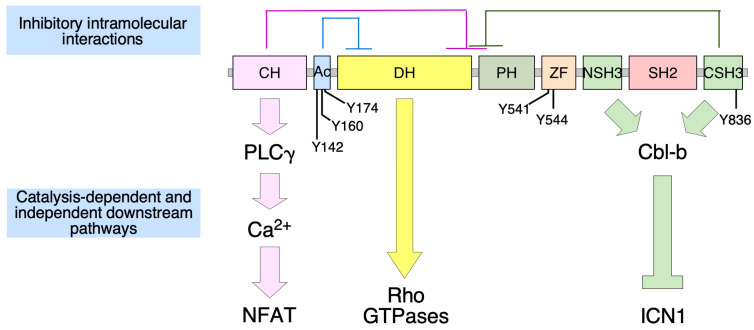
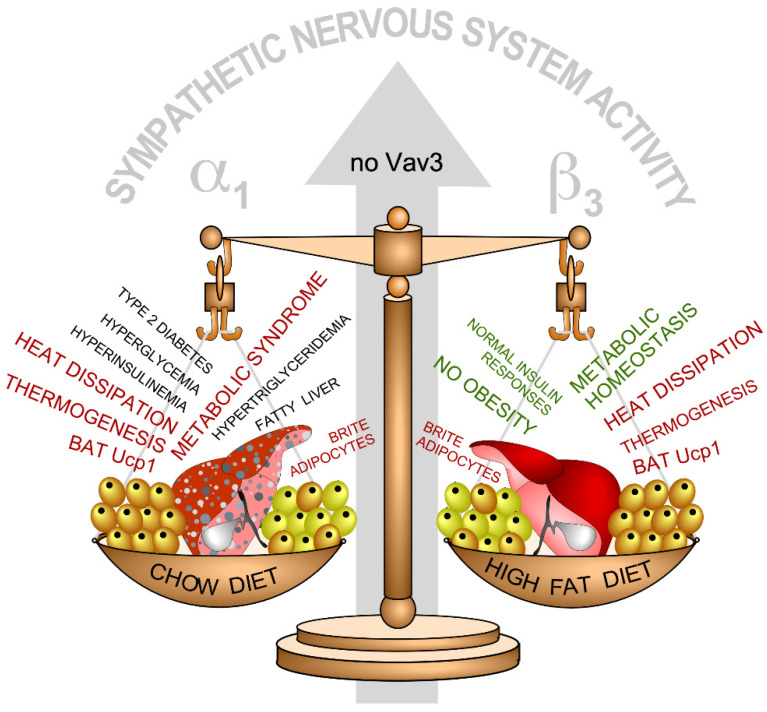
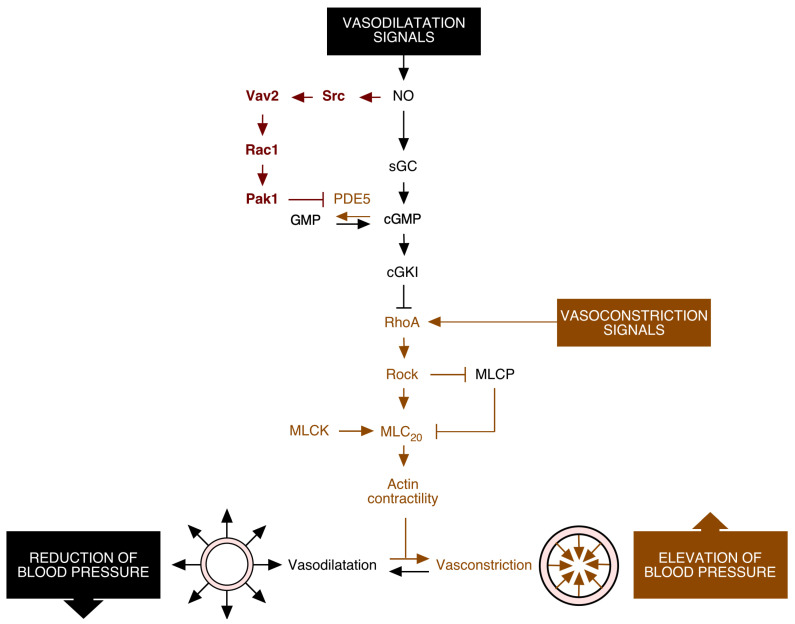
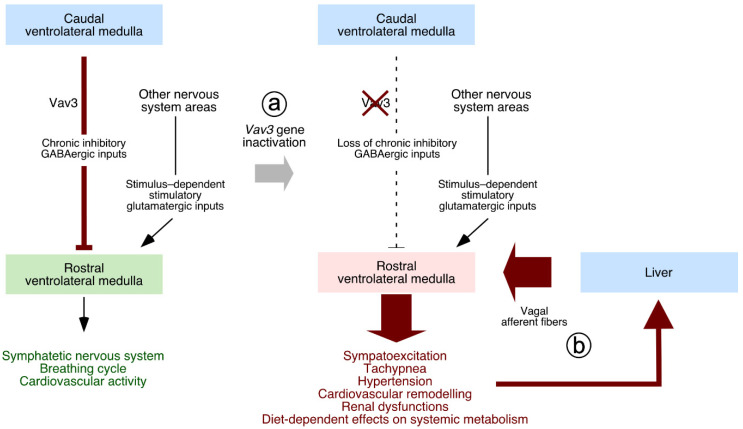
Vav proteins act as tyrosine phosphorylation-regulated guanosine nucleotide exchange factors for Rho GTPases and as molecular scaffolds. In mammals, this family of signaling proteins is composed of three members (Vav1, Vav2, Vav3) that work downstream of protein tyrosine kinases in a wide variety of cellular processes. Recent work with genetically modified mouse models has revealed that these proteins play key signaling roles in vascular smooth and skeletal muscle cells, specific neuronal subtypes, and glia cells. These functions, in turn, ensure the proper regulation of blood pressure levels, skeletal muscle mass, axonal wiring, and fiber myelination events as well as systemic metabolic balance. The study of these mice has also led to the discovery of new physiological interconnection among tissues that contribute to the ontogeny and progression of different pathologies such as, for example, hypertension, cardiovascular disease, and metabolic syndrome. Here, we provide an integrated view of all these new Vav family-dependent signaling and physiological functions.
Vav蛋白作为Rho GTP酶的酪氨酸磷酸化调节鸟苷酸交换因子以及分子支架发挥作用。在哺乳动物中,这个信号蛋白家族由三个成员(Vav1、Vav2、Vav3)组成,它们在多种细胞过程中作用于蛋白酪氨酸激酶的下游。最近对基因改造小鼠模型的研究表明,这些蛋白在血管平滑肌细胞、骨骼肌细胞、特定神经元亚型和神经胶质细胞中发挥关键的信号作用。这些功能进而确保血压水平、骨骼肌质量、轴突布线和纤维髓鞘形成事件以及全身代谢平衡的适当调节。对这些小鼠的研究还导致发现了组织之间新的生理联系,这些联系有助于不同病理(如高血压、心血管疾病和代谢综合征)的发生和发展。在这里,我们提供了所有这些新的依赖Vav家族的信号和生理功能的综合观点。