Department of Biological Sciences, Sungkyunkwan University, Jangan-gu, Suwon 16419, Gyeonggi-do, Korea.
Science Research Center (SRC) for Immune Research on Non-lymphoid Organ (CIRNO), Sungkyunkwan University, Jangan-gu, Suwon 16419, Gyeonggi-do, Korea.
Cells. 2021 Aug 30;10(9):2250. doi: 10.3390/cells10092250.
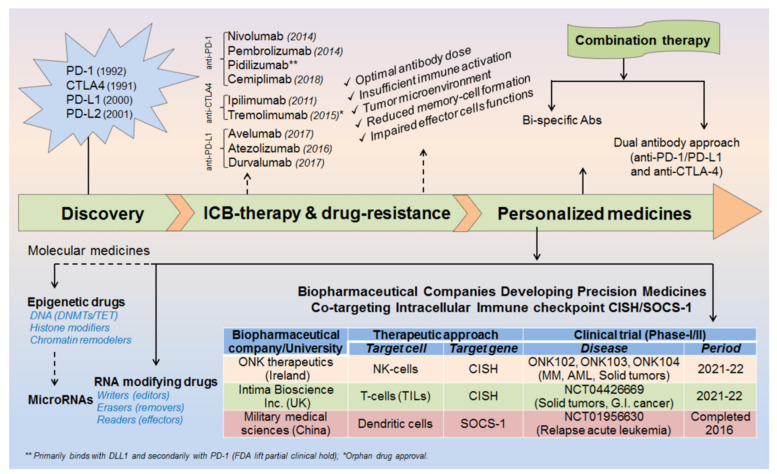
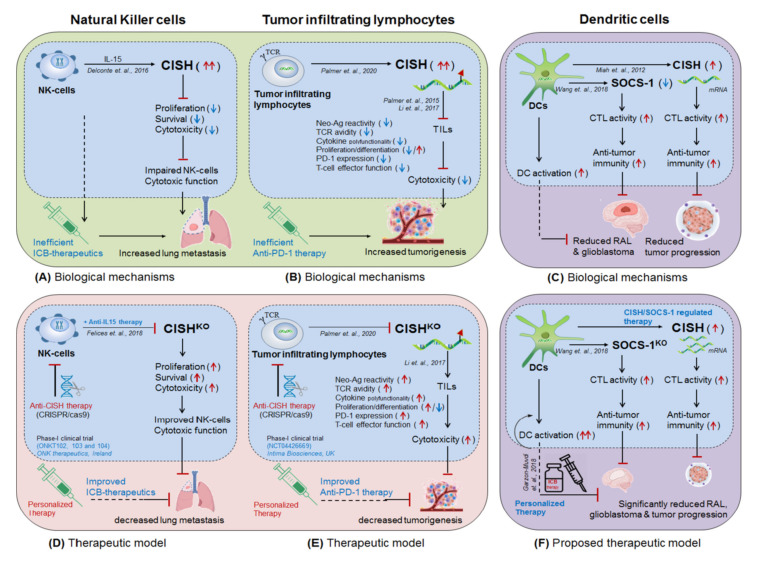
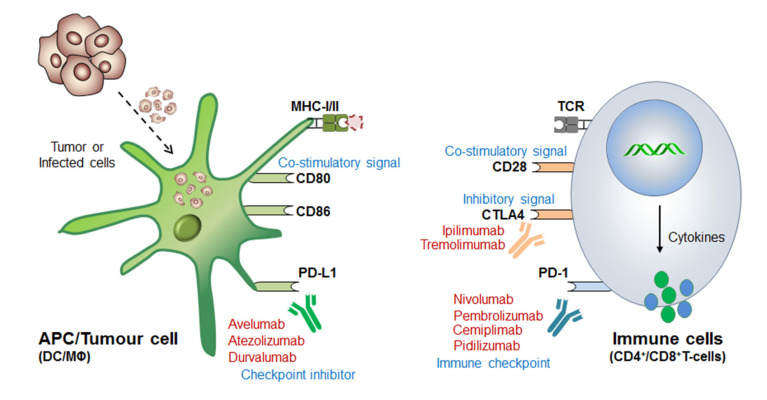
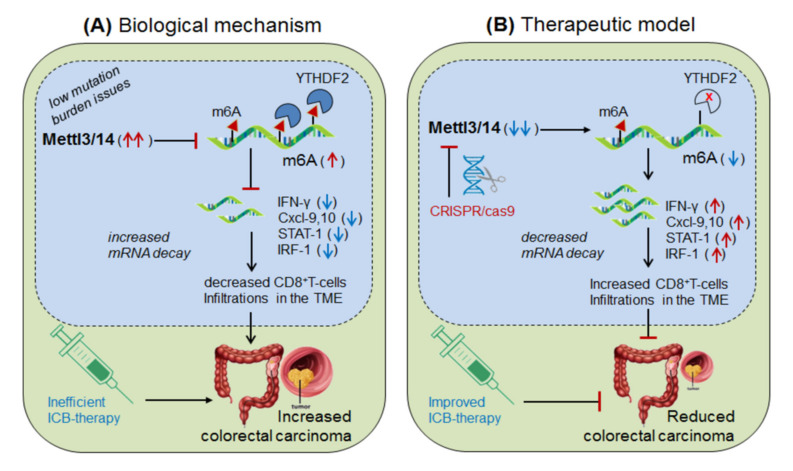
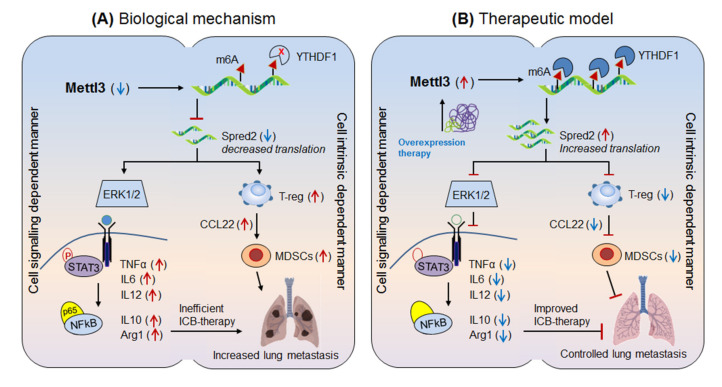
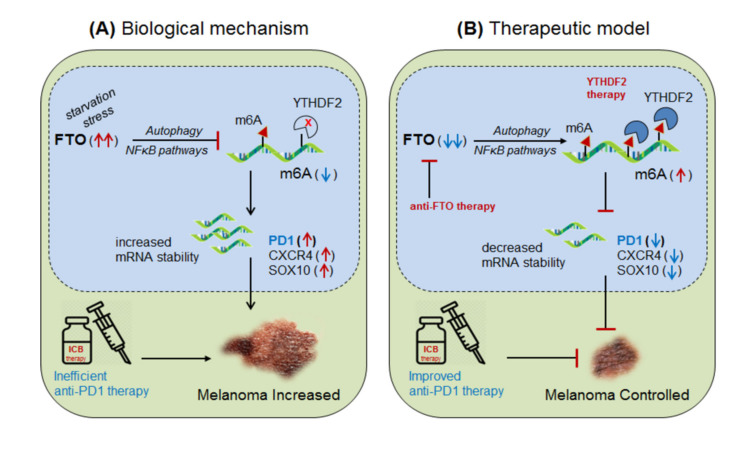
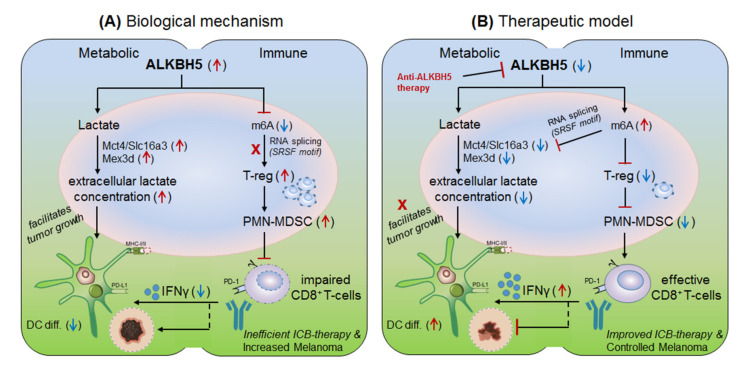
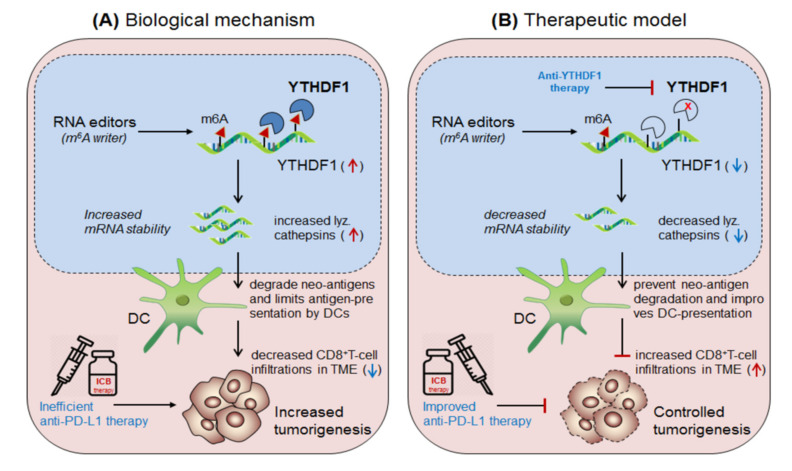
Cellular immunotherapy has recently emerged as a fourth pillar in cancer treatment co-joining surgery, chemotherapy and radiotherapy. Where, the discovery of immune checkpoint blockage or inhibition (ICB/ICI), anti-PD-1/PD-L1 and anti-CTLA4-based, therapy has revolutionized the class of cancer treatment at a different level. However, some cancer patients escape this immune surveillance mechanism and become resistant to ICB-therapy. Therefore, a more advanced or an alternative treatment is required urgently. Despite the functional importance of epitranscriptomics in diverse clinico-biological practices, its role in improving the efficacy of ICB therapeutics has been limited. Consequently, our study encapsulates the evidence, as a possible strategy, to improve the efficacy of ICB-therapy by co-targeting molecular checkpoints especially NA-modification machineries which can be reformed into RNA modifying drugs (RMD). Here, we have explained the mechanism of individual RNA-modifiers (editor/writer, eraser/remover, and effector/reader) in overcoming the issues associated with high-dose antibody toxicities and drug-resistance. Moreover, we have shed light on the importance of suppressor of cytokine signaling (SOCS/CISH) and microRNAs in improving the efficacy of ICB-therapy, with brief insight on the current monoclonal antibodies undergoing clinical trials or already approved against several solid tumor and metastatic cancers. We anticipate our investigation will encourage researchers and clinicians to further strengthen the efficacy of ICB-therapeutics by considering the importance of epitranscriptomics as a personalized medicine.
细胞免疫疗法最近作为癌症治疗的第四大支柱出现,与手术、化疗和放疗并列。在这里,免疫检查点阻断或抑制(ICB/ICI)、抗 PD-1/PD-L1 和抗 CTLA4 的发现,在不同层面上彻底改变了癌症治疗的范畴。然而,一些癌症患者逃避这种免疫监视机制,对 ICB 治疗产生耐药性。因此,迫切需要更先进或替代的治疗方法。尽管表观转录组学在各种临床生物学实践中的功能重要性,但它在提高 ICB 治疗效果方面的作用有限。因此,我们的研究提供了证据,作为一种可能的策略,通过共同靶向分子检查点来提高 ICB 治疗的效果,特别是可以转化为 RNA 修饰药物(RMD)的 NA 修饰机制。在这里,我们解释了单个 RNA 修饰剂(编辑/写入器、擦除器/删除器和效应器/读取器)的机制,以克服与高剂量抗体毒性和耐药性相关的问题。此外,我们还阐明了细胞因子信号转导抑制因子(SOCS/CISH)和 microRNAs 在提高 ICB 治疗效果方面的重要性,并简要介绍了目前正在进行临床试验或已批准用于治疗几种实体瘤和转移性癌症的单克隆抗体。我们预计,我们的研究将鼓励研究人员和临床医生通过考虑表观转录组学作为个性化医学的重要性,进一步加强 ICB 治疗的效果。