Department of Veterinary Pathology, College of Veterinary Medicine, Seoul National University, Seoul, Republic of Korea.
Department of Life Sciences, College of Natural Sciences, Research Institute for Natural Sciences, Hanyang University, Seoul, Republic of Korea.
Cell Mol Gastroenterol Hepatol. 2021;12(2):715-739. doi: 10.1016/j.jcmgh.2021.04.007. Epub 2021 Apr 21.
BACKGROUND & AIMS: Helicobacter pylori has been reported to modulate local immune responses to colonize persistently in gastric mucosa. Although the induced expression of programmed cell death ligand 1 (PD-L1) has been suggested as an immune modulatory mechanism for persistent infection of H pylori, the main immune cells expressing PD-L1 and their functions in Helicobacter-induced gastritis still remain to be elucidated.
The blockades of PD-L1 with antibody or PD-L1-deficient bone marrow transplantation were performed in Helicobacter-infected mice. The main immune cells expressing PD-L1 in Helicobacter-infected stomach were determined by flow cytometry and immunofluorescence staining. Helicobacter felis or H pylori-infected dendritic cell (DC)-deficient mouse models including Flt3, Zbtb46-diphtheria toxin receptor, and BDCA2-diphtheria toxin receptor mice were analyzed for pathologic changes and colonization levels. Finally, the location of PD-L1-expressing DCs and the correlation with H pylori infection were analyzed in human gastric tissues using multiplexed immunohistochemistry.
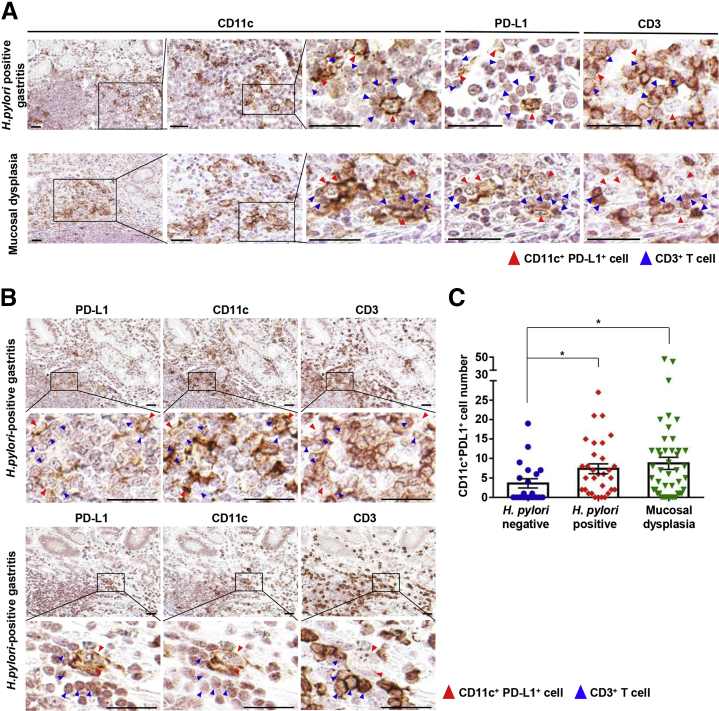
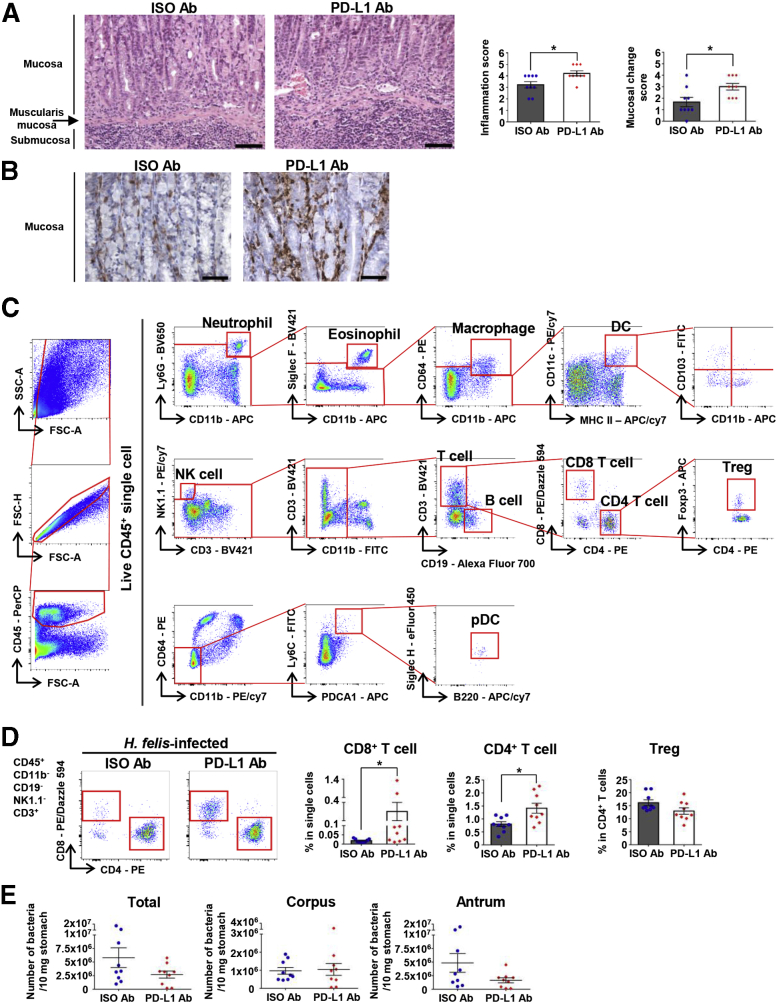
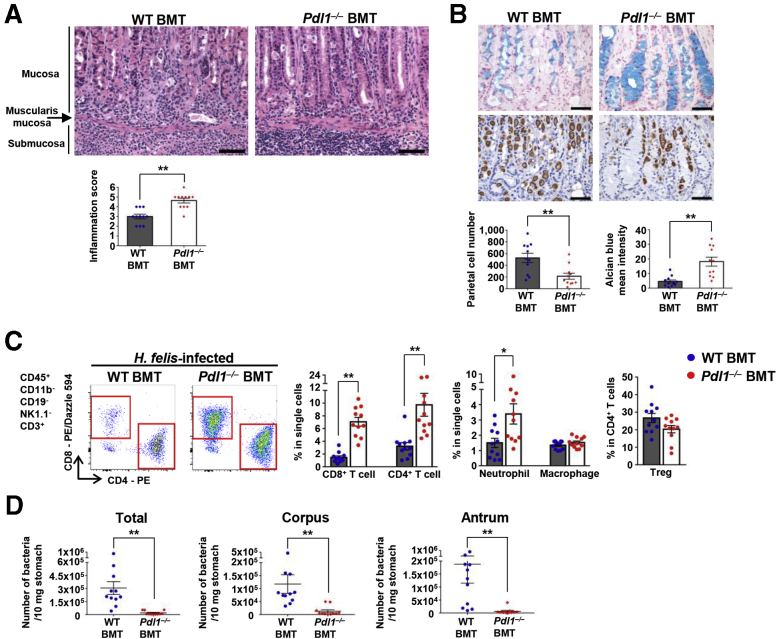
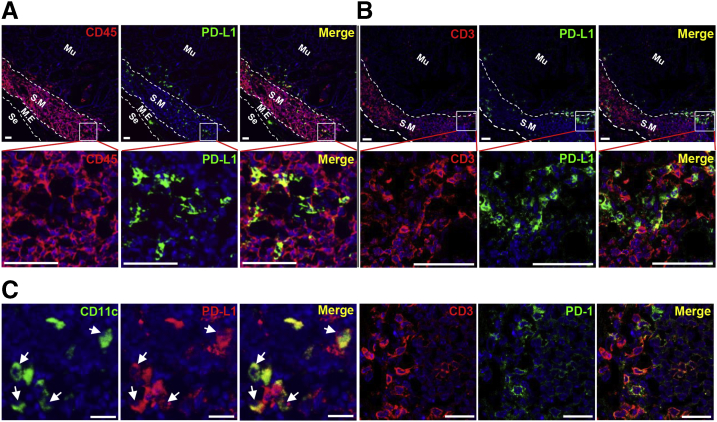
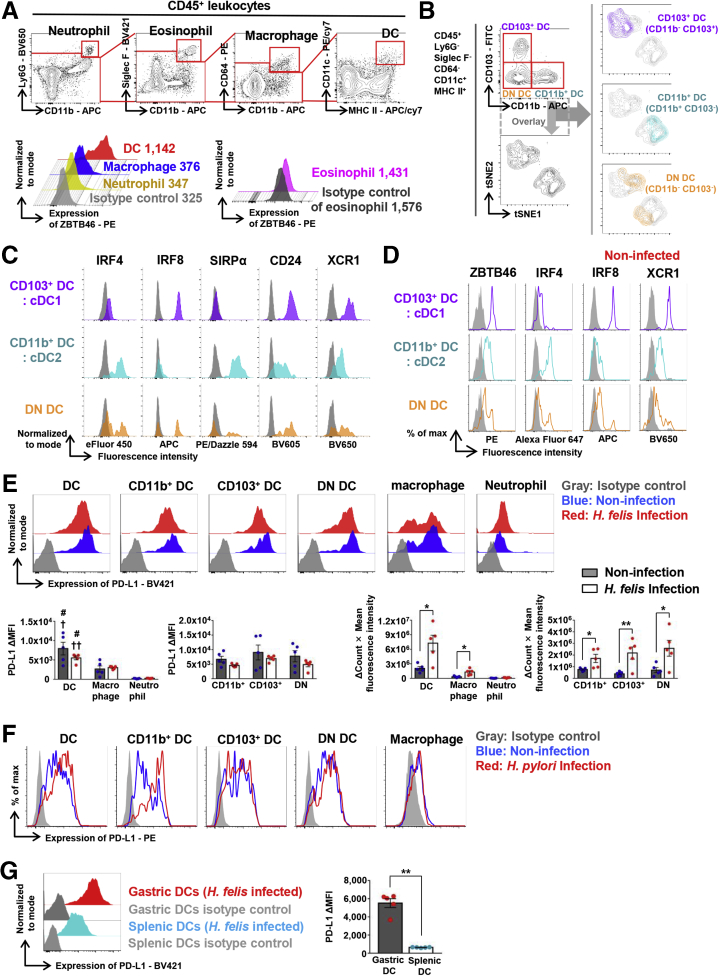
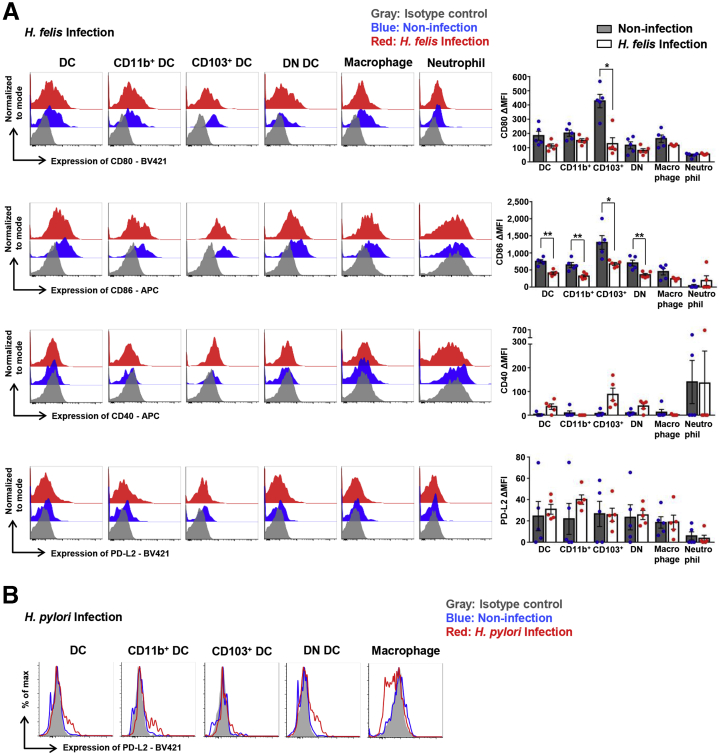
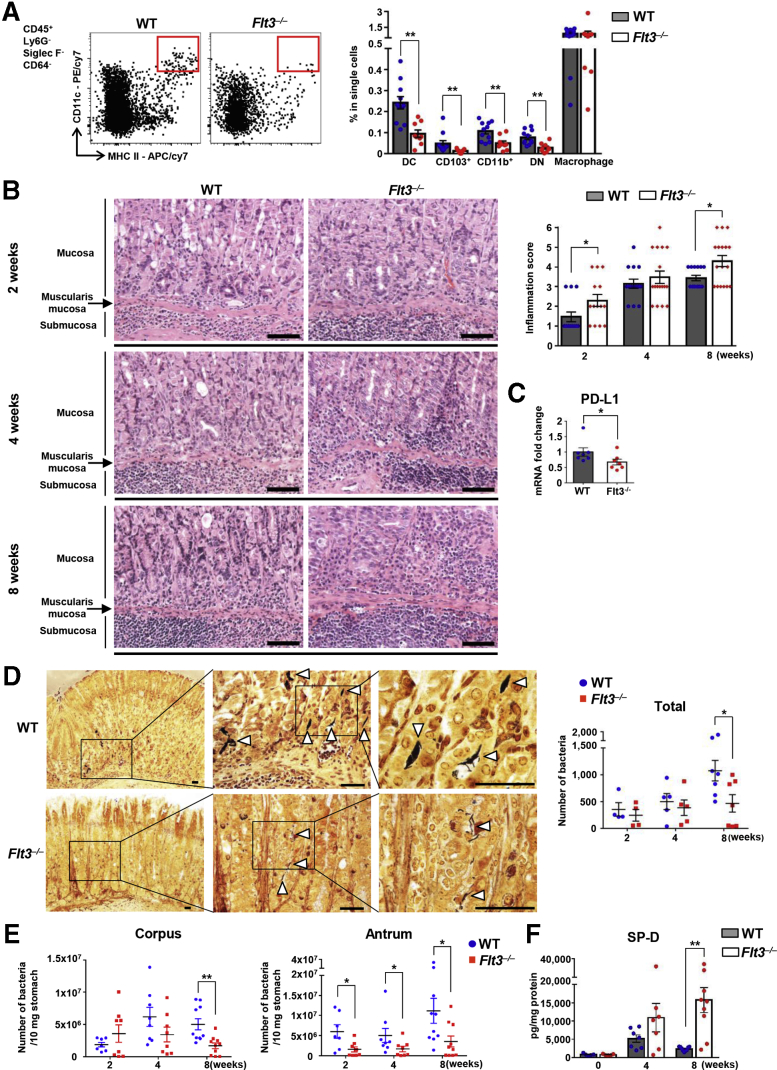
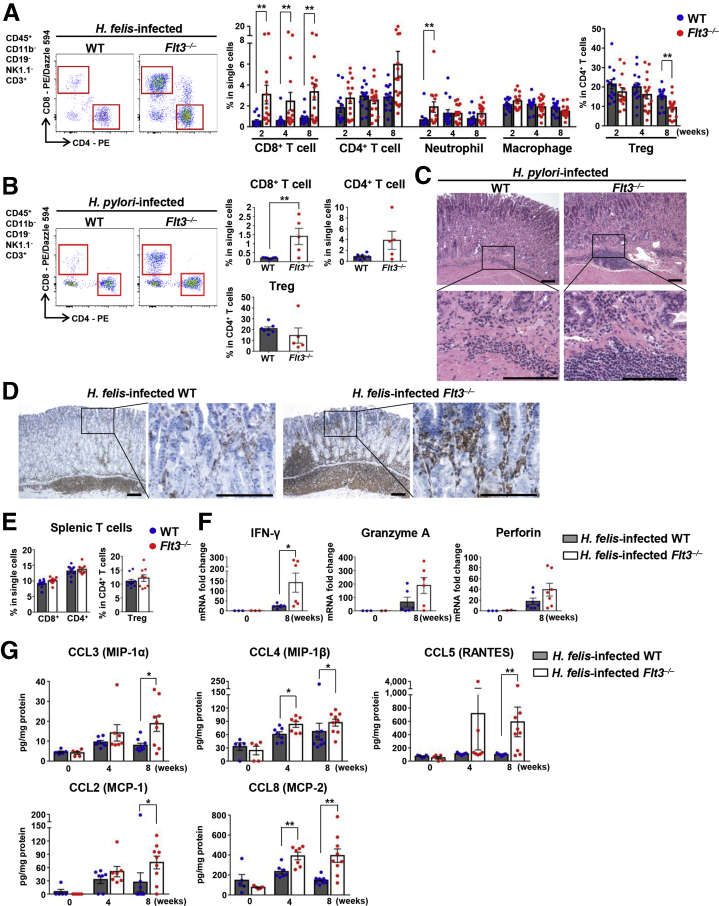
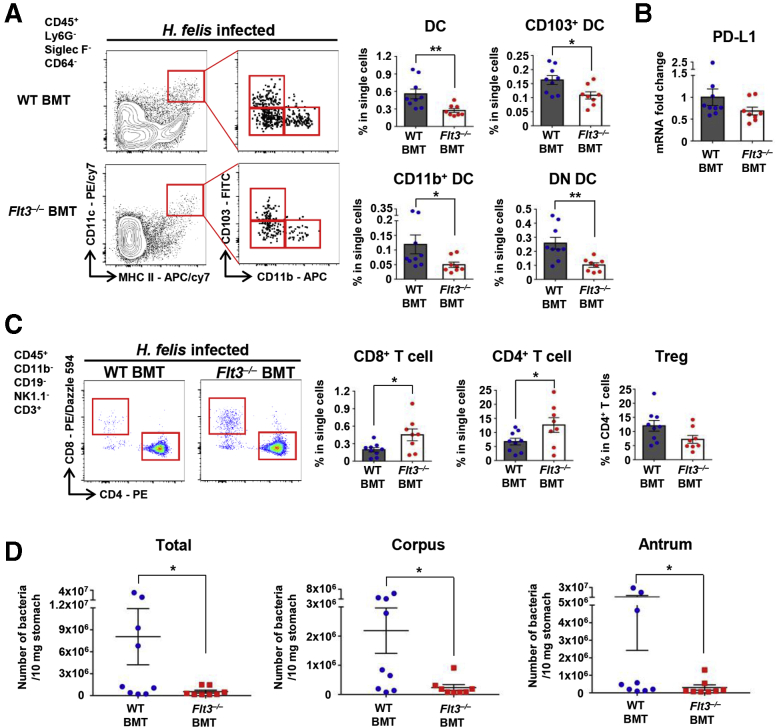
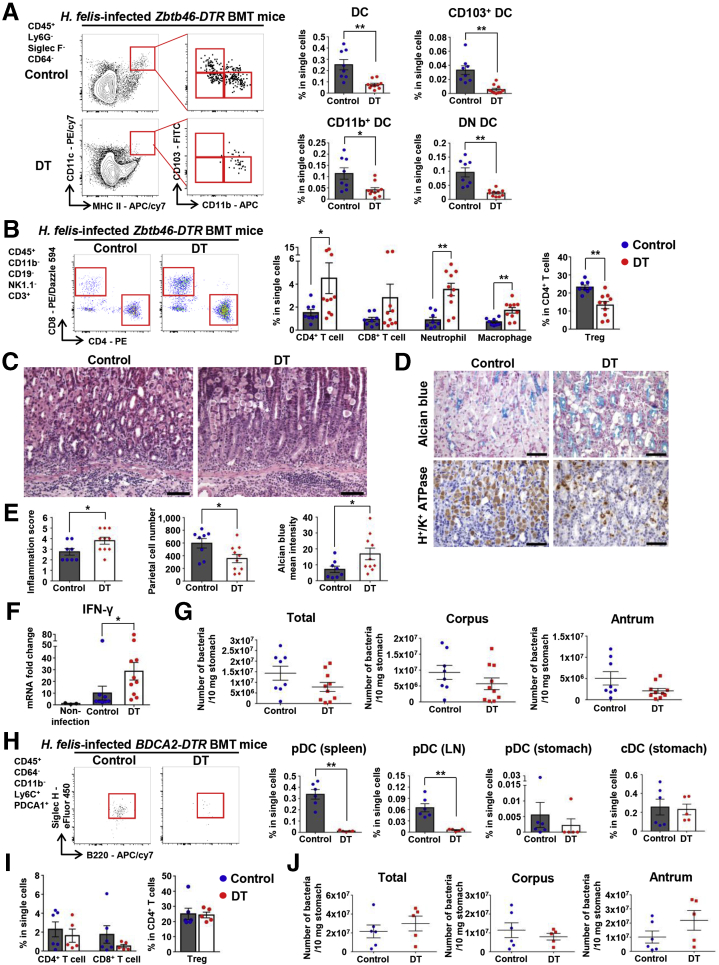
Genetic or antibody-mediated blockade of PD-L1 aggravated Helicobacter-induced gastritis with mucosal metaplasia. Gastric classical DCs expressed considerably higher levels of PD-L1 than other immune cells and co-localized with T cells in gastritis lesions from Helicobacter-infected mice and human beings. H felis- or H pylori-infected Flt3 or classical DC-depleted mice showed aggravated gastritis with severe T-cell and neutrophil accumulation with low bacterial loads compared with that in control mice. Finally, PD-L1-expressing DCs were co-localized with T cells and showed a positive correlation with H pylori infection in human subjects.
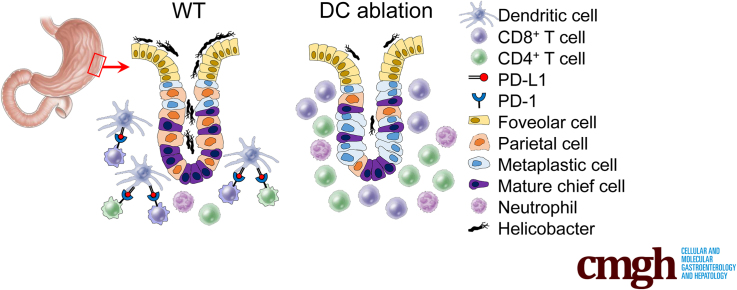
The PD-1/PD-L1 pathway may be responsible for the immune modulatory function of gastric DCs that protects the gastric mucosa from Helicobacter-induced inflammation, but allows persistent Helicobacter colonization.
已有报道称,幽门螺杆菌(Helicobacter pylori)可调节局部免疫应答,从而在胃黏膜中持续定植。虽然诱导程序性细胞死亡配体 1(PD-L1)的表达已被认为是幽门螺杆菌持续感染的免疫调节机制,但表达 PD-L1 的主要免疫细胞及其在幽门螺杆菌诱导性胃炎中的功能仍有待阐明。
采用抗体阻断或 PD-L1 缺陷型骨髓移植的方法,在感染幽门螺杆菌的小鼠中进行实验。采用流式细胞术和免疫荧光染色,确定感染幽门螺杆菌的胃中表达 PD-L1 的主要免疫细胞。分析感染有脆弱拟杆菌(Helicobacter felis)或幽门螺杆菌的树突状细胞(dendritic cell,DC)缺陷型小鼠模型(包括 Flt3、Zbtb46-白喉毒素受体和 BDCA2-白喉毒素受体小鼠)的病理变化和定植水平。最后,采用多重免疫组化技术,分析人胃组织中表达 PD-L1 的 DC 位置及其与幽门螺杆菌感染的相关性。
PD-L1 的遗传或抗体阻断加重了幽门螺杆菌诱导的胃炎,伴有黏膜化生。与其他免疫细胞相比,胃经典 DC 表达了更高水平的 PD-L1,且在感染幽门螺杆菌的小鼠和人类的胃炎病变中与 T 细胞共定位。与对照组小鼠相比,感染脆弱拟杆菌或幽门螺杆菌的 Flt3 或经典 DC 耗竭小鼠的胃炎更严重,T 细胞和中性粒细胞积聚更严重,细菌载量更低。最后,表达 PD-L1 的 DC 与 T 细胞共定位,并与人类受试者的幽门螺杆菌感染呈正相关。
PD-1/PD-L1 通路可能负责胃 DC 的免疫调节功能,该功能可保护胃黏膜免受幽门螺杆菌诱导的炎症,但允许幽门螺杆菌持续定植。