Cacciaguerra Giovanni, Palermo Monica, Marino Lidia, Rapisarda Filippo Andrea Salvatore, Pavone Piero, Falsaperla Raffaele, Ruggieri Martino, Marino Silvia
Department of Clinical and Experimental Medicine, Section of Pediatrics and Child Neuropsychiatry, Unit of Rare Diseases of the Nervous System in Childhood, University of Catania, 95125 Catania, Italy.
Radiology Unit 1, Department of Medical Surgical Sciences and Advanced Technologies "GF Ingrassia", University of Catania, 95125 Catania, Italy.
Children (Basel). 2021 Aug 25;8(9):727. doi: 10.3390/children8090727.
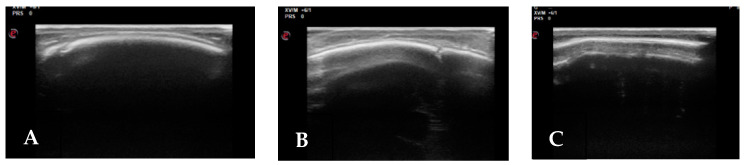
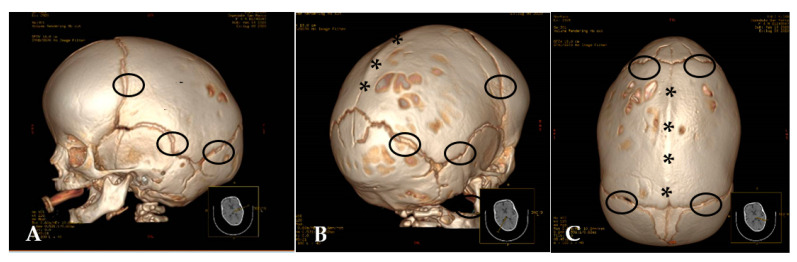
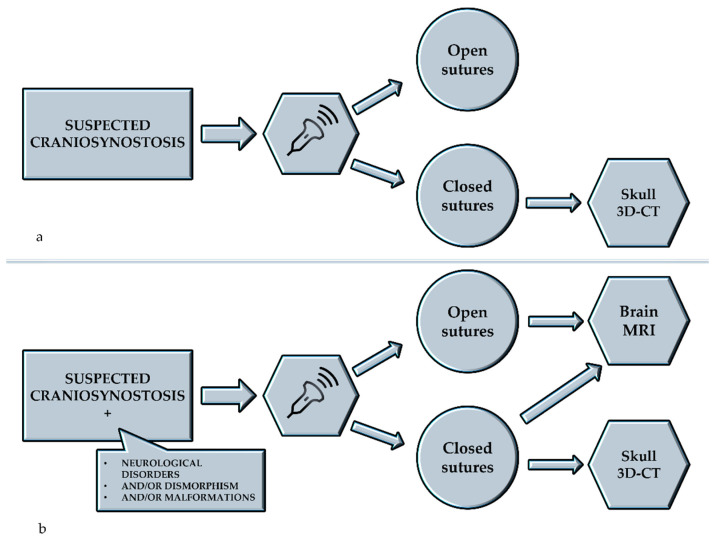
Craniosynostosis, the premature closure of cranial sutures, is one of the principal causes of pediatric skull deformities. It can cause aesthetic, neurological, acoustic, ophthalmological complications up to real emergencies. Craniosynostosis are primarily diagnosed with accurate physical examination, skull measurement and observation of the deformity, but the radiological support currently plays an increasingly important role in confirming a more precise diagnosis and better planning for therapeutic interventions. The clinician must know how to diagnose in the earliest and least invasive way for the child. In the past, technological limitations reduced the choices; today, however, there are plenty of choices and it is necessary to use the various types of available imaging correctly. In the future, imaging techniques will probably rewrite the common classifications we use today. We provide an updated review of the role of imaging in this condition, through the ages, to outline the correct choice for the clinician for an early and non-invasive diagnosis.
颅缝早闭,即颅骨缝线过早闭合,是小儿颅骨畸形的主要原因之一。它可导致美学、神经、听觉、眼科方面的并发症,甚至引发真正的紧急情况。颅缝早闭主要通过精确的体格检查、颅骨测量和对畸形的观察来诊断,但目前放射学支持在确认更精确的诊断以及更好地规划治疗干预方面发挥着越来越重要的作用。临床医生必须知道如何以对儿童最早且侵入性最小的方式进行诊断。过去,技术限制减少了选择;然而如今,有大量的选择,正确使用各种可用的成像技术很有必要。未来,成像技术可能会改写我们如今使用的常见分类。我们对成像在这种病症中的作用进行了最新综述,贯穿各个时代,以概述临床医生进行早期和非侵入性诊断的正确选择。