Lin Hung-Yu, Ho Hui-Wen, Chang Yen-Hsiang, Wei Chun-Jui, Chu Pei-Yi
Graduate Institute of Biomedical Engineering, National Chung Hsing University, Taichung 402, Taiwan.
Research Assistant Center, Show Chwan Memorial Hospital, Changhua 500, Taiwan.
Cancers (Basel). 2021 Sep 12;13(18):4576. doi: 10.3390/cancers13184576.
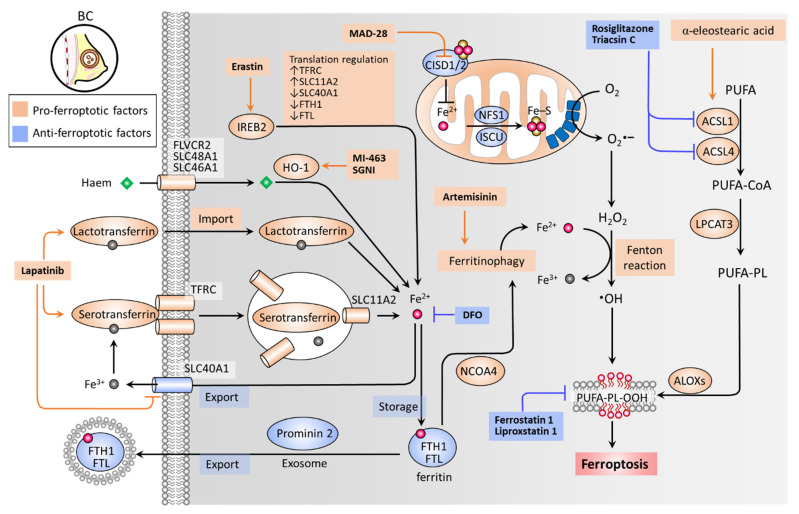
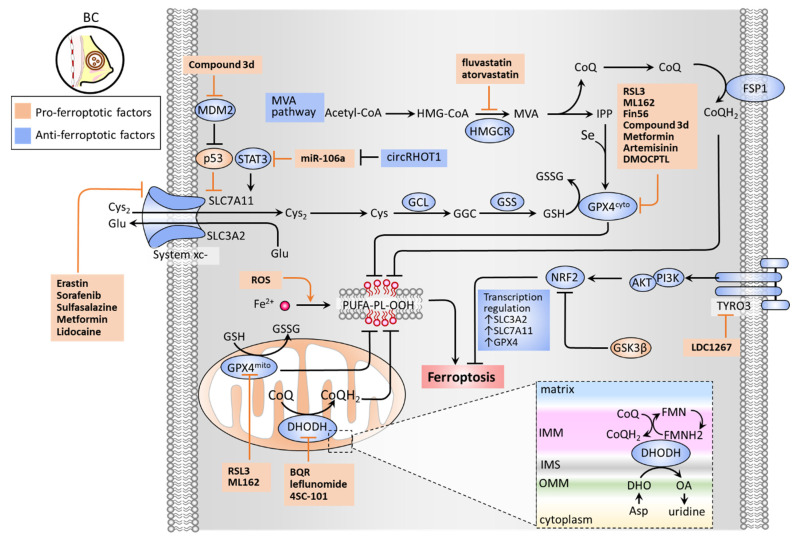
Breast cancer (BC) is the most common malignancy among women worldwide. The discovery of regulated cell death processes has enabled advances in the treatment of BC. In the past decade, ferroptosis, a new form of iron-dependent regulated cell death caused by excessive lipid peroxidation has been implicated in the development and therapeutic responses of BC. Intriguingly, the induction of ferroptosis acts to suppress conventional therapy-resistant cells, and to potentiate the effects of immunotherapy. As such, pharmacological or genetic modulation targeting ferroptosis holds great potential for the treatment of drug-resistant cancers. In this review, we present a critical analysis of the current understanding of the molecular mechanisms and regulatory networks involved in ferroptosis, the potential physiological functions of ferroptosis in tumor suppression, its potential in therapeutic targeting, and explore recent advances in the development of therapeutic strategies for BC.
乳腺癌(BC)是全球女性中最常见的恶性肿瘤。调节性细胞死亡过程的发现推动了乳腺癌治疗的进展。在过去十年中,铁死亡作为一种由过度脂质过氧化引起的新型铁依赖性调节性细胞死亡,已被证明与乳腺癌的发生发展及治疗反应有关。有趣的是,铁死亡的诱导作用可抑制传统治疗耐药细胞,并增强免疫治疗的效果。因此,针对铁死亡的药理学或基因调控在耐药性癌症治疗中具有巨大潜力。在本综述中,我们对当前对铁死亡所涉及的分子机制和调控网络的理解、铁死亡在肿瘤抑制中的潜在生理功能、其在治疗靶点方面的潜力进行了批判性分析,并探讨了乳腺癌治疗策略开发的最新进展。