School of Public Health and Community Medicine, Faculty of Medicine, University of New South Wales, Sydney, NSW 2052, Australia.
Int J Environ Res Public Health. 2021 Sep 19;18(18):9869. doi: 10.3390/ijerph18189869.
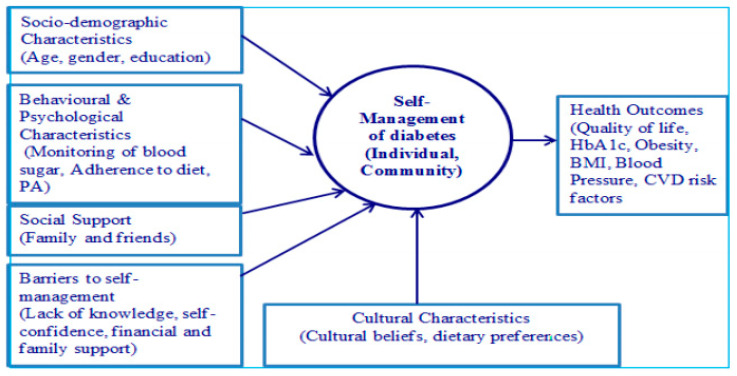
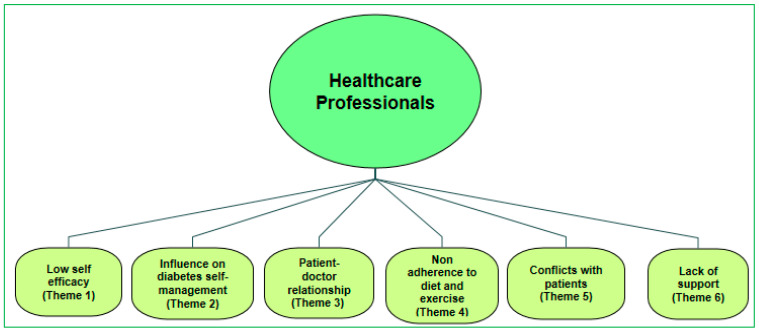
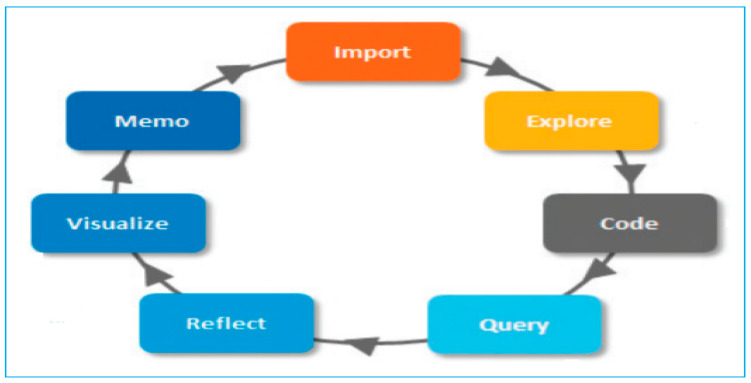
The main objective of this research work was to explore the healthcare professionals' perspectives of type 2 diabetes patients' experiences of self-management of diabetes in the rural area of Pakistan. In this study, we have carried out a methodological approach to use a self-management framework to direct the interview guide for healthcare professionals to examine their perceptions and expectations of their diabetes patients' adherence to the medications prescribed. Twenty healthcare professionals were recruited in this study consisting of ten general practitioners and ten nurses from various clinics (medical centres) of Al-Rehman Hospital at Abbottabad, Pakistan. This qualitative study explored the feelings and opinions of general practitioners on patients' compliance and adherence by using the semi-structured interview guide using a methodological framework. All interviews of participants were audiotaped and transcribed for content analysis. Six major themes were identified: patient-doctor relationship; patient's non-adherence to diet and exercise; conflicts with the patients; low self-efficacy and feeling of "resignation with poor care"; the influence of culture on patients' self-management activities and lack of support for patients by health care providers, patients, and their families. We have derived relevant solutions from qualitative studies and considered that communication, tailored, and shared care is the best approach for patient adherence to treatment. GPs felt that a structured consultation and follow-up in a multidisciplinary team might help to increase adherence. The results of this qualitative health research highlighted the challenges healthcare professionals are facing in rural Pakistan in managing patients with type 2 diabetes and supporting their management activities. Healthcare professionals and patients may benefit by adopting a methodological framework approach to ensure meaningful participation and adjusting the patient-doctor relationship, and setting up achievable management and self-management goals.
本研究工作的主要目的是探讨巴基斯坦农村地区的医疗保健专业人员对 2 型糖尿病患者自我管理糖尿病体验的看法。在这项研究中,我们采用了一种自我管理框架的方法学方法来指导医疗保健专业人员的访谈指南,以检查他们对患者遵守规定药物的看法和期望。本研究共招募了 20 名医疗保健专业人员,其中包括来自巴基斯坦 Abbottabad 的 Al-Rehman 医院的 10 名全科医生和 10 名护士。这项定性研究通过使用半结构化访谈指南和方法论框架,探索了全科医生对患者依从性的感受和意见。对参与者的所有访谈均进行了录音和转录,以进行内容分析。确定了六个主要主题:医患关系;患者不遵守饮食和运动规定;与患者的冲突;自我效能感低和“因护理不佳而无奈”的感觉;文化对患者自我管理活动的影响以及医疗保健提供者、患者及其家庭对患者的支持不足。我们从定性研究中得出了相关解决方案,并认为沟通、量身定制和共同护理是患者接受治疗的最佳方法。全科医生认为,在多学科团队中进行结构化咨询和随访可能有助于提高依从性。这项定性健康研究的结果强调了巴基斯坦农村地区医疗保健专业人员在管理 2 型糖尿病患者和支持他们的管理活动方面所面临的挑战。医疗保健专业人员和患者可以通过采用方法学框架方法受益,以确保有意义的参与和调整医患关系,并设定可实现的管理和自我管理目标。