Humaloja Jaana, Vento Maximo, Kuligowski Julia, Andersson Sture, Piñeiro-Ramos José David, Sánchez-Illana Ángel, Litonius Erik, Jakkula Pekka, Hästbacka Johanna, Bendel Stepani, Tiainen Marjaana, Reinikainen Matti, Skrifvars Markus B
Department of Emergency Care and Services, University of Helsinki and Helsinki University Hospital, 00029 Helsinki, Finland.
Neonatal Research Group, Health Research Institute La Fe, 46026 Valencia, Spain.
J Clin Med. 2021 Sep 17;10(18):4226. doi: 10.3390/jcm10184226.
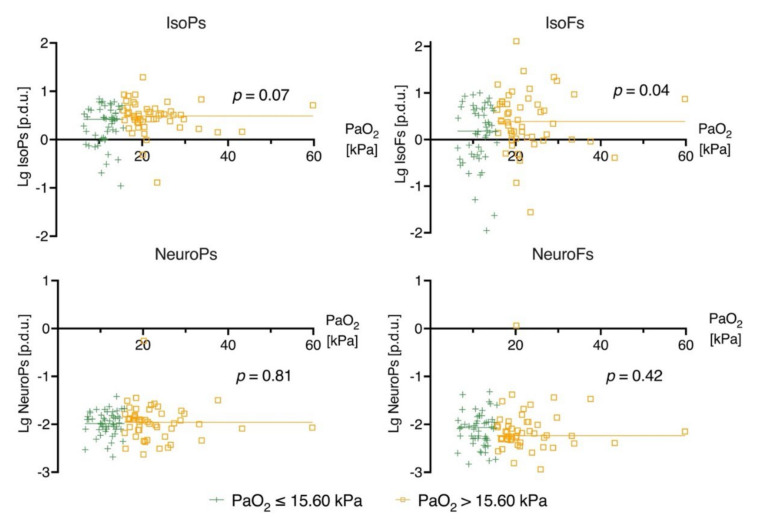
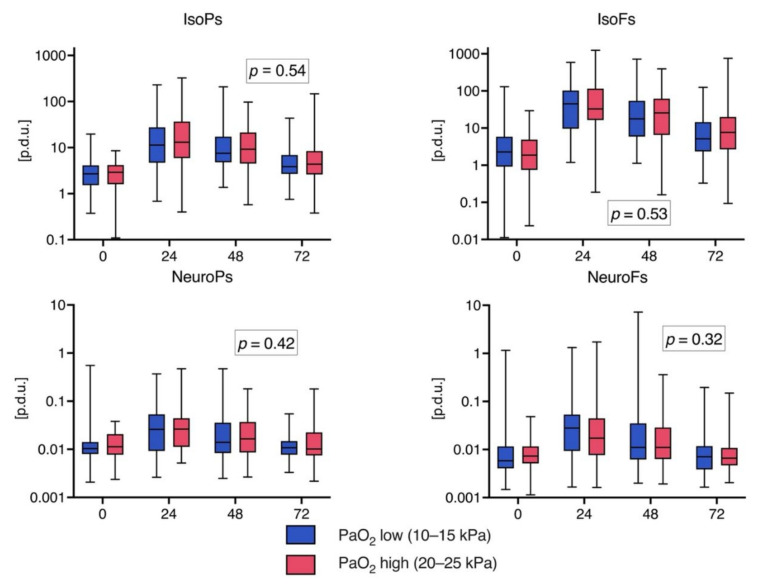
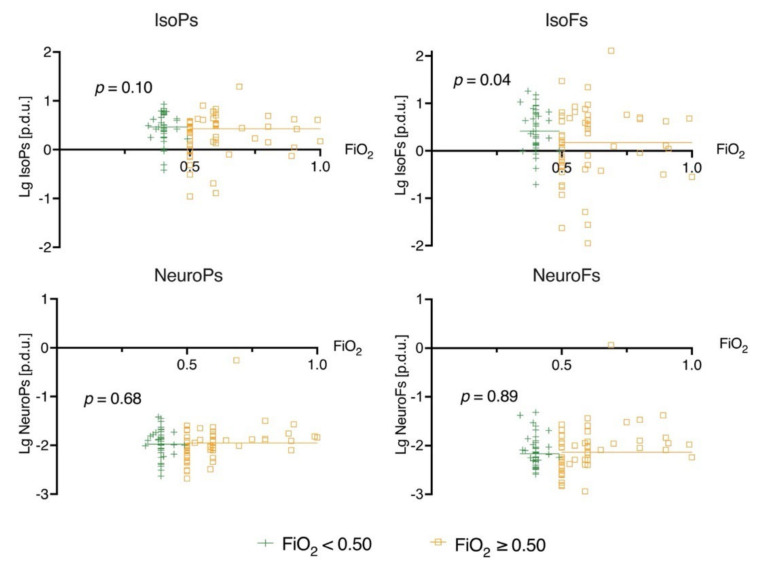
The products of polyunsaturated fatty acid peroxidation are considered reliable biomarkers of oxidative injury in vivo. We investigated ischemia-reperfusion-related oxidative injury by determining the levels of lipid peroxidation biomarkers (isoprostane, isofuran, neuroprostane, and neurofuran) after cardiac arrest and tested the associations between the biomarkers and different arterial oxygen tensions (PaO). We utilized blood samples collected during the COMACARE trial (NCT02698917). In the trial, 123 patients resuscitated from out-of-hospital cardiac arrest were treated with a 10-15 kPa or 20-25 kPa PaO target during the initial 36 h in the intensive care unit. We measured the biomarker levels at admission, and 24, 48, and 72 h thereafter. We compared biomarker levels in the intervention groups and in groups that differed in oxygen exposure prior to randomization. Blood samples for biomarker determination were available for 112 patients. All four biomarker levels peaked at 24 h; the increase appeared greater in younger patients and in patients without bystander-initiated life support. No association between the lipid peroxidation biomarkers and oxygen exposure either before or after randomization was found. Increases in the biomarker levels during the first 24 h in intensive care suggest continuing oxidative stress, but the clinical relevance of this remains unresolved.
多不饱和脂肪酸过氧化产物被认为是体内氧化损伤的可靠生物标志物。我们通过测定心脏骤停后脂质过氧化生物标志物(异前列腺素、异呋喃、神经前列腺素和神经呋喃)的水平,研究了缺血再灌注相关的氧化损伤,并测试了这些生物标志物与不同动脉血氧张力(PaO)之间的关联。我们利用了在COMACARE试验(NCT02698917)期间采集的血样。在该试验中,123名从院外心脏骤停中复苏的患者在重症监护病房最初的36小时内接受了10 - 15 kPa或20 - 25 kPa的PaO目标治疗。我们在入院时以及此后的24、48和72小时测量了生物标志物水平。我们比较了干预组和随机分组前氧暴露不同的组之间的生物标志物水平。有112名患者可获得用于生物标志物测定的血样。所有四种生物标志物水平在24小时达到峰值;在年轻患者和没有旁观者启动生命支持的患者中,这种升高似乎更大。未发现脂质过氧化生物标志物与随机分组前后的氧暴露之间存在关联。重症监护最初24小时内生物标志物水平的升高表明氧化应激持续存在,但其临床相关性仍未解决。