Tsai Chia-Lung, Lin Chiao-Yun, Chao Angel, Lee Yun-Shien, Wu Ren-Chin, Tsai Chi-Neu, Yen Chih-Feng, Chao An-Shine
Genomic Medicine Research Core Laboratory, Linkou Chang Gung Memorial Hospital, Taoyuan 333011, Taiwan.
Department of Obstetrics and Gynecology, Linkou Chang Gung Memorial Hospital and Chang Gung University College of Medicine, Taoyuan 333423, Taiwan.
J Pers Med. 2021 Sep 11;11(9):906. doi: 10.3390/jpm11090906.
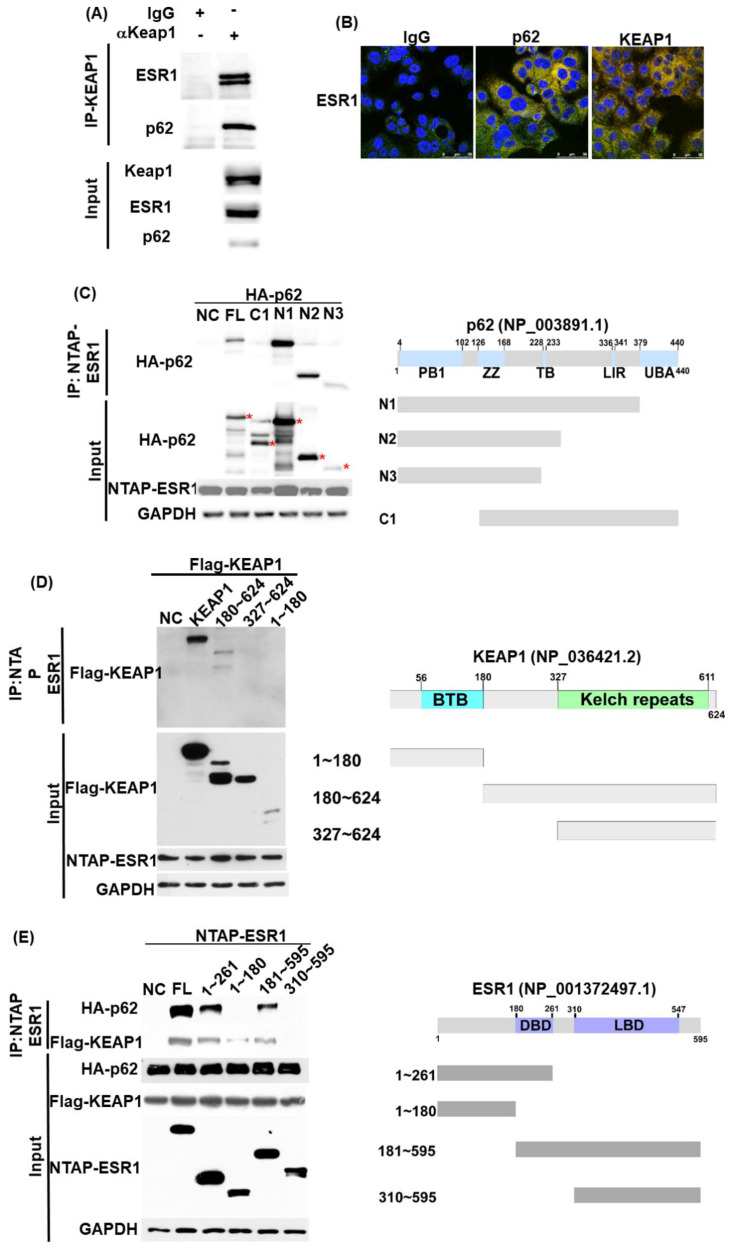
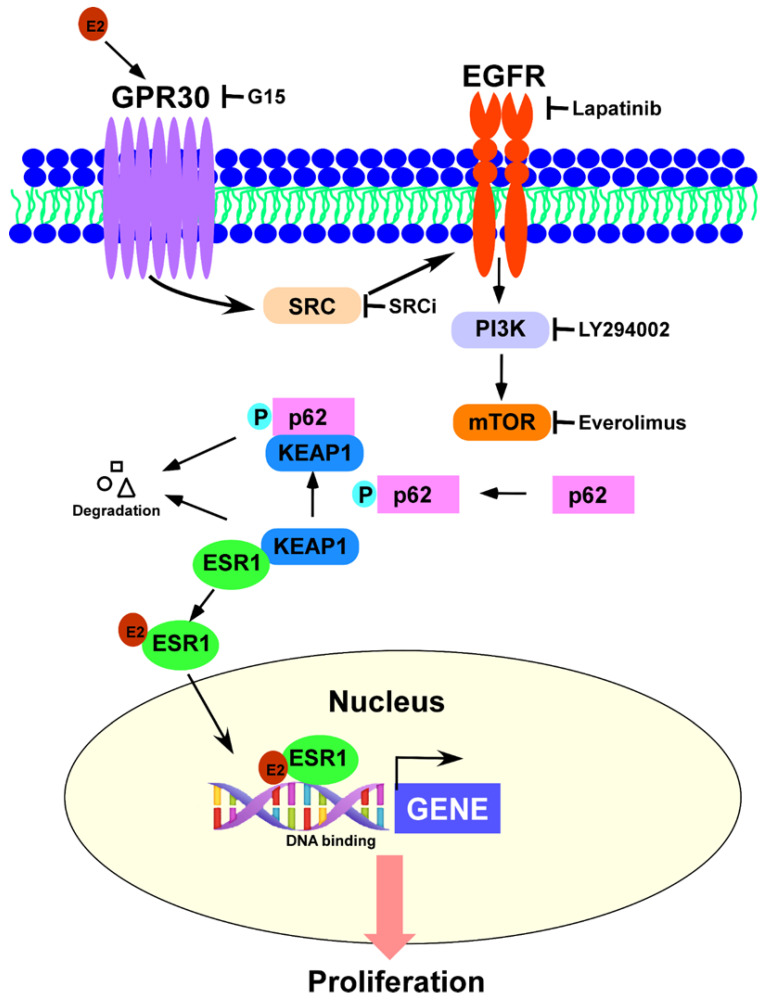
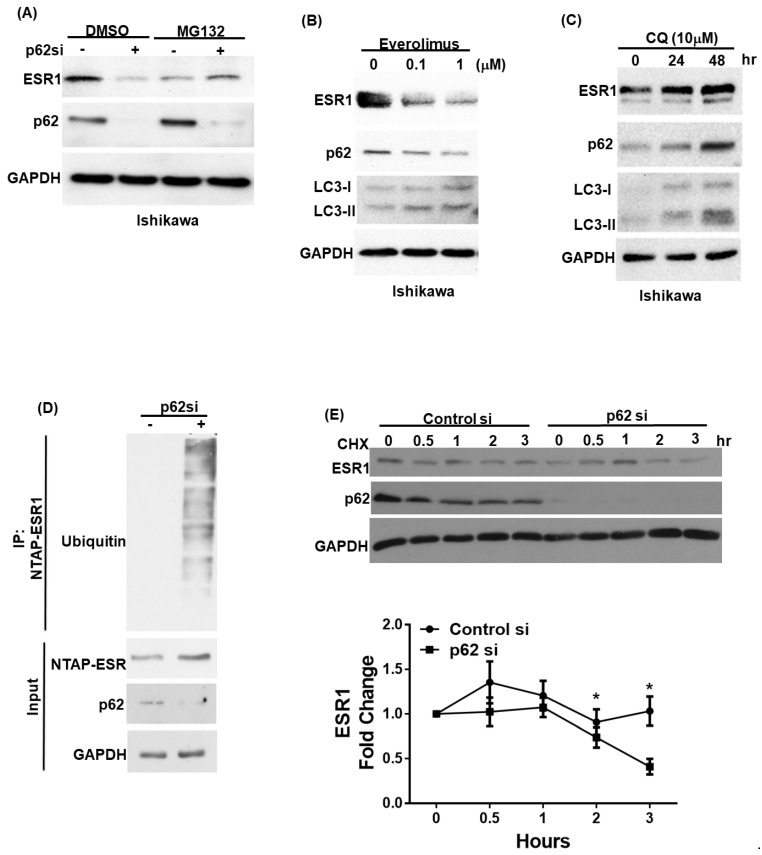
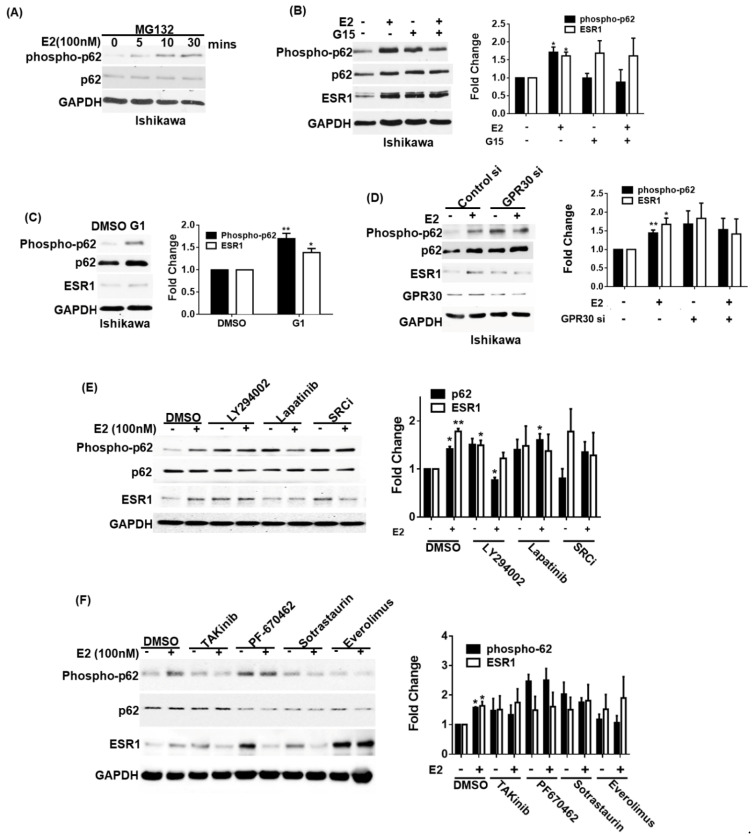
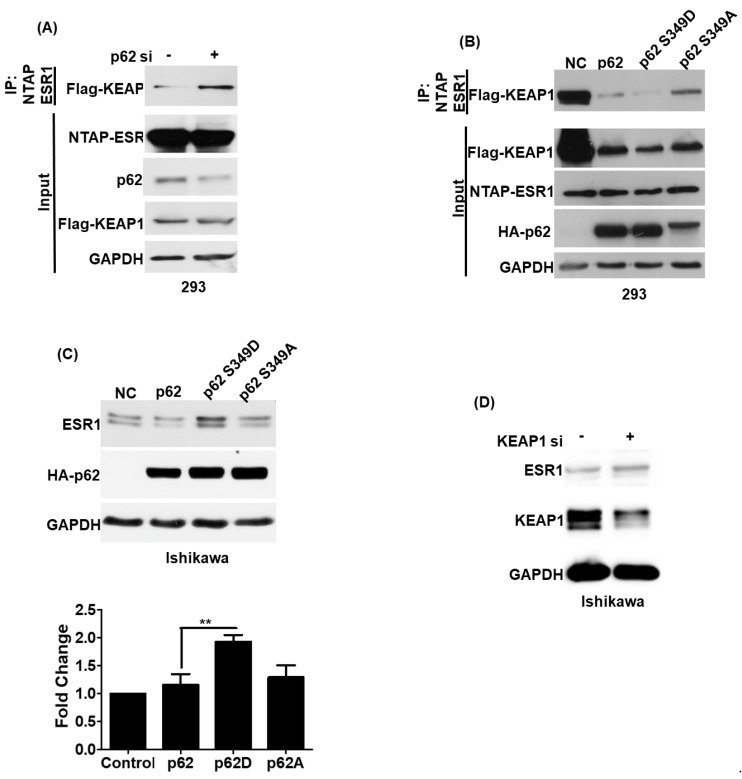
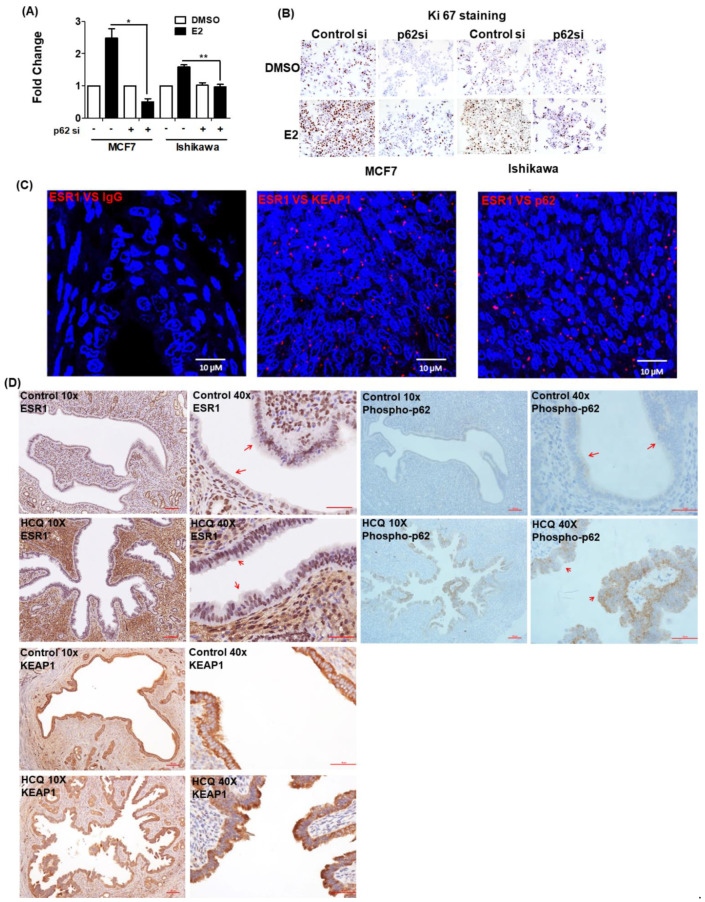
Estrogens can elicit rapid cellular responses via the G-protein-coupled receptor 30 (GPR30), followed by estrogen receptor α (ERα/ESR1)-mediated genomic effects. Here, we investigated whether rapid estrogen signaling via GRP30 may affect ESR1 expression, and we examined the underlying molecular mechanisms. The exposure of human endometrial cancer cells to 17β-estradiol promoted p62 phosphorylation and increased ESR1 protein expression. However, both a GPR30 antagonist and GPR30 silencing abrogated this phenomenon. GPR30 activation by 17β-estradiol elicited the SRC/EGFR/PI3K/Akt/mTOR signaling pathway. Intriguingly, unphosphorylated p62 and ESR1 were found to form an intracellular complex with the substrate adaptor protein KEAP1. Upon phosphorylation, p62 promoted ESR1 release from the complex, to increase its protein expression. Given the critical role played by p62 in autophagy, we also examined how this process affected ESR1 expression. The activation of autophagy by everolimus decreased ESR1 by promoting p62 degradation, whereas autophagy inhibition with chloroquine increased ESR1 expression. The treatment of female C57BL/6 mice with the autophagy inhibitor hydroxychloroquine-which promotes p62 expression-increased both phosphorylated p62 and ESR1 expression in uterine epithelial cells. Collectively, our results indicate that 17β-estradiol-mediated GPR30 activation elicits the SRC/EGFR/PI3K/Akt/mTOR signaling pathway and promotes p62 phosphorylation. In turn, phosphorylated p62 increased ESR1 expression by inducing its release from complexes that included KEAP1. Our findings may lead to novel pharmacological strategies aimed at decreasing ESR1 expression in estrogen-sensitive cells.
雌激素可通过G蛋白偶联受体30(GPR30)引发快速的细胞反应,随后是雌激素受体α(ERα/ESR1)介导的基因组效应。在此,我们研究了通过GRP30的快速雌激素信号传导是否会影响ESR1的表达,并研究了其潜在的分子机制。人子宫内膜癌细胞暴露于17β-雌二醇会促进p62磷酸化并增加ESR1蛋白表达。然而,GPR30拮抗剂和GPR30沉默均消除了这种现象。17β-雌二醇激活GPR30引发了SRC/EGFR/PI3K/Akt/mTOR信号通路。有趣的是,发现未磷酸化的p62和ESR1与底物衔接蛋白KEAP1形成细胞内复合物。磷酸化后,p62促进ESR1从复合物中释放,从而增加其蛋白表达。鉴于p62在自噬中起关键作用,我们还研究了这个过程如何影响ESR1表达。依维莫司激活自噬通过促进p62降解降低了ESR1,而用氯喹抑制自噬则增加了ESR1表达。用促进p62表达的自噬抑制剂羟氯喹治疗雌性C57BL/6小鼠,增加了子宫上皮细胞中磷酸化p62和ESR1的表达。总的来说,我们的结果表明,17β-雌二醇介导的GPR30激活引发了SRC/EGFR/PI3K/Akt/mTOR信号通路并促进p62磷酸化。反过来,磷酸化的p62通过诱导其从包含KEAP1的复合物中释放来增加ESR1表达。我们的发现可能会带来旨在降低雌激素敏感细胞中ESR1表达的新的药理学策略。