Lauruschkat Chris D, Etter Sonja, Schnack Elisabeth, Ebel Frank, Schäuble Sascha, Page Lukas, Rümens Dana, Dragan Mariola, Schlegel Nicolas, Panagiotou Gianni, Kniemeyer Olaf, Brakhage Axel A, Einsele Hermann, Wurster Sebastian, Loeffler Juergen
Department of Internal Medicine II, University Hospital of Wuerzburg, 97080 Wuerzburg, Germany.
Institute for Infectious Diseases and Zoonoses, Ludwig-Maximilians-University of Munich, 80539 Munich, Germany.
J Fungi (Basel). 2021 Aug 27;7(9):698. doi: 10.3390/jof7090698.
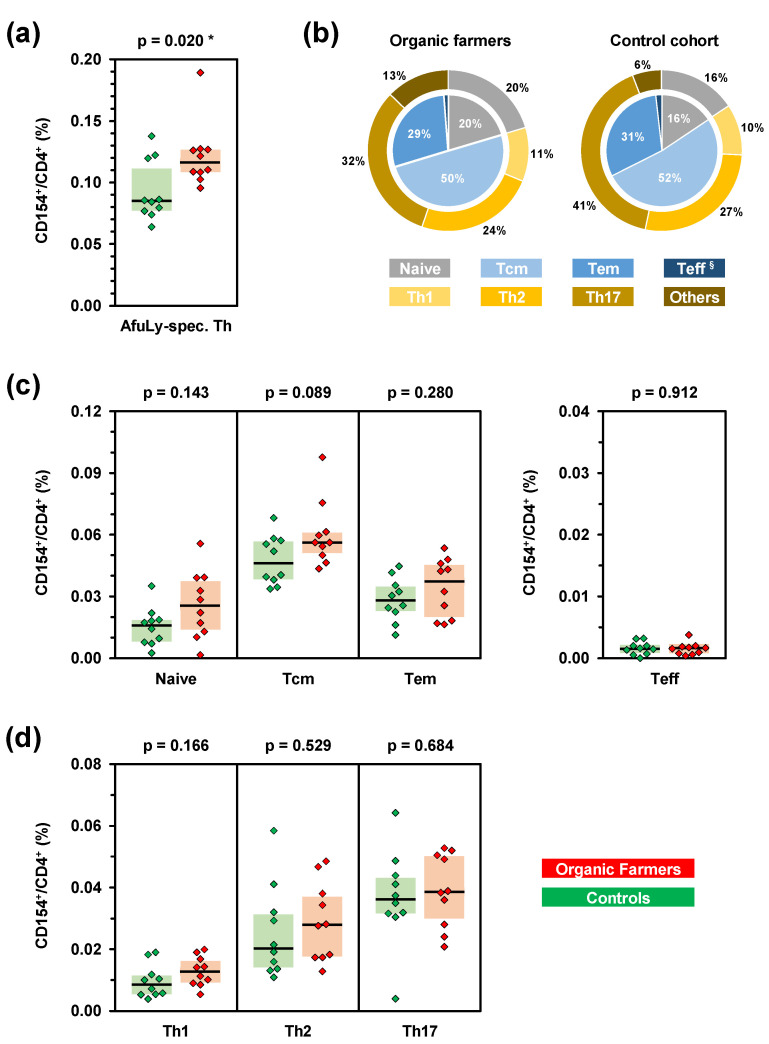
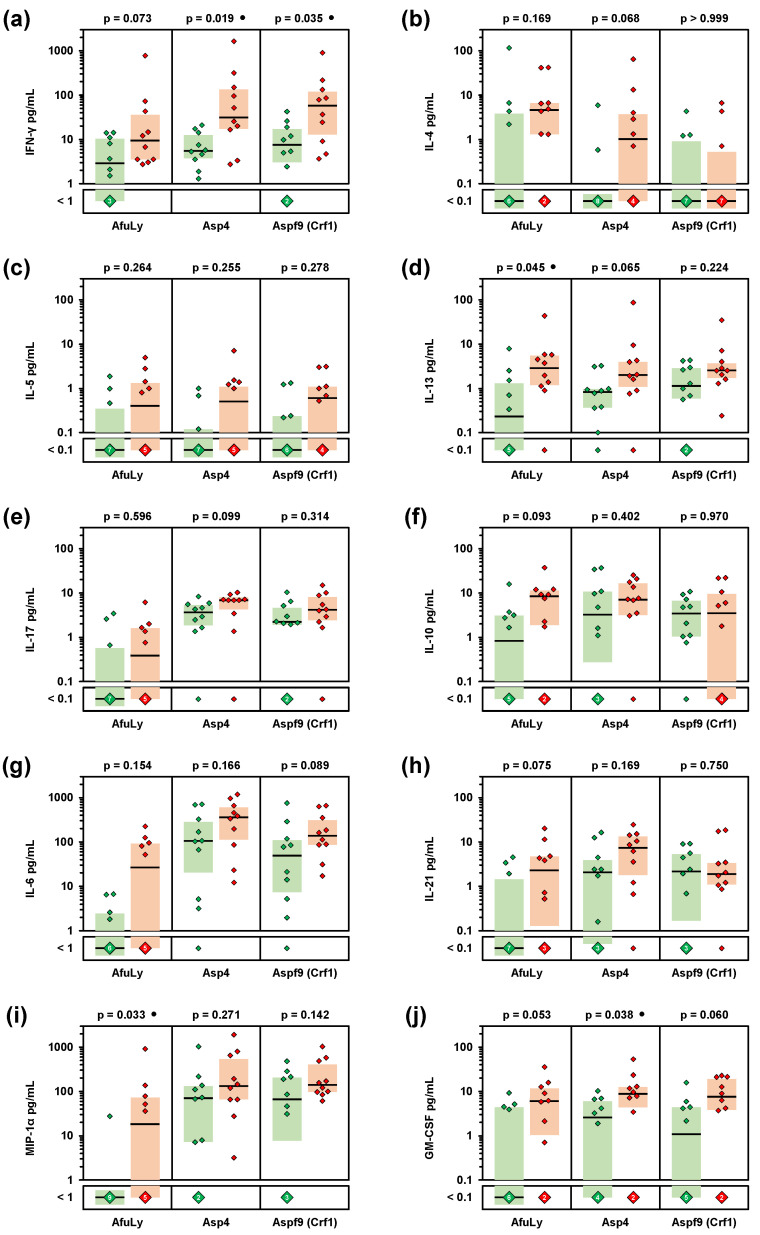
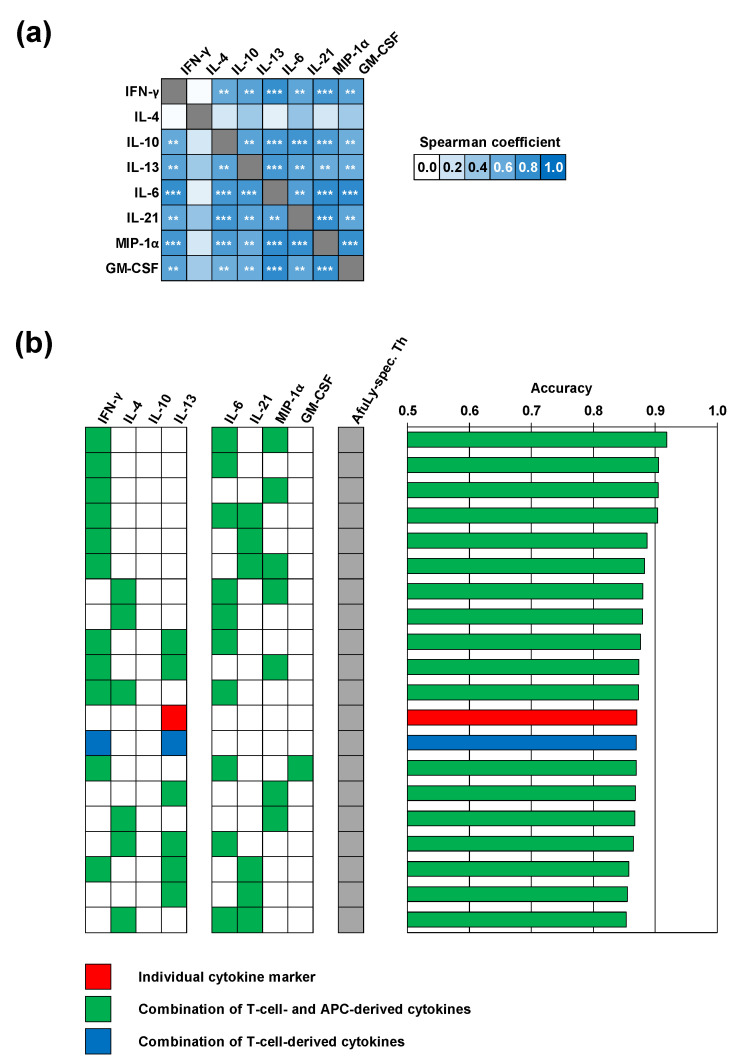
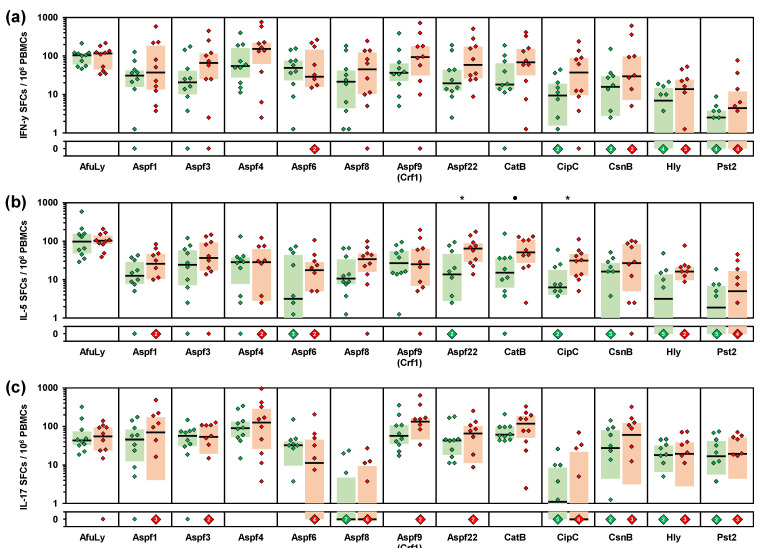
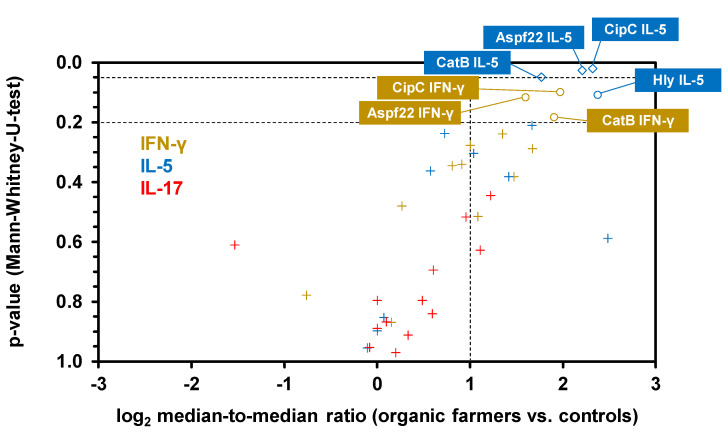
Occupational mold exposure can lead to -associated allergic diseases including asthma and hypersensitivity pneumonitis. Elevated IL-17 levels or disbalanced T-helper (Th) cell expansion were previously linked to -associated allergic diseases, whereas alterations to the Th cell repertoire in healthy occupationally exposed subjects are scarcely studied. Therefore, we employed functional immunoassays to compare Th cell responses to antigens in organic farmers, a cohort frequently exposed to environmental molds, and non-occupationally exposed controls. Organic farmers harbored significantly higher -specific Th-cell frequencies than controls, with comparable expansion of Th1- and Th2-cell frequencies but only slightly elevated Th17-cell frequencies. Accordingly, antigen-induced Th1 and Th2 cytokine levels were strongly elevated, whereas induction of IL-17A was minimal. Additionally, increased levels of some innate immune cell-derived cytokines were found in samples from organic farmers. Antigen-induced cytokine release combined with -specific Th-cell frequencies resulted in high classification accuracy between organic farmers and controls. Aspf22, CatB, and CipC elicited the strongest differences in Th1 and Th2 responses between the two cohorts, suggesting these antigens as potential candidates for future bio-effect monitoring approaches. Overall, we found that occupationally exposed agricultural workers display a largely balanced co-expansion of Th1 and Th2 immunity with only minor changes in Th17 responses.
职业性接触霉菌可导致包括哮喘和过敏性肺炎在内的相关过敏性疾病。先前已将白细胞介素-17水平升高或辅助性T(Th)细胞扩增失衡与相关过敏性疾病联系起来,而对健康职业接触者的Th细胞库变化研究甚少。因此,我们采用功能性免疫测定法,比较有机农场主(一个经常接触环境霉菌的群体)和非职业接触对照组对抗原的Th细胞反应。有机农场主的特异性Th细胞频率显著高于对照组,Th1和Th2细胞频率的扩增相当,但Th17细胞频率仅略有升高。相应地,抗原诱导的Th1和Th2细胞因子水平大幅升高,而白细胞介素-17A的诱导作用最小。此外,在有机农场主样本中发现一些先天免疫细胞衍生的细胞因子水平升高。抗原诱导的细胞因子释放与特异性Th细胞频率相结合,使得在有机农场主和对照组之间具有较高的分类准确性。Aspf22、组织蛋白酶B和CipC在两个队列的Th1和Th2反应中引起的差异最为显著,表明这些抗原是未来生物效应监测方法的潜在候选物。总体而言,我们发现职业接触的农业工人Th1和Th2免疫反应在很大程度上呈现平衡的共同扩增,Thl7反应仅有轻微变化。