CIRI-Centre International de Recherche en Infectiologie, Univ Lyon, Université Claude Bernard Lyon 1, Inserm, U1111, CNRS, UMR5308, ENS Lyon, 46 Allée d'Italie, F-69007 Lyon, France.
Int J Mol Sci. 2021 Sep 16;22(18):9991. doi: 10.3390/ijms22189991.
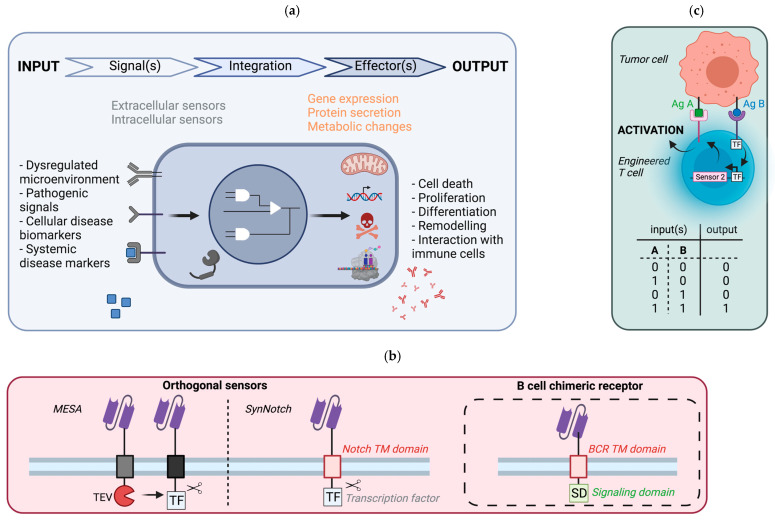
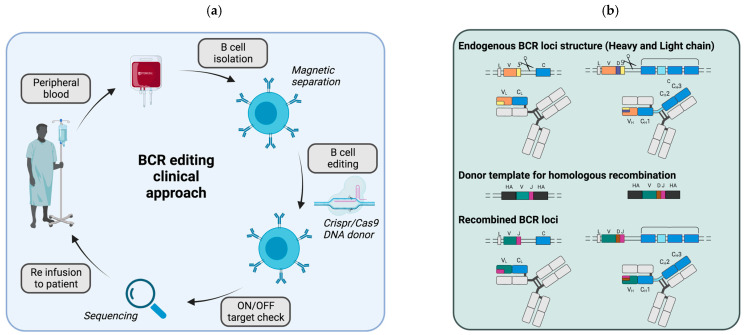
Nowadays, cancers still represent a significant health burden, accounting for around 10 million deaths per year, due to ageing populations and inefficient treatments for some refractory cancers. Immunotherapy strategies that modulate the patient's immune system have emerged as good treatment options. Among them, the adoptive transfer of B cells selected showed promising results, with a reduction in tumor growth in several cancer mouse models, often associated with antitumoral immune responses. Aside from the benefits of their intrinsic properties, including antigen presentation, antibody secretion, homing and long-term persistence, B cells can be modified prior to reinfusion to increase their therapeutic role. For instance, B cells have been modified mainly to boost their immuno-stimulatory activation potential by forcing the expression of costimulatory ligands using defined culture conditions or gene insertion. Moreover, tumor-specific antigen presentation by infused B cells has been increased by ex vivo antigen loading (peptides, RNA, DNA, virus) or by the sorting/ engineering of B cells with a B cell receptor specific to tumor antigens. Editing of the BCR also rewires B cell specificity toward tumor antigens, and may trigger, upon antigen recognition, the secretion of antitumor antibodies by differentiated plasma cells that can then be recognized by other immune components or cells involved in tumor clearance by antibody-dependent cell cytotoxicity or complement-dependent cytotoxicity for example. With the expansion of gene editing methodologies, new strategies to reprogram immune cells with whole synthetic circuits are being explored: modified B cells can sense disease-specific biomarkers and, in response, trigger the expression of therapeutic molecules, such as molecules that counteract the tumoral immunosuppressive microenvironment. Such strategies remain in their infancy for implementation in B cells, but are likely to expand in the coming years.
如今,由于人口老龄化和某些难治性癌症的治疗效果不理想,癌症仍然是一个严重的健康负担,每年导致约 1000 万人死亡。调节患者免疫系统的免疫疗法策略已成为一种很好的治疗选择。其中,选择的 B 细胞的过继转移显示出了有前景的结果,在几种癌症小鼠模型中减少了肿瘤生长,通常与抗肿瘤免疫反应有关。除了其固有特性(包括抗原呈递、抗体分泌、归巢和长期持久性)的好处外,B 细胞在重新输注之前可以进行修饰,以增加其治疗作用。例如,B 细胞主要通过使用定义的培养条件或基因插入来强制表达共刺激配体来修饰,以增强其免疫刺激激活潜能。此外,通过体外抗原加载(肽、RNA、DNA、病毒)或通过对具有肿瘤抗原特异性 B 细胞受体的 B 细胞进行分选/工程化,增加了输注的 B 细胞对肿瘤特异性抗原的呈递。BCR 的编辑还重新编程了 B 细胞对肿瘤抗原的特异性,并可能在识别抗原时触发分化的浆细胞分泌抗肿瘤抗体,然后这些抗体可以被其他免疫成分或参与通过抗体依赖性细胞毒性或补体依赖性细胞毒性清除肿瘤的细胞识别。随着基因编辑方法的扩展,正在探索用全合成电路重新编程免疫细胞的新策略:修饰的 B 细胞可以感知疾病特异性生物标志物,并相应地触发治疗分子的表达,例如对抗肿瘤免疫抑制微环境的分子。这些策略在 B 细胞中的应用仍处于起步阶段,但在未来几年可能会扩大。