Bogaerts Jonathan, Aerts Roy, Vermeyen Tom, Johannessen Christian, Herrebout Wouter, Batista Joao M
Department of Chemistry, University of Antwerp, 2020 Antwerp, Belgium.
Department of Chemistry, Ghent University, 9000 Ghent, Belgium.
Pharmaceuticals (Basel). 2021 Aug 29;14(9):877. doi: 10.3390/ph14090877.
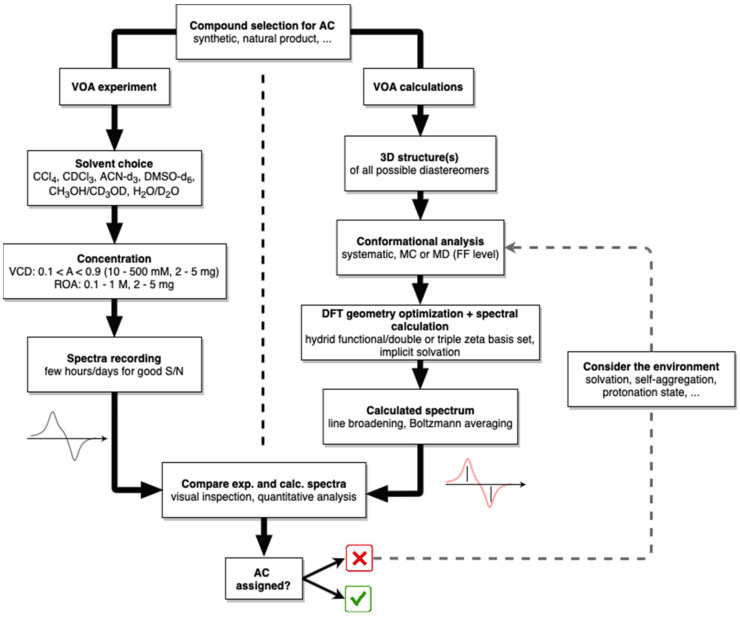
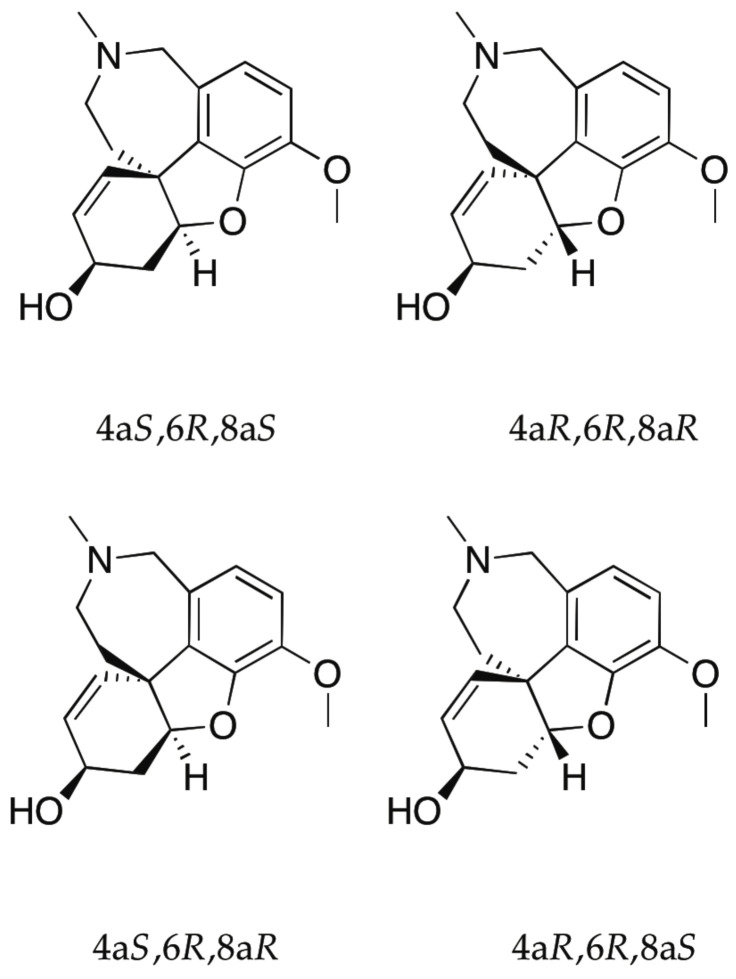
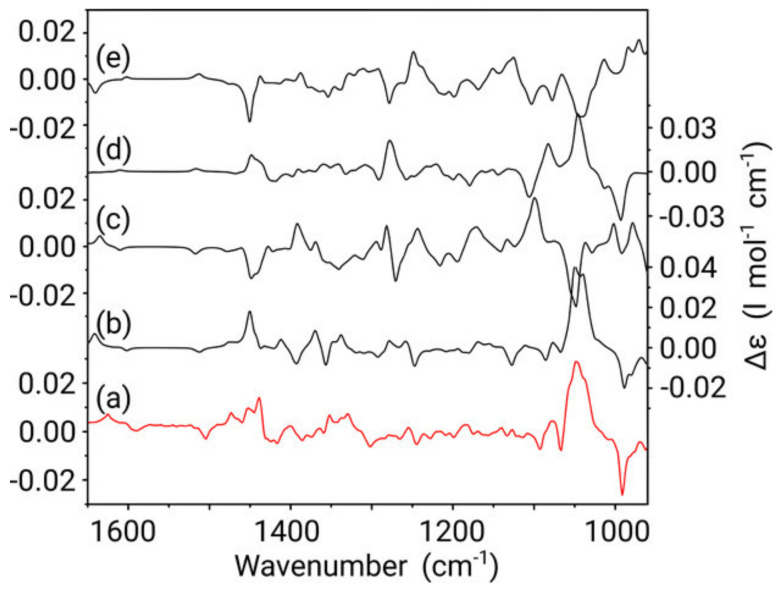
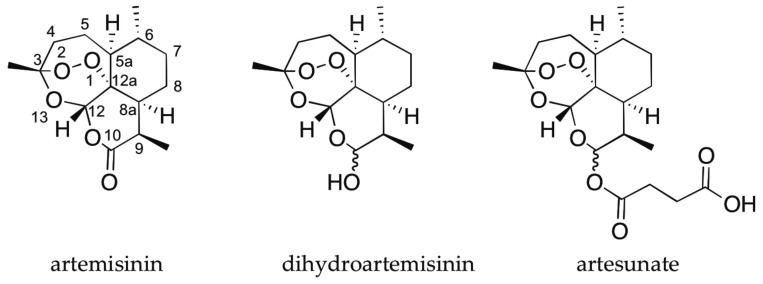
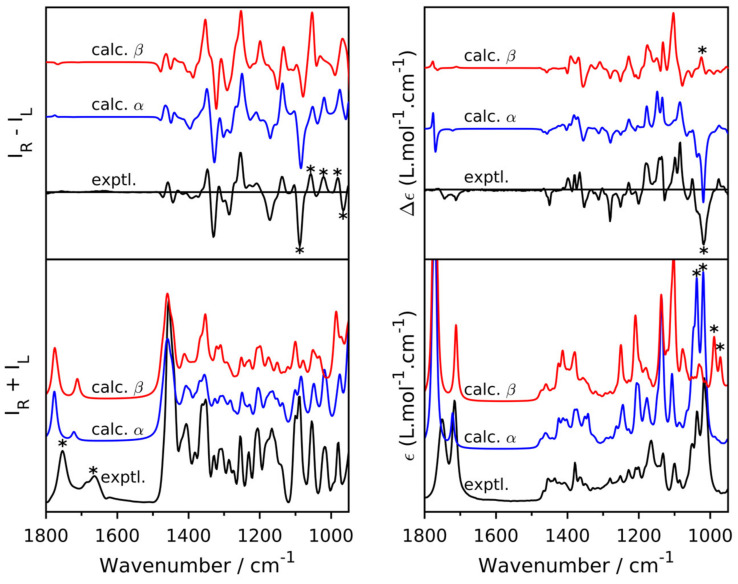
Chirality plays a crucial role in drug discovery and development. As a result, a significant number of commercially available drugs are structurally dissymmetric and enantiomerically pure. The determination of the exact 3D structure of drug candidates is, consequently, of paramount importance for the pharmaceutical industry in different stages of the discovery pipeline. Traditionally the assignment of the absolute configuration of druggable molecules has been carried out by means of X-ray crystallography. Nevertheless, not all molecules are suitable for single-crystal growing. Additionally, valuable information about the conformational dynamics of drug candidates is lost in the solid state. As an alternative, vibrational optical activity (VOA) methods have emerged as powerful tools to assess the stereochemistry of drug molecules directly in solution. These methods include vibrational circular dichroism (VCD) and Raman optical activity (ROA). Despite their potential, VCD and ROA are still unheard of to many organic and medicinal chemists. Therefore, the present review aims at highlighting the recent use of VOA methods for the assignment of the absolute configuration of chiral small-molecule drugs, as well as for the structural analysis of biologics of pharmaceutical interest. A brief introduction on VCD and ROA theory and the best experimental practices for using these methods will be provided along with selected representative examples over the last five years. As VCD and ROA are commonly used in combination with quantum calculations, some guidelines will also be presented for the reliable simulation of chiroptical spectra. Special attention will be paid to the complementarity of VCD and ROA to unambiguously assess the stereochemical properties of pharmaceuticals.
手性在药物研发中起着至关重要的作用。因此,大量市售药物在结构上是不对称的且对映体纯。因此,确定候选药物的确切三维结构对于制药行业在发现流程的不同阶段至关重要。传统上,可成药分子绝对构型的确定是通过X射线晶体学来进行的。然而,并非所有分子都适合生长单晶。此外,关于候选药物构象动力学的有价值信息在固态中会丢失。作为一种替代方法,振动光学活性(VOA)方法已成为直接在溶液中评估药物分子立体化学的强大工具。这些方法包括振动圆二色性(VCD)和拉曼光学活性(ROA)。尽管它们具有潜力,但许多有机化学家和药物化学家仍然对VCD和ROA闻所未闻。因此,本综述旨在突出VOA方法最近在确定手性小分子药物绝对构型以及对具有药学意义的生物制品进行结构分析方面的应用。将提供关于VCD和ROA理论的简要介绍以及使用这些方法的最佳实验实践,并给出过去五年中选定的代表性实例。由于VCD和ROA通常与量子计算结合使用,还将给出一些关于可靠模拟手性光谱的指导方针。将特别关注VCD和ROA的互补性,以明确评估药物的立体化学性质。