Csiszár Emília, Kun Dávid, Fekete Erika
Laboratory of Plastics and Rubber Technology, Department of Physical Chemistry and Materials Science, Budapest University of Technology and Economics, Műegyetem rkp. 3, H-1111 Budapest, Hungary.
Research Centre for Natural Sciences, Institute of Materials and Environmental Chemistry, Magyar Tudósok Körútja 2, H-1117 Budapest, Hungary.
Polymers (Basel). 2021 Sep 20;13(18):3186. doi: 10.3390/polym13183186.
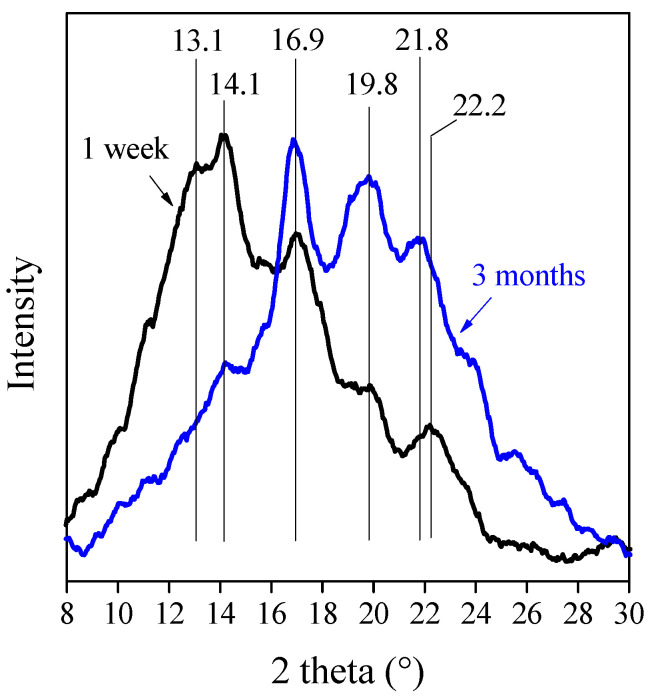
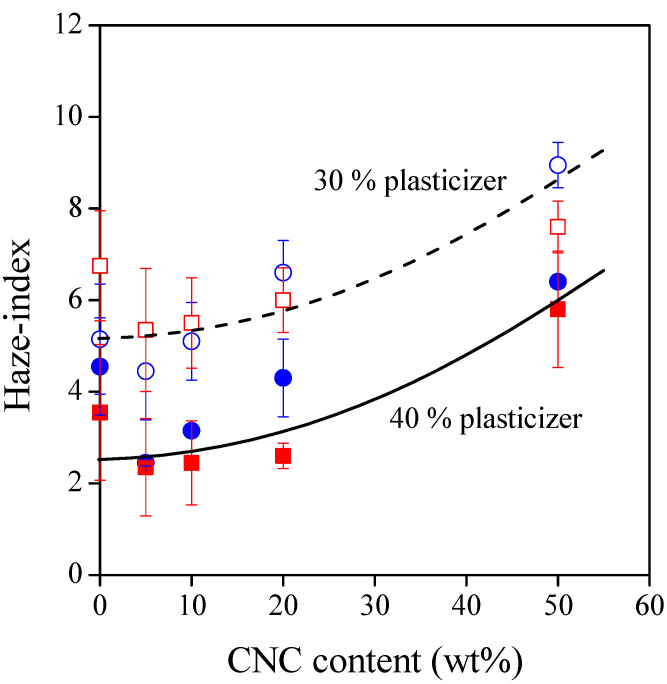
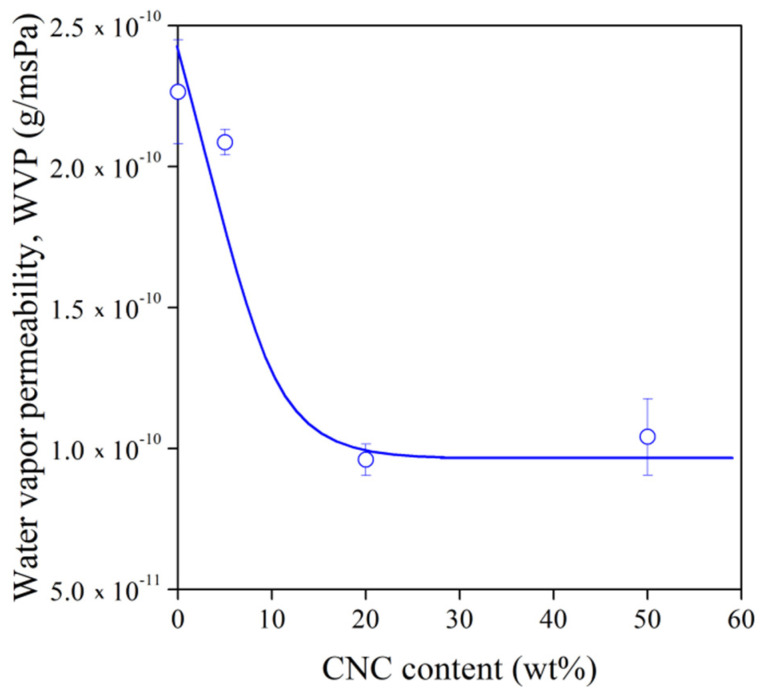
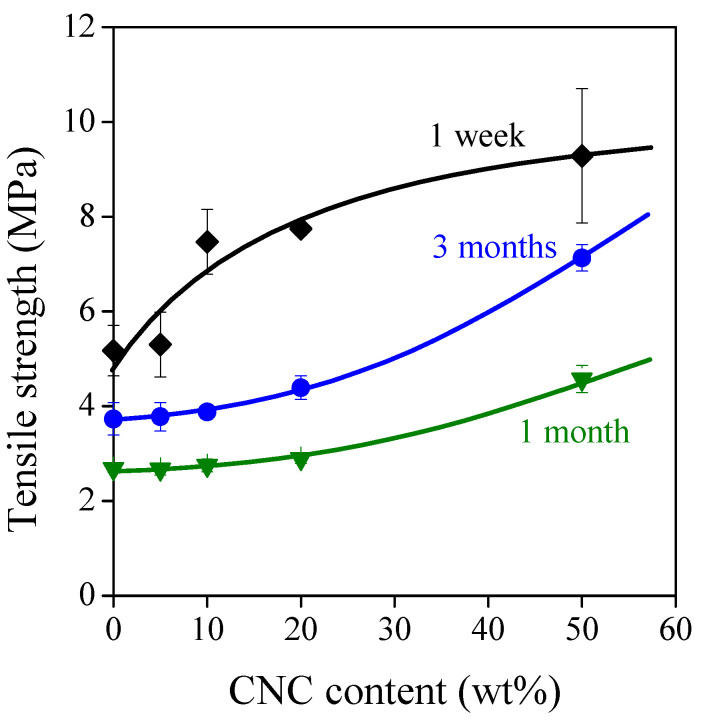
Composite films were fabricated by using cellulose nanocrystals (CNCs) as reinforcement up to 50 wt% in thermoplastic starch (TPS). Structure and interactions were modified by using different types (glycerol and sorbitol) and different amounts (30 and 40%) of plasticizers. The structure of the composites was characterized by visible spectroscopy, Haze index measurements, and scanning electron microscopy. Tensile properties were determined by tensile testing, and the effect of CNC content on vapor permeability was investigated. Although all composite films are transparent and can hardly be distinguished by human eyes, the addition of CNCs somewhat decreases the transmittance of the films. This can be related to the increased light scattering of the films, which is caused by the aggregation of nanocrystals, leading to the formation of micron-sized particles. Nevertheless, strength is enhanced by CNCs, mostly in the composite series prepared with 30% sorbitol. Additionally, the relatively high water vapor permeability of TPS is considerably decreased by the incorporation of at least 20 wt% CNCs. Reinforcement is determined mostly by the competitive interactions among starch, nanocellulose, and plasticizer molecules. The aging of the films is caused by the additional water uptake from the atmosphere and the retrogradation of starch.
通过使用纤维素纳米晶体(CNCs)作为增强剂,在热塑性淀粉(TPS)中添加量高达50 wt%来制备复合薄膜。通过使用不同类型(甘油和山梨醇)和不同用量(30%和40%)的增塑剂来改变结构和相互作用。通过可见光谱、雾度指数测量和扫描电子显微镜对复合材料的结构进行表征。通过拉伸试验测定拉伸性能,并研究CNC含量对水蒸气透过率的影响。尽管所有复合薄膜都是透明的,肉眼几乎无法区分,但添加CNCs会使薄膜的透光率有所降低。这可能与薄膜光散射增加有关,光散射增加是由纳米晶体的聚集引起的,导致形成微米级颗粒。然而,CNCs增强了强度,主要是在含有30%山梨醇的复合系列中。此外,加入至少20 wt%的CNCs可显著降低TPS相对较高的水蒸气透过率。增强作用主要由淀粉、纳米纤维素和增塑剂分子之间的竞争相互作用决定。薄膜的老化是由从大气中额外吸收水分和淀粉的回生引起的。